
Apple Patents a System That Wraps 3D Sound Around Whatever Is on Your Screen
Apple is working on audio that doesn't just surround you in the abstract, it positions sound specifically around the thing you're looking at, scaling the speaker arrangement to match how big that object appears on screen.
How Apple ties headphone audio to what you're looking at
Ever put on headphones to watch something and felt like the sound was sort of... floating nearby rather than actually coming from the screen? Apple's latest patent takes aim at that gap.
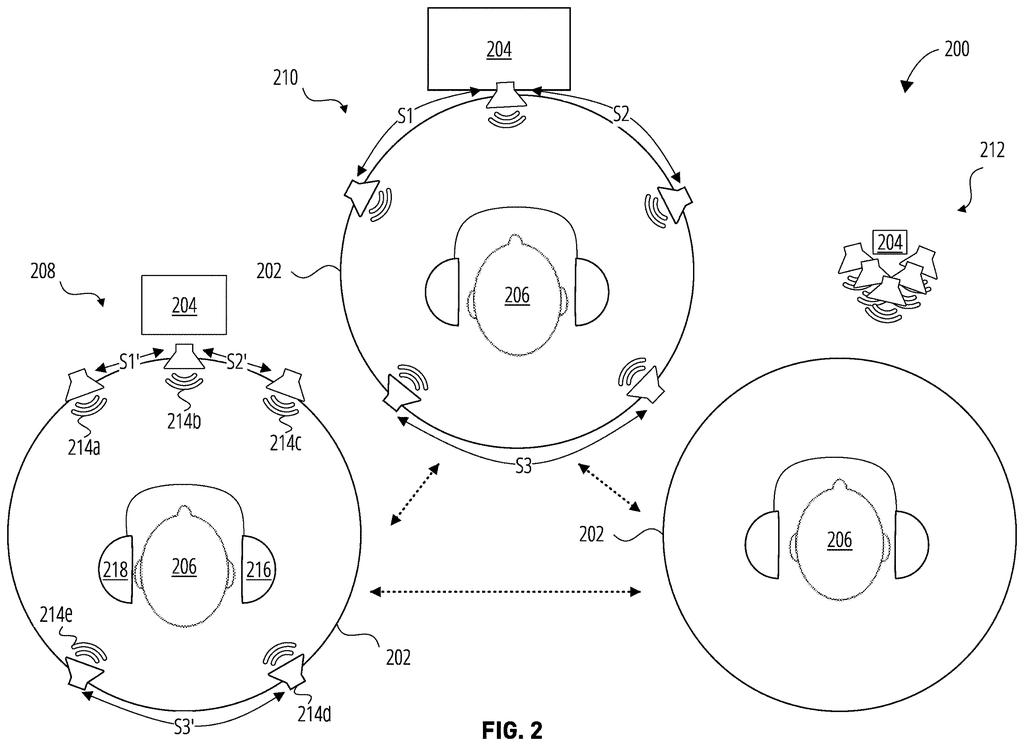
The idea: your device looks at a visual object on the display, measures how big it is, and then arranges a cluster of virtual speakers around it at matching proportions. Those virtual speakers play audio through a technique called binaural rendering, which tricks your ears into hearing sound as if it's coming from specific points in space rather than from two flat drivers.
The result, at least in theory, is that audio locks to what you're watching. A small UI element gets a tight, close audio field. A large scene gets a wider one. Apple calls out head-worn speakers specifically, so this is clearly aimed at Vision Pro or something like it.
An audio processing system may obtain a size of a visual object to present to a display. The audio processing system may determine a virtual placement for each of a plurality of virtual speakers at least based on the size of the visual object.
Translation: The software looks at how big something is on your screen to decide where surround sound speakers should be placed.
How virtual speaker positions scale with visual object size
The patent describes an audio processing pipeline with three main steps:
- Measuring the visual object: The system reads the size of something on screen, whether a video panel, a UI widget, or a virtual object in an AR scene.
- Placing virtual speakers: Based on that size, it calculates where a set of virtual speakers should sit in three-dimensional space around the object. Bigger object, wider speaker spread. Smaller object, tighter cluster.
- Binaural rendering: Each virtual speaker is spatially rendered using binaural audio, a technique that applies mathematical filters (called Head-Related Transfer Functions, or HRTFs) to make sound appear to arrive from a specific direction and distance. The output plays through headphones worn on the head.
The phrase "spatial blending" in the title suggests the system doesn't hard-switch between configurations but crossfades speaker positions as objects change size or move, keeping the audio transition smooth rather than jarring.
The abstract mentions this is designed for head-worn speakers, pointing squarely at a device like Apple Vision Pro, where users are already inside a mixed-reality environment and audio placement has obvious spatial relevance.
What this means for spatial audio in Apple headsets
For anyone wearing an Apple headset, this kind of system would make virtual content feel more physically present. Right now, even good spatial audio can feel like a background effect rather than something that belongs to what you're watching. Tying speaker geometry directly to object size on screen is a concrete step toward audio that behaves the way vision does: bigger things sound bigger because they are bigger.
The pattern in Apple's spatial audio filings suggests the company is building a layered system where visual rendering and audio rendering talk to each other continuously. That matters because it shifts audio from being a post-processed effect to being a first-class output of the display pipeline.
Apple's 467th filing we've tracked since May in our Apple coverage continues a wireless theme seen in a Wi-Fi and Bluetooth range trick and a faster satellite switching idea.
Claim 1 was canceled during prosecution, which means we cannot read the final scope from this filing. What the dependent claims sketch out, though, is a system that ties the placement of virtual speakers directly to the size of whatever is showing on screen, then renders those speakers through headphone audio that mimics three-dimensional space.
That underlying logic is narrow enough to be defensible. It is not simply "spatial audio for headsets." It is specifically about letting the visual frame drive the audio geometry, so a small window sounds like a small room and a large one sounds like a large stage.
If a claim like that survives negotiation with the patent office, it would cover any headset experience where the software automatically adjusts where sound appears to come from based on how big the on-screen image is, which maps cleanly onto Apple Vision Pro as it exists today.
There are more where this came from
We read every patent application Big Tech publishes and send you the ones worth knowing. Plain English, free, every week.
The drawings
6 drawing sheets from US 2026/0292430 A1 · click any drawing to enlarge


Want this weekly breakdown for a company we don't cover? Patentlyze Pro →
Be the first to weigh in