
Apple Patents a Software Trick to Push Wi-Fi and Bluetooth Signals Farther
Apple has filed a patent for a way to extend how far your device's wireless signal travels, without touching a single piece of hardware. The whole trick happens in software, by reshaping data before it even reaches the radio chip.
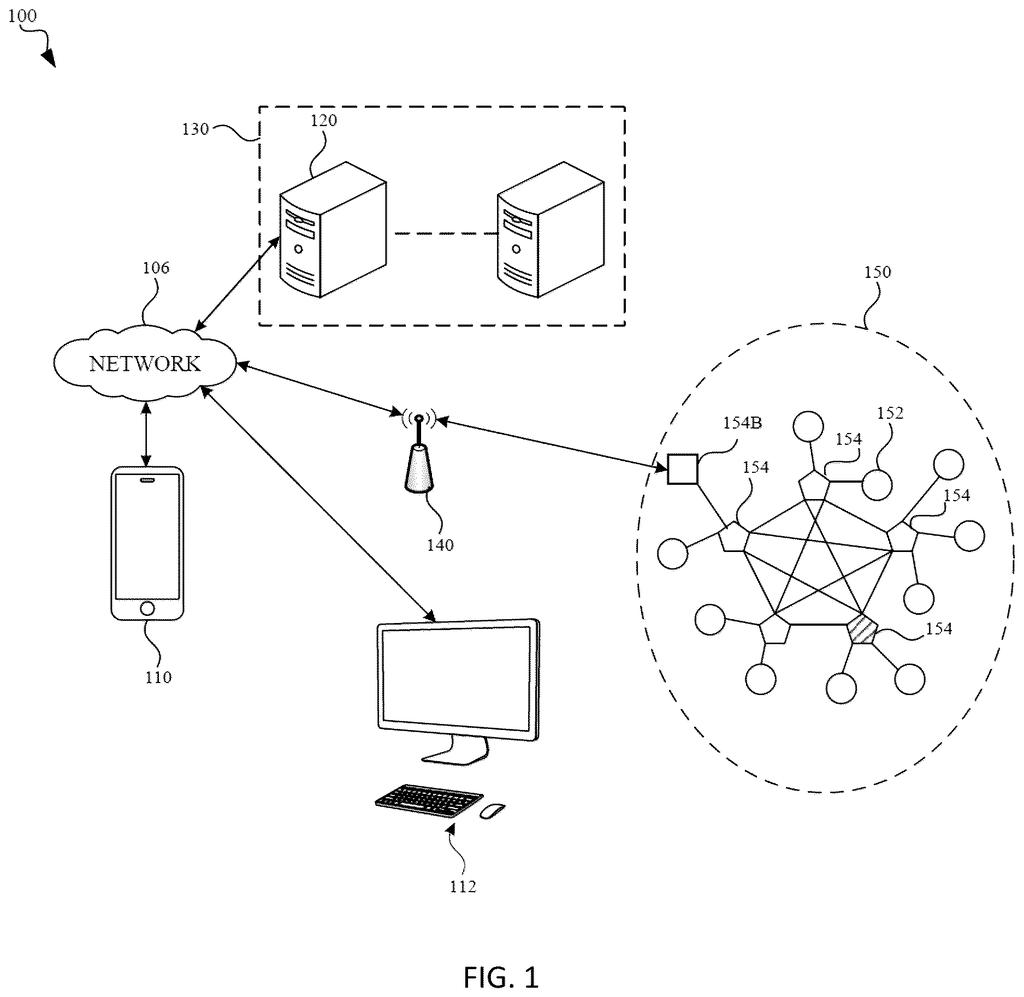
What Apple's software range extension actually does
A phone sits at the far end of a warehouse, just barely holding a Wi-Fi connection. The signal keeps dropping, but swapping out the antenna isn't an option. That's exactly the kind of problem this patent is designed to solve.
Apple's idea is to intervene in software before your device's radio chip ever sees the data. When your phone detects it's at the edge of a wireless network's reach, it can compress the vocabulary of signals it uses to carry data. Think of it like choosing to speak in short, clear words instead of a wide mix of syllables when you're shouting across a noisy room. Fewer, simpler signals travel farther and hold together better in a weak connection.
On the receiving end, a device can collect several garbled versions of the same message and reconstruct what was originally sent. Neither approach requires any new chip or antenna, which means it could work on devices that are already in your pocket.
Range extension operations can be performed, in software, at a transmitting device and/or at a receiving device.
Translation: The boost happens purely through software adjustments on either end of the wireless connection.
How the symbol-space reduction stretches wireless range
Wireless radios send data by encoding it into a set of distinct signal patterns called a symbol space. A larger symbol space carries more data per transmission but requires a cleaner, stronger signal to be decoded correctly at the other end. When signal strength drops, errors multiply.
Apple's patent describes a software layer that sits between the device's operating system and its wireless chip. When the device detects a range extension condition (essentially, a weak or stressed wireless link), it reformats the outgoing data stream so that it only uses a smaller subset of those signal patterns. The radio chip itself doesn't change; it just sees a simplified input. Because fewer, more distinct patterns are being transmitted, the signal is easier to read at longer distances or through interference.
The patent also covers the receiving side. A device can accumulate multiple error-filled copies of the same frame (a frame is one chunk of transmitted data) and then mathematically estimate what the original, correct frame should have looked like. This is similar to how photo software reconstructs a blurry image from multiple slightly-different exposures.
Key components covered include:
- Software detection of a range extension condition before transmission
- Digital modification of the bitstream to map to a reduced symbol set
- Frame accumulation and estimation at the receiver
- No changes required to the wireless hardware itself
What this means for iPhones in weak-signal situations
For everyday users, a software-based range fix is appealing because it could arrive as a firmware or OS update, no hardware refresh needed. Devices already in use could potentially get better range in marginal signal situations, whether that's a phone connecting to a router across a large home or a wearable maintaining a link to its paired device in a crowded space.
For Apple's product line, Apple's run of wireless-software filings suggests the company is working to close the gap between what its hardware can physically do and what its software can squeeze out of it. That matters most for smaller, lower-power devices like AirPods or the Apple Watch, where adding a bigger antenna simply isn't an option.
Apple's 466th filing in our Apple coverage since May continues a radio efficiency thread that includes faster satellite switching and waking radios without draining battery.
The clearest thing in favor of this patent is how close it already is to a real product. There is no new chip to design, no regulatory approval to chase, and no factory line to retool. The logic lives entirely in software, on hardware Apple already ships.
The harder question is how much real-world gain this approach delivers. Slimming down how much information gets packed into each wireless signal can stretch a connection's reach, but that stretch comes at the cost of speed, so this would only matter when staying connected counts more than moving data fast.
The shortest path to market looks like a background mode that switches on automatically when signal quality drops, invisible to users and buried in a software update rather than announced on a stage.
There are more where this came from
We read every patent application Big Tech publishes and send you the ones worth knowing. Plain English, free, every week.
The drawings
12 drawing sheets from US 2026/0292528 A1 · click any drawing to enlarge


Want this weekly breakdown for a company we don't cover? Patentlyze Pro →
Be the first to weigh in