
Samsung Patents a VR Screen That Arranges App Windows Around What You're Doing
Imagine a virtual desktop that watches what you're doing and automatically moves the most relevant app front and center, without you having to drag anything around. That's the core idea in Samsung's latest VR filing.
What Samsung's context-aware VR window layout actually does
Picture yourself wearing a VR headset and trying to work across several open apps at once, just like having a bunch of windows open on your computer. Right now, managing all those floating panels in virtual space is clunky: you manually drag things around, windows pile on top of each other, and finding what you need takes real effort.
Samsung's patent describes a system that watches what you're currently doing, and based on that "user context," automatically promotes one window to a dedicated priority spot on the virtual screen. Everything else arranges itself in the leftover space around that featured window, with no overlapping.
In practice, if you're mid-conversation in a messaging app, that window could snap to your main focus zone automatically, while your music player, browser, and calendar tile neatly around it. You stay in the flow of what you're doing instead of constantly reorganizing your virtual workspace.
How the device picks which window gets the prime spot
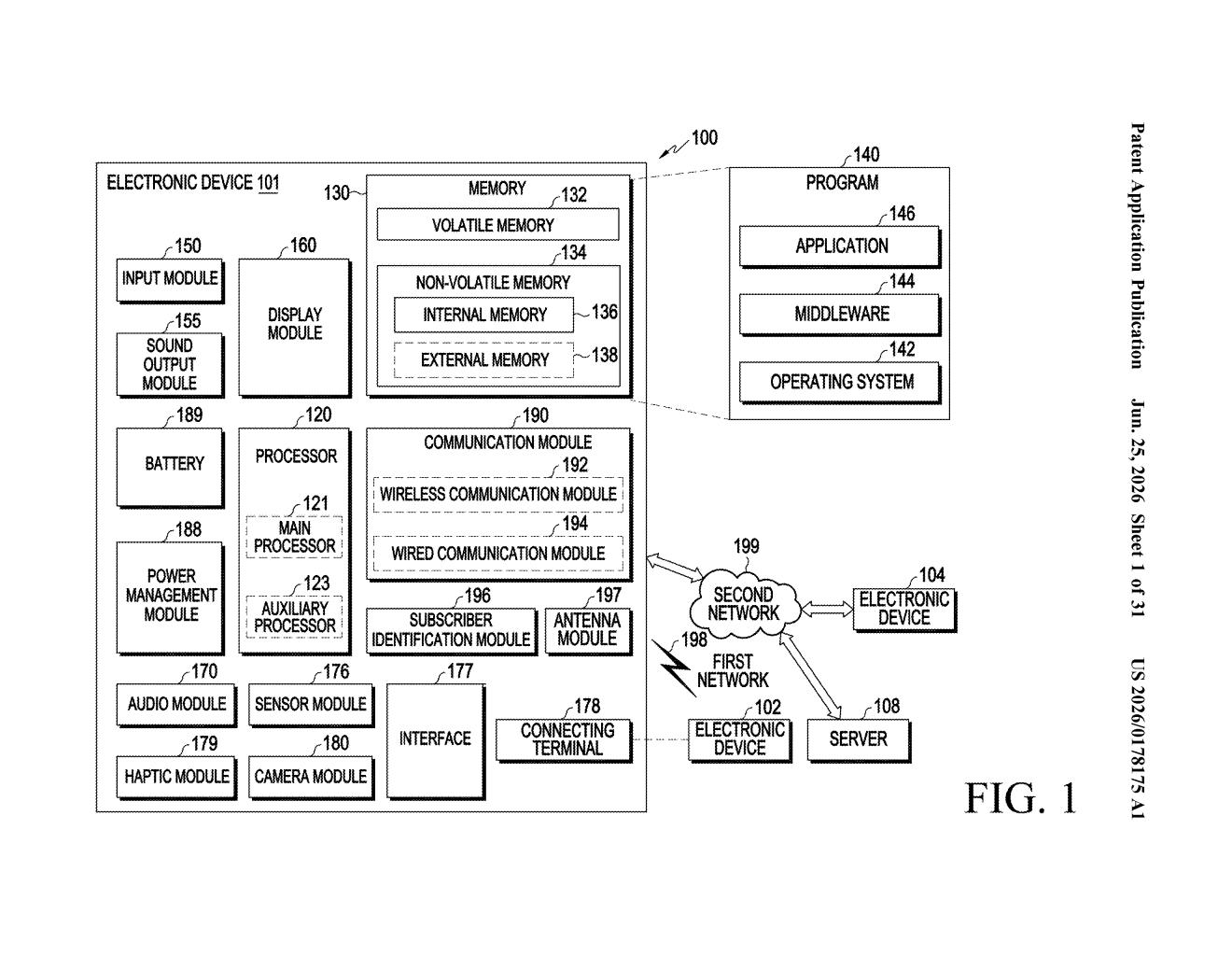
The patent describes an electronic device, most likely a VR or mixed-reality headset, that renders a virtual screen inside a virtual reality space. On that screen, the device manages multiple execution windows belonging to one or more running applications.
The key mechanism has two layers:
- User context information drives the selection of a "first window" (the priority window). Context could include what app you're actively using, where you're looking, what task is in progress, or other behavioral signals the device monitors.
- A specified arrangement condition governs how the remaining windows tile into the leftover screen area, with an explicit rule against any window overlapping the priority window.
The result is a dynamic, non-overlapping layout where the most relevant window always holds a defined zone, and secondary windows fill in around it in an orderly way. The patent is hardware-agnostic in its language, covering any "electronic device" with a display and processor, but the VR framing makes headsets the obvious target.
What the patent does not detail is exactly how user context is measured, or what the arrangement algorithms look like beyond the non-overlap constraint. Those specifics may live in dependent claims or future filings.
What this means for Samsung's XR headset ambitions
Managing multiple floating app panels is one of the most complained-about friction points in current XR headsets. Apple's Vision Pro shipped with a manual drag-and-pin model; Samsung's Galaxy XR device (developed with Google) is expected to compete directly in that space. A context-aware layout system is a meaningful quality-of-life feature that could make the difference between a headset feeling like a productivity tool versus an expensive novelty.
For you as a user, this kind of automatic window management could make wearing a headset for actual work far less exhausting. For Samsung, it's a signal that the company is thinking seriously about multi-tasking workflows, not just immersive media playback, as a reason to put on a headset.
This is a real and practical UX problem, and the patent addresses it with a sensible architecture. It's not flashy engineering, but window management in VR is genuinely unsolved, and Samsung filing this ahead of its XR headset launch suggests the team is thinking about it systematically. Worth watching as a signal of product direction, even if the patent itself is modest.
There are more where this came from
We read every patent application Big Tech publishes and send you the ones worth knowing. Plain English, free, every week.
Want this weekly breakdown for a company we don't cover? Patentlyze Pro →