
Microsoft Patents an AI System That Reads Your Emails and Web Pages to Find You Better Deals
Microsoft is patenting a system that reads a web page, app screen, or email, figures out what matters on it using AI, and then checks whether you could be getting a better deal.
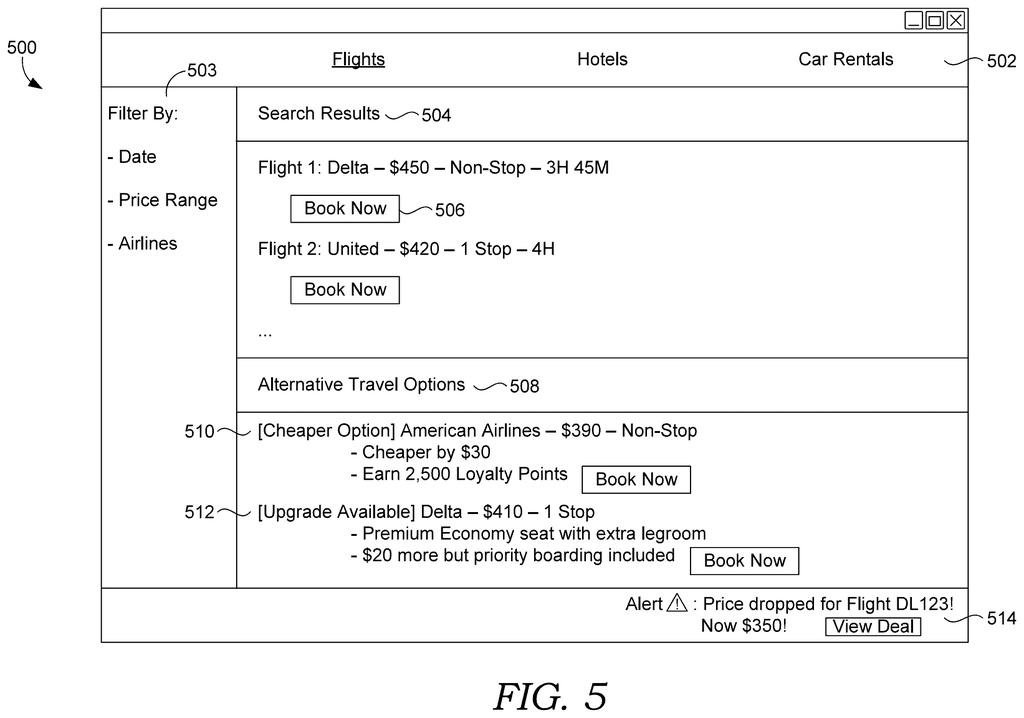
How Microsoft's AI skims your screen to find cheaper options
You're looking at a flight confirmation email in your inbox and the price has already gone up since you booked. A tool that notices that and immediately surfaces a cheaper alternative would be useful, and that's roughly the idea here.
Microsoft's patent describes a system where an AI reads a URL, a web page, an app screen, or an email, works out what the important details are (a price, a flight number, a hotel date range), and then checks an external service to see whether a better option exists. The result shows up as a notification or a suggestion right in context.
The system does this in two phases. Before you even open anything, it has already studied common page layouts and built rules for pulling out useful information. When you do open a page or email, it applies those rules instantly and shows you the comparison without you having to ask.
obtaining a data source that includes at least one of: a Uniform Resource Locator (URL), an app page or webpage, or an email; providing the data source and a prompt as input to a language model, wherein the language model generates extraction logic …
Translation: The system feeds your emails, web pages, or links into an AI to figure out how to read them.
How the system turns a URL or email into a live recommendation
The patent describes a two-stage pipeline. In the first stage, called offline mode, the system feeds sample web pages, app screens, and emails into a language model along with a prompt that tells the model what kind of information to look for. The language model responds not with an answer but with extraction logic, rules or patterns (things like regular expressions, which are search-pattern formulas, or XPath selectors, which are instructions for picking specific pieces out of a structured page) that describe how to find that information reliably in the future. These rules get stored alongside metadata tagging them to specific domains or page types.
In the second stage, called online or runtime mode, the system detects when you're on a relevant URL, page, or email. It pulls up the pre-built extraction rules for that type of content, applies them to pull out key parameters (a price, a product name, a travel date), and then calls an external API (essentially asks a third-party service a question) passing those parameters along.
The API returns alternative options or recommendations, a cheaper flight, a lower hotel rate, a competing product price. The system then presents this as a notification or contextual suggestion.
Key components the patent covers:
- Language-model-generated extraction logic for URLs, web pages, app pages, and emails
- Domain-specific storage of those rules for fast retrieval
- Real-time detection and parameter extraction at browsing or reading time
- API calls that convert extracted parameters into actionable alternatives
The parameters are then passed to an API to determine alternative options or recommendations, which are presented as notifications or contextual suggestions.
Translation: It sends the extracted details to an external service to find you better deals and pops up with suggestions.
What this means for shopping, travel, and inbox offers
For you as a user, the practical payoff is that a tool like this would remove a genuinely tedious task: opening a new tab, copying a flight number or product name, pasting it into a comparison site, and interpreting the results yourself. If this system works as described, that whole sequence collapses into a single notification.
The email angle is particularly interesting. Most comparison tools operate at the browser level, on pages you're actively browsing. Applying the same logic to your inbox, where booking confirmations, subscription renewals, and purchase receipts already contain structured price information, extends the reach considerably. Whether users would want an always-on system reading their email for commercial signals is a different question entirely, and one the patent doesn't address.
Microsoft's 13th filing we've tracked since July, following one that runs brainstorms and one that decodes your intent, adds yet another piece to agents that act for you.
The experience this patent describes is one most people would actually want. You book a hotel, the price drops, and nothing tells you. A system that closes that gap passively, without asking you to do extra work, has a clear and immediate payoff.
The harder question is trust. A tool that reads your emails and web pages to extract prices and pass them to an API is doing something that will feel invasive to many users, even if the outcome is a money-saving suggestion. Microsoft would need to be very clear about what leaves your device and where it goes, because the commercial case and the privacy concern land at exactly the same spot: your inbox.
a growing pile of Microsoft AI-assistant filings suggests the company is building toward a layer of proactive, always-on help that sits above individual apps. This patent is one piece of that picture, focused specifically on the extraction step that makes such suggestions possible.
There are more where this came from
We read every patent application Big Tech publishes and send you the ones worth knowing. Plain English, free, every week.
The drawings
11 drawing sheets from US 2026/0288894 A1 · click any drawing to enlarge


Want this weekly breakdown for a company we don't cover? Patentlyze Pro →
Be the first to weigh in