
Google Patents a Way to Cut the Delay When You Talk to Your Earbuds
Every time you say "Hey Google" into your earbuds, your voice has to make a round trip over Bluetooth before anything happens. Google has filed a patent targeting that exact pause, using a dedicated wireless channel to speed up the handoff.
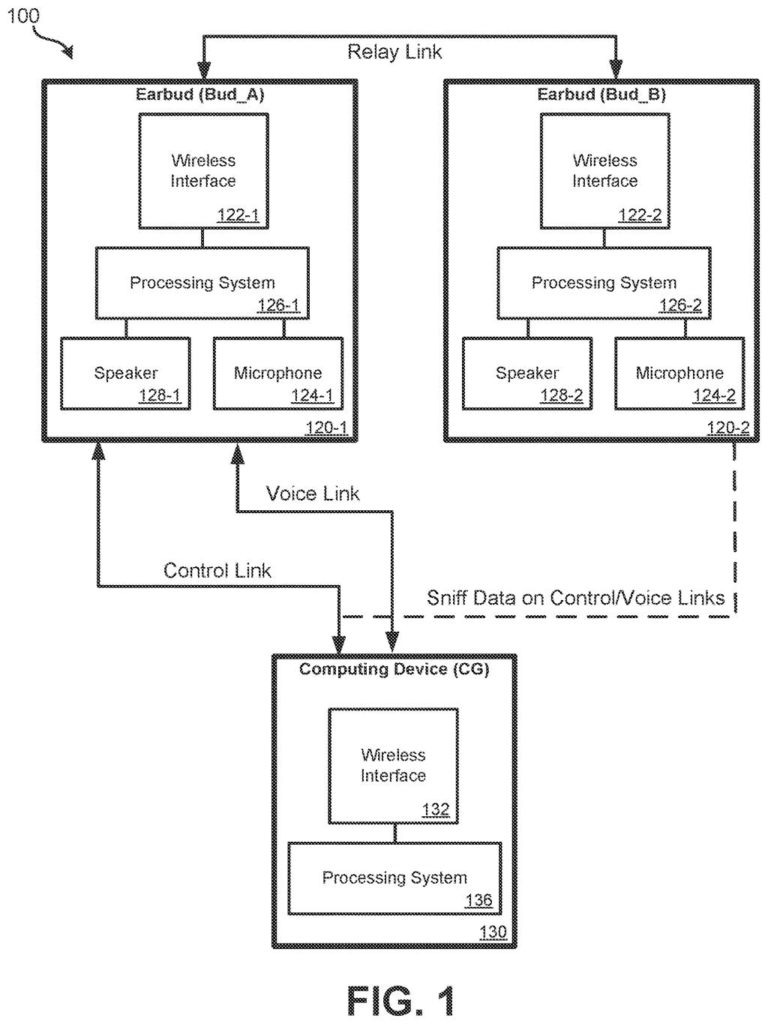
What Google's earbud voice-latency fix actually does
A person asks their earbuds a question while their hands are full, and waits a beat longer than they'd like for Google Assistant to respond. That gap is the problem this patent is designed to shrink.
Right now, the audio your earbuds capture has to travel over a general-purpose Bluetooth connection to your phone, which then sends it onward. Google's approach sets up a second, dedicated Bluetooth channel, called a Connected Isochronous Stream, specifically for voice data. Think of it as a reserved lane on a highway, kept clear so your spoken request doesn't sit in traffic behind other data.
The result, at least in theory, is that when you say a wake word like "Hey Google," the audio gets to your phone faster, the assistant starts processing sooner, and you hear a reply with less waiting. It's a small change in the plumbing, aimed at making the experience feel more like talking to a person in the room.
establishing an Asynchronous Connection Oriented Link (ACL) connection between an earbud and a computing device; establishing a Connected Isochronous Stream (CIS) connection between an earbud and the computing device; detecting, at the earbud, an utterance; …
Translation: The earbuds set up two types of Bluetooth connections before listening for you to speak.
How the CIS connection carries your voice faster
The patent describes a method for handling voice data between a Bluetooth earbud and a connected device (your phone or laptop) using two parallel Bluetooth connections.
The first is a standard ACL connection (Asynchronous Connection-Oriented Link), the ordinary data channel Bluetooth has used for years to move general information back and forth. The second is a CIS connection (Connected Isochronous Stream), a newer Bluetooth Low Energy feature designed to deliver audio data at precise, predictable intervals with minimal delay. "Isochronous" just means time-sensitive, and the whole point of a CIS channel is that the timing is guaranteed rather than best-effort.
When the earbud detects an utterance, including a wake word followed by a spoken request, it routes that audio specifically over the CIS channel rather than the general ACL pipe. The computing device receives the voice data with lower latency and then sends back the assistant's audio response over that same dedicated channel.
- Establish a standard ACL Bluetooth link for general data
- Establish a CIS channel specifically for voice
- Detect a wake word or voice command at the earbud
- Send the voice audio over the CIS channel
- Receive the assistant's audio reply over that same channel
The CIS connection can be used to transmit utterance data (e.g., a hotword followed by a user request) to a computing device to help to improve a user experience by reducing latency in interacting with a virtual assistant or perform some other operation.
Translation: This special connection sends your voice commands faster so your digital assistant replies without noticeable lag.
What this means for hands-free Google Assistant users
The delay between saying something to a voice assistant and hearing a response is one of the main reasons people stop using the feature. Even a fraction of a second of extra lag makes the interaction feel broken rather than fluid. This patent targets that specific friction point at the hardware-communication level, which is a more direct fix than trying to speed up the software processing on the other end.
For Google Assistant users who rely on earbuds for hands-free help, a reduction in that round-trip time could make the experience meaningfully more natural. Google's run of Bluetooth audio filings suggests the company sees the earbud pipeline, not just the AI model, as a place where the assistant experience can still improve.
Google's 748th filing in our Google coverage since May adds to a privacy thread that includes keeping grid AI data private and catching cheating database clients.
Voice assistants have a trust problem, and it lives in the half-second pause. When a device feels slow to respond, people stop reaching for it, and that habit breaks through a hundred small frustrations rather than one dramatic failure. Google has a lot riding on keeping people in that habit.
The delay this patent targets sits in the wireless hop between the earbud and the phone. A dedicated, low-latency audio channel means the phone receives the full request sooner, giving the rest of the system a head start before any heavy processing begins.
The honest question is whether the fix matches the size of the problem. The earbud-to-phone leg is one of the shorter waits in the chain, with server processing doing more damage overall. But latency erodes trust in small, repeated doses, and shaving even a fraction of that wireless gap means fewer moments where a user registers, however briefly, that the thing is slow.
There are more where this came from
We read every patent application Big Tech publishes and send you the ones worth knowing. Plain English, free, every week.
The drawings
8 drawing sheets from US 2026/0290338 A1 · click any drawing to enlarge


Want this weekly breakdown for a company we don't cover? Patentlyze Pro →
Be the first to weigh in