
Microsoft Patents an AI That Indexes Your Documents While They're Still Uploading
Every time you feed a big batch of documents into an AI tool, you wait. Microsoft wants to cut that gap by having the system read and index your files at the same moment they're being uploaded, not after.
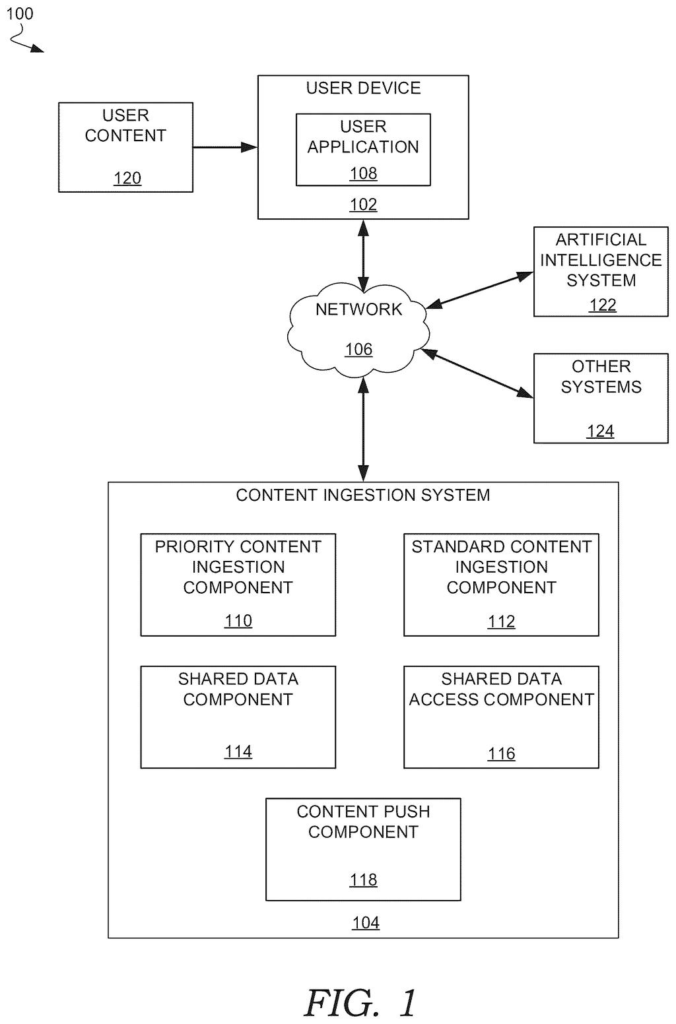
What Microsoft's parallel upload-and-read system actually does
Imagine you hand a stack of reports to an AI assistant and it tells you to come back in ten minutes while it reads everything. That delay happens because most systems finish receiving a file before they start making sense of it, two steps done one at a time.
Microsoft's patent describes a system that does both at once. As a document arrives, the AI is already scanning it for meaningful content, pulling out the key passages, and recording exactly where they sit inside the file. By the time the upload is done, the index is done too.
The patent also includes a priority queue, so you can flag certain documents as urgent and the system will jump them ahead of the line. The finished documents and their indexes land in a shared storage layer that any part of the AI system can reach immediately.
… concurrently parsing the document, as it is received, to identify semantic content within the document, based on the request; processing the identified semantic content to generate an index of the document that indicates locations within the document of the identified semantic content; …
Translation: The system analyzes the document and builds its search index on the fly while the file is still coming in.
How the system parses meaning before the upload finishes
The core idea is concurrent ingestion: instead of a two-stage pipeline (upload first, analyze second), the system runs both stages in parallel on the same document stream.
When a user or application sends a request marked for priority ingestion, the system signals a document upload queue to raise that batch. As each document flows into the queue, a parser runs alongside the incoming data, identifying what the patent calls semantic content (meaning the substantive, meaningful passages as opposed to headers, boilerplate, or formatting noise).
From that semantic content, the system generates an index: a structured map that records the location of each meaningful chunk inside the document. Think of it like a book's index page, but generated automatically and in real time.
- Both the raw document and its index are written to a shared data access system, a common storage layer accessible to downstream AI components.
- The priority queue means high-urgency documents don't sit behind routine background uploads.
- Because indexing is finished the moment the upload is finished, any AI retrieval or reasoning that needs those documents can start immediately.
The documents are uploaded to the document upload queue while concurrently parsing the documents to identify semantic content within the document. The semantic content is then analyzed to generate and store indices of the document that indicate locations within the documents of the semantic content.
Translation: Files get parsed for meaning right in the upload queue so indices are ready instantly.
What faster AI document ingestion means for your workday
For anyone using an AI tool that ingests large document sets (think enterprise search, contract review, or a corporate knowledge base), the practical payoff is that you stop waiting. The gap between 'I uploaded this' and 'the AI can actually use this' shrinks toward zero.
The priority queue piece matters in real workflows where not all documents are equal. If you're uploading a mix of routine archives and a contract that needs review in the next hour, a priority flag lets the system serve the urgent request first. Microsoft's run of AI knowledge-management filings suggests this is part of a broader push to make enterprise AI tools feel more immediate and responsive rather than batch-processed.
Microsoft's 65th Language AI filing we've tracked since May follows one on plain-language reports and one on user-priority training.
The frustration is familiar: you add a document to an AI tool, ask a question about it thirty seconds later, and get an answer that misses something plainly written on page two. Microsoft's patent fixes the timing problem by building the reading process into the moment of upload, so the AI finishes understanding the file at roughly the same time the file arrives.
The people who feel this most are the ones working under pressure. A lawyer uploading a contract minutes before a call, or a support agent adding a new policy before a difficult customer conversation, cannot afford to wait for a system to catch up silently in the background.
Whether this improvement reaches everyday users depends on where Microsoft chooses to deploy it. The failure it prevents is common enough that most people would recognize it immediately, which gives this a clear and practical payoff if it surfaces in the products people actually open.
There are more where this came from
We read every patent application Big Tech publishes and send you the ones worth knowing. Plain English, free, every week.
The drawings
13 drawing sheets from US 2026/0288769 A1 · click any drawing to enlarge


Want this weekly breakdown for a company we don't cover? Patentlyze Pro →
Be the first to weigh in