
Microsoft Patents a System That Turns Raw AI Data Into Plain-Language Reports
Reading the output of a machine-learning model usually requires a data scientist. Microsoft is patenting a way to make that step automatic, turning raw model results into plain, readable reports without any human translation in between.
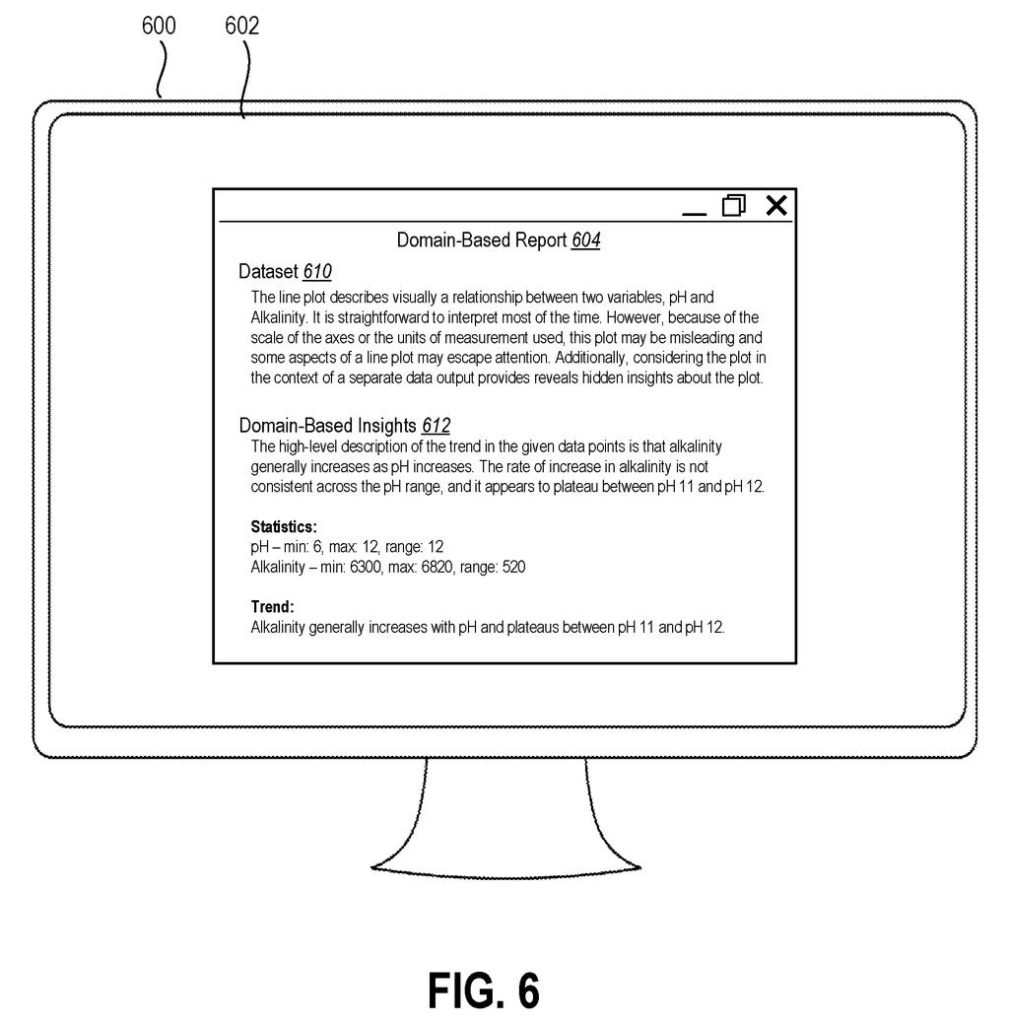
What Microsoft's auto-report system actually does for you
Imagine you run a hospital and your team has trained an AI to flag patients at risk of certain conditions. The AI spits out tables, scores, and probability numbers. Someone still has to turn all of that into a report a doctor can act on. That translation step is slow, inconsistent, and easy to get wrong.
Microsoft's patent describes a system designed to close that gap automatically. It takes whatever a machine-learning model produces, figures out what kind of data it is, and then picks a carefully constructed prompt to feed into a large AI model (think the kind of AI behind chatbots). The large AI then writes a clear, domain-appropriate explanation tailored to that specific report type.
The key idea is that the prompts are not one-size-fits-all. The system matches the data format to the right prompt template, which the company argues makes the generated text more accurate and less likely to hallucinate or miss the point.
… determining a context prompt for a generative AI model by matching a domain descriptor from a domain-based report to the multiple output formats to identify the context prompt for the generative AI model; …
Translation: It matches specific types of reports with the right data formats to figure out how to instruct the AI.
How the system matches data types to the right AI prompts
The system works in three main steps, all described in Claim 1.
- Step 1, Run the underlying model: A machine-learning model (which could be anything from a fraud detector to a medical risk scorer) processes an input dataset and produces multiple outputs, potentially in different formats: scores, classifications, probability distributions, and so on.
- Step 2, Match outputs to prompts: The system reads a domain descriptor (a label describing what kind of report is needed, like a clinical summary or a financial risk brief) and compares it against the output formats. From that match, it selects a context prompt, a pre-built instruction set tuned for that specific combination of data type and report type.
- Step 3, Generate the report: A large generative AI model (the kind of model that can write fluent prose) receives the raw data outputs, the context prompt, and additional report descriptors (parameters that shape tone, depth, or audience). It then produces a finished, readable report.
The patent also mentions system-level meta-prompts, meaning there can be a higher-level instruction layer that governs how the prompt-selection process itself behaves, adding another layer of control over the output quality.
The practical payoff is that different data domains, say, cybersecurity logs versus patient records versus financial statements, each get prompts tuned specifically for them, rather than a generic instruction that the AI has to interpret from scratch each time.
… the domain insight system converts data outputs from machine-learning models in various output formats into clear, accurate, comprehensible, and straightforward results.
Translation: The system translates complex machine data into easy to understand summaries.
What this means for non-technical report readers
For anyone who has ever had to explain a data model's output to a non-technical audience, this describes a genuinely useful automation. Right now, turning model results into a readable report is usually a manual step that requires both domain knowledge and writing skill. A system that automates it could speed up workflows in healthcare, finance, or enterprise security, anywhere complex data has to be explained to decision-makers quickly.
Microsoft has been filing around AI-assisted enterprise productivity since at least 2023, and this patent fits squarely into that pattern. For you as a user, the downstream effect is reports that arrive faster, with less chance that a human translator misread the model's output. The risk, of course, is that if the prompt-matching step picks the wrong template, the AI may produce a fluent but wrong report, which is potentially worse than no report at all.
Microsoft's 64th Language AI filing we've tracked since May follows one on personalizing AI training and one on smarter code references.
Claim 1 is written broadly. It covers any method that takes machine-learning outputs, selects a prompt by matching a domain descriptor to those output formats, and uses a generative AI to produce a report. That is a wide net: it does not limit the technique to a specific industry, a specific type of model, or a specific format of output.
In practice, if granted as written, that breadth could create friction for other companies building AI reporting tools on top of third-party models. Plenty of enterprise software already stitches together a data model and a language model to produce narrative summaries. The question a patent examiner will wrestle with is whether the specific mechanics of prompt-matching-by-domain-descriptor are novel enough to distinguish this from general retrieval-augmented generation or template-based reporting, both of which are well-established ideas.
The honest read is that this is a useful engineering approach that addresses a real bottleneck in AI workflows, but the claim language is ambitious enough that its scope will likely narrow during examination. Watch what survives.
There are more where this came from
We read every patent application Big Tech publishes and send you the ones worth knowing. Plain English, free, every week.
The drawings
8 drawing sheets from US 2026/0288779 A1 · click any drawing to enlarge


Want this weekly breakdown for a company we don't cover? Patentlyze Pro →
Be the first to weigh in