
Qualcomm Patents Wireless Remote Control for Earbud Noise-Canceling Modes
Your earbuds blocking out the world is great, until someone needs your attention and you have to fumble for a button. Qualcomm is patenting a way for an external device to flip your earbuds between noise-canceling and transparency mode entirely over a wireless signal.
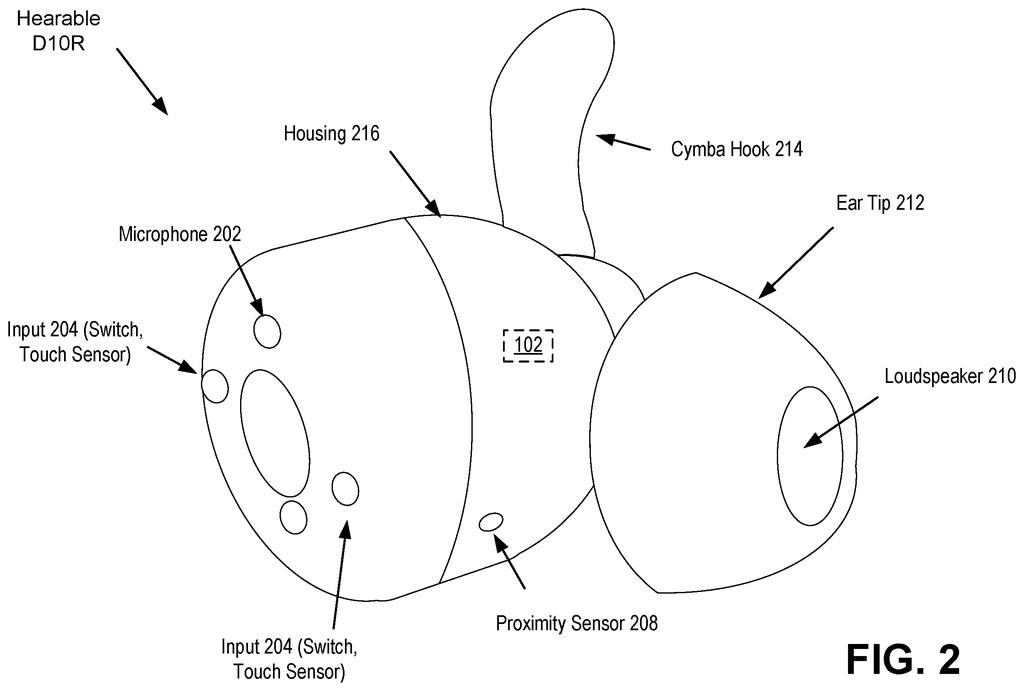
How Qualcomm's wireless ANC switching actually works
A worker sits on a noisy factory floor, ears sealed off by noise-canceling headphones, completely unaware that a supervisor has been trying to get their attention. If they had to reach up and tap the earbud to let sound back in, they'd have to know someone was calling first. That's the problem Qualcomm is trying to solve.
The patent describes earbuds (or any ear-worn device) that can receive a wireless command from another device and automatically switch from active noise cancellation (ANC) to transparency mode, which lets ambient sound pass through so you can hear what's happening around you. Critically, the earbud doesn't just react to a tap on its own body; it receives the instruction over the air from somewhere else.
This means a phone, a smartwatch, a desk phone, or another paired device could trigger the switch without you touching your ears at all. The patent also covers the reverse, switching from transparency back to ANC by remote command.
(a) in a first contextual mode in which active noise cancellation is enabled, produce an audio signal based on audio data; (b) receive a wireless signal carrying a command to change a contextual mode; (c) based on receiving the wireless signal carrying the command, transition from the first contextual mode to a second contextual mode corresponding to a transparency mode …
Translation: The earbud listens for wireless commands to switch between noise cancellation and transparency modes.
How the command signal triggers the mode transition
The patent centers on an ear-worn device with a processor that manages two distinct operating states: an active noise cancellation (ANC) mode, where the device generates an anti-noise signal to suppress sounds from the environment, and a transparency mode, where external audio is captured by a microphone and reproduced through the speaker so the wearer can hear their surroundings naturally.
The key invention is the trigger mechanism. Instead of the wearer pressing a button on the earbud itself, the device listens for a wireless command signal sent from another device (think a smartphone, a connected watch, or a computer). When that command arrives, the processor transitions between modes automatically.
- In ANC mode, the device produces audio based on incoming audio data while blocking ambient sound.
- On receiving the wireless command, it exits ANC mode.
- In transparency mode, it reproduces ambient sound in a pass-through manner, meaning real-world audio is captured and replayed in real time.
- The earbud can also send control signals back wirelessly, allowing two-way coordination.
The patent is relatively sparse on the underlying radio technology used for the wireless link, but the claim is broad enough to cover Bluetooth, Wi-Fi, or proprietary short-range protocols. The emphasis is on the command-driven state machine, the logic that governs when and how the earbud changes modes, rather than the audio-processing details.
… reproduce ambient sound in a pass-through manner. The first device is configured to communicate control signals wirelessly.
Translation: The device pipes outside noise through to your ear while receiving commands over the air.
What this means for connected earbud ecosystems
For everyday users, the practical appeal is hands-free mode switching. If your phone detects an incoming call, it could automatically drop noise cancellation so you can hear a physical phone ringing nearby, or let a smart home system open up your ears when a doorbell rings. The automation replaces a gesture you'd otherwise have to remember to make yourself.
For Qualcomm's track record in audio chip patents, this fits a pattern of building mode-switching and audio management into chipsets that third-party earbud makers license. If this approach lands in a widely used audio chip, the feature could show up across dozens of brands simultaneously, not just one product line. That's a broader reach than most single-product audio patents.
Qualcomm's third filing in our wearable tech coverage since July follows applications on keeping muted headphones connected and smartwatch pre-warning a phone.
Losing awareness of your surroundings while wearing noise-canceling earbuds is a minor nuisance at a coffee shop and a serious hazard on a warehouse floor. When workers are acoustically sealed off from the environment around them, they can miss warnings, machinery alerts, and spoken instructions in ways that carry real physical risk. That is a problem with measurable consequences, not just a comfort complaint.
A system that lets a supervisor remotely open up a worker's hearing, without requiring the worker to stop what they are doing and press a button, addresses that risk directly and at the right level.
The patent covers the handshake between a command and a mode change, which is narrow, but the narrowness fits. No exotic new technology is needed here; the value is in making a reliable, controllable version of something earbuds can already do, and putting that control in the right hands at the right moment.
There are more where this came from
We read every patent application Big Tech publishes and send you the ones worth knowing. Plain English, free, every week.
The drawings
13 drawing sheets from US 2026/0290300 A1 · click any drawing to enlarge


Want this weekly breakdown for a company we don't cover? Patentlyze Pro →
Be the first to weigh in