
Qualcomm Patents a Three-Device System for Building Your Avatar in a Video Call
What if your next video call used a lifelike 3D avatar of you, but your phone didn't have to do all the heavy lifting to build it? Qualcomm has filed a patent for a system that splits that rendering work across three separate devices.
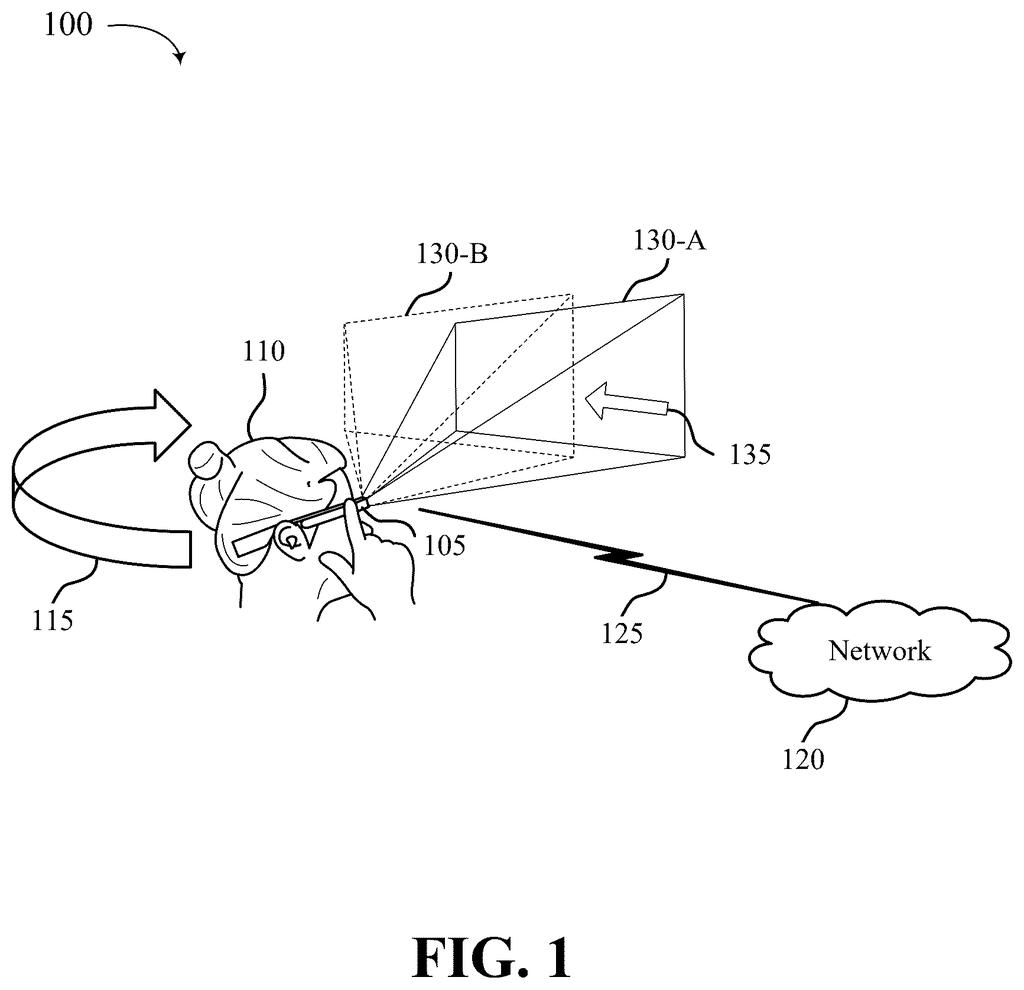
What Qualcomm's distributed avatar call system actually does
Imagine you're on a video call, but instead of a flat camera feed, both people appear as realistic 3D avatars in a shared virtual space. Building that kind of avatar in real time takes serious computing power, and most phones can't handle it alone.
Qualcomm's idea is to bring in a third device, essentially a server or nearby computing node, to help. Your phone tells the other caller you want to start a "virtual representation call." Once they accept, your device sends details about what you and your surroundings look like to that third device. That helper then does the heavy lifting of constructing what the other person sees: your avatar, their avatar, and the full scene, all from their point of view.
The result arrives back at the right phones fully assembled, so neither handset has to burn through its battery or processor doing the whole job. It's a divide-and-conquer approach to making 3D calls feel real without requiring a supercomputer in your pocket.
… output, by the first device to a third device, input information associated with at least one of the first device or a user of the first device, the input information to generate a virtual representation of a user of the second device and a virtual scene from a perspective of the user of the second device; …
Translation: The first device sends data to a third device to build a virtual world and avatar for the second user.
How three devices split the work of rendering a virtual scene
The patent describes a three-party architecture for conducting what it calls a "virtual representation call", a video-call-like session where participants appear as animated 3D avatars rather than camera images.
Here's how the claim breaks down:
- Device 1 (caller) sends a call-establishment request to Device 2 (the other caller), similar to how a regular call is set up.
- Once Device 2 accepts, Device 1 sends input information about itself or its user to Device 3, a third-party compute node (think a cloud server or edge computing box on a 5G network).
- Device 3 uses that input to generate the virtual scene and the avatars as seen from the other user's perspective, then sends the finished scene data back to the appropriate device.
The earlier abstract mentions "mesh information" and "mesh animation parameters", which are the technical terms for the 3D shape of an avatar and the instructions for how it moves. By offloading that generation to Device 3, neither endpoint phone has to render the full scene locally. the pattern in Qualcomm's extended-reality filings points toward doing more compute off the device, and this patent fits squarely in that direction.
The claim is broad: it covers any apparatus that follows this three-device call setup, output-to-third-device flow, and receive-scene-back loop, regardless of the specific rendering technology used.
The first device can transmit, to the second device, first mesh information for a first virtual representation of a first user of the first device and first mesh animation parameters for the first virtual representation.
Translation: Your phone sends 3D shapes and movement data of your avatar directly to the other person on the call.
What this means for the future of 3D video calling
3D avatar calls are the kind of feature that sounds like science fiction until a headset or a carrier makes it real. By offloading scene generation to a third device, Qualcomm's approach could let ordinary phones, not just expensive XR headsets, participate in immersive virtual calls. That matters especially on 5G networks where a nearby edge server can take on compute tasks in milliseconds.
If granted broadly, claim 1 could give Qualcomm a stake in any three-device virtual-call system that routes scene-generation work through an intermediary. That covers a wide range of future products, from smartphone AR apps to enterprise telepresence tools, which is either a useful foundation or a wide net depending on how patent examiners read the scope.
Qualcomm's 448th filing in our Qualcomm coverage since May continues its AR headset work, building on rendering two views from one chip and fixing blur from remote processing.
Claim 1 is written at a high level of abstraction. It doesn't lock down a specific way of building avatars, a particular codec for mesh data, or even a defined type of "third device." It claims the broader concept: call setup between two endpoints, offload rendering inputs to a third party, receive a scene back. That breadth is a double-edged sword.
On one hand, a broadly written claim is harder to design around. Any company building a three-device virtual-call pipeline that follows this sequence would need to account for this filing. On the other hand, broad claims face more scrutiny at the patent office, and there's a long history of prior art in cloud-rendered graphics and VoIP call-signaling that examiners will weigh carefully.
For readers, the practical question is whether carriers or device makers will actually ship this kind of system. The compute-offload idea is sound, and 5G edge infrastructure makes it more plausible than it was five years ago. But the patent itself is more of a land-grab on an architecture than a blueprint for a finished product.
There are more where this came from
We read every patent application Big Tech publishes and send you the ones worth knowing. Plain English, free, every week.
The drawings
45 drawing sheets from US 2026/0289909 A1 · click any drawing to enlarge


Want this weekly breakdown for a company we don't cover? Patentlyze Pro →
Be the first to weigh in