
Nvidia Patents a Delta-Sync System for Multi-User 3D Scene Editing
When multiple artists edit the same 3D scene at once, keeping everyone's view consistent is surprisingly hard. Nvidia's new patent tackles that with a lightweight 'override layer' system that ships only what changed — not the whole scene.
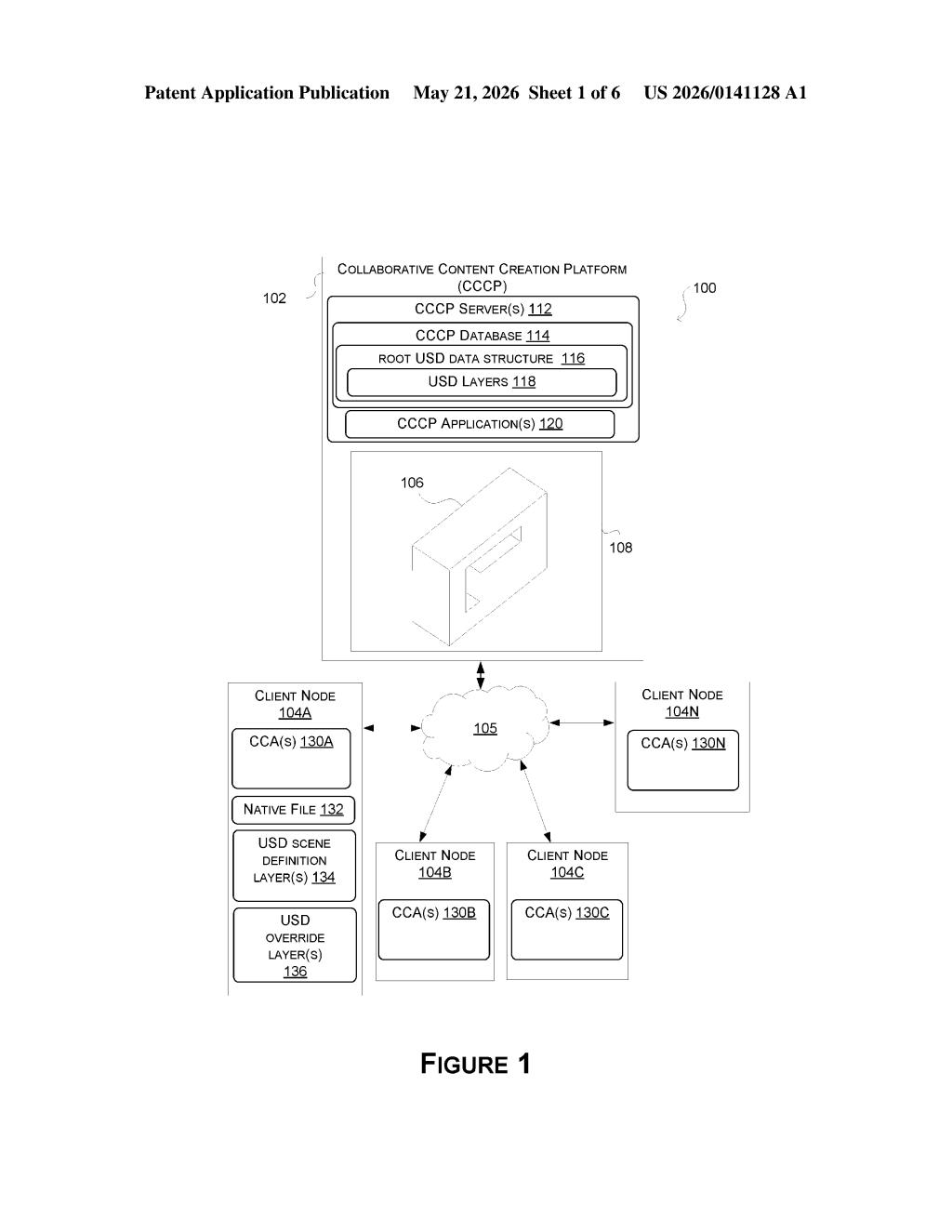
How Nvidia keeps collaborative 3D scenes in sync
Imagine you and a colleague are both editing the same 3D world at the same time — maybe you're building a virtual film set or a game level. Every time one of you moves an object or tweaks a texture, the other person needs to see that update almost instantly. The naive solution — just re-send the entire scene description on every edit — is way too slow for complex scenes.
Nvidia's approach is to wrap each edit in something called an override layer. Instead of resending the whole scene, your software packages only the specific changes you made and ships that slim bundle to a central server, which then notifies everyone else on the project.
Other artists' tools receive the override layer, check whether it applies to the part of the scene they care about, and selectively apply just the relevant updates. The underlying scene definition stays untouched; the overrides sit on top like a stack of sticky notes. It's a pattern that should feel familiar if you've ever used non-destructive editing in Photoshop or version-control diffs in Git.
How override layers propagate USD scene changes
The patent centers on Universal Scene Description (USD) — Pixar's open 3D scene format that Nvidia has heavily invested in through its Omniverse platform. A USD scene is structured as a scene graph (a tree of objects, lights, materials, and their properties, called primitives).
When a user edits something inside a Content Creation Application (CCA), the system:
- Tracks which scene primitives changed (position, color, geometry, etc.)
- Packages those changes into a new override layer — essentially a diff that sits on top of the base scene
- Sends a new layer message to a Collaborative Content Creation Platform (CCCP) server, telling it to attach the override layer to the root USD file's scene graph
- Notifies all other subscribed CCA instances that a new override layer is available
Each receiving client then decides which override primitives are relevant to its current view and applies them selectively — so a lighting artist working on a specific shot isn't forced to reload geometry changes happening on the other side of the scene.
The key insight is that USD's layering model already supports non-destructive overrides natively. Nvidia is essentially building a real-time collaborative sync protocol on top of that existing layer composition model, rather than inventing a new scene format.
What this means for real-time 3D collaboration tools
Collaborative real-time 3D editing is one of the messiest unsolved problems in creative software. Tools like Nvidia's Omniverse, Autodesk's cloud pipeline, and various game-engine collaboration features all struggle with the same core tension: 3D scenes are enormous and interconnected, but users need sub-second feedback on each other's changes.
This patent points to a concrete architectural answer — treat edits as lightweight override layers, not full-scene refreshes — which could meaningfully reduce latency and bandwidth in multi-user workflows. If you've ever worked on a shared 3D project and watched your viewport freeze while a teammate's change synced, this is the kind of plumbing that fixes that.
This is deep-infrastructure work, not a flashy feature announcement — but it's exactly the kind of thing that determines whether Nvidia Omniverse becomes a genuinely viable collaborative production tool or stays a demo platform. The override-layer approach is elegant because it leverages USD's existing composition model rather than bolting on a bespoke sync protocol. Worth paying attention to if you follow professional 3D workflows.
There are more where this came from
We read every patent application Big Tech publishes and send you the ones worth knowing. Plain English, free, every week.
Want this weekly breakdown for a company we don't cover? Patentlyze Pro →