
Samsung Patents a Way to Jump Between VR Apps Through Virtual Doorways
Switching apps in a VR headset today usually means dropping out of whatever world you're in and landing on a flat menu screen. Samsung's new patent describes something more immersive: a virtual doorway that appears inside your current virtual space, letting you walk (or gesture) your way into a different app entirely.
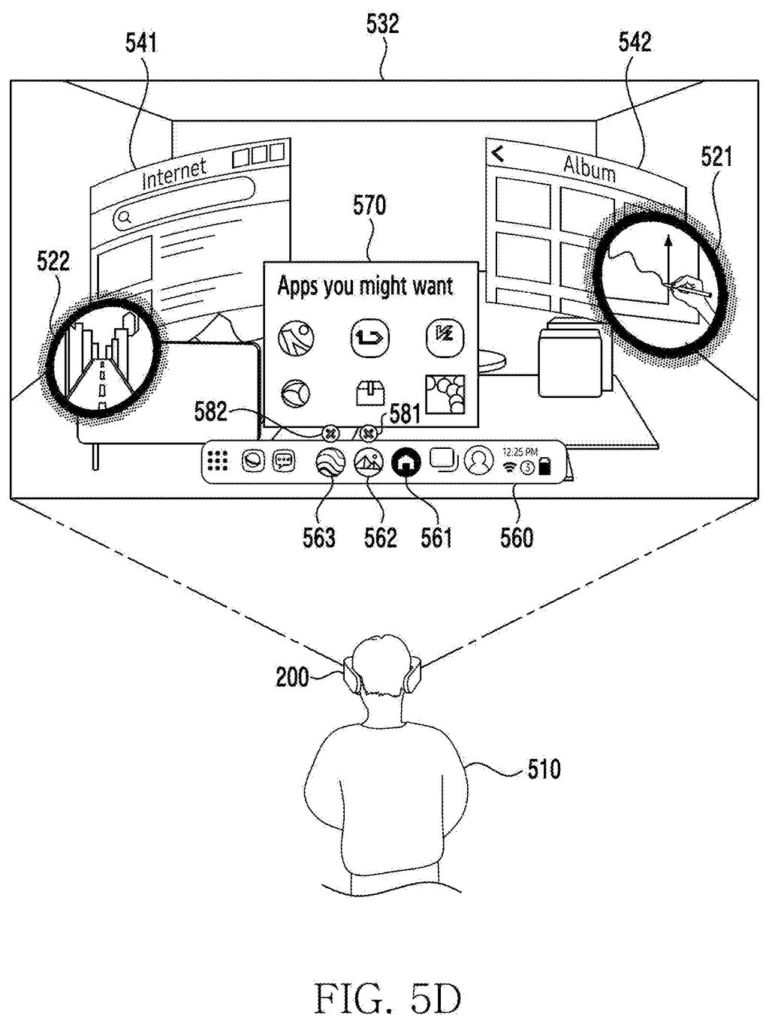
What Samsung's virtual app-switching doorway actually does
Ever tried to switch apps on a VR headset without losing your sense of where you are? Right now, most headsets drop you out of whatever experience you're in and dump you onto a flat home screen before loading the next app.
Samsung's patent describes a different approach. When you open a second app while already inside a virtual space, a virtual object (think of it as a doorway, a portal, or any visual anchor) appears inside the space you're already in. You interact with that object, and it carries you into the new app's virtual space. Once you're there, a second object appears so you can go back the same way.
The result is that you'd move between apps the way you move between rooms, without ever feeling like you've been thrown back to a loading screen. It's a small change in how navigation works, but it keeps the sense of presence that makes spatial computing feel different from a phone.
… display a first virtual object for entry into a second virtual space corresponding to the second application within the first virtual space …
Translation: The device puts a virtual portal inside the first app to let you access the second one.
How the headset renders and swaps the two virtual spaces
The system lives inside a wearable device (a headset or AR glasses) with at least one sensor, a display, a processor, and memory. Here is how the flow works:
- You are inside Virtual Space A, running Application 1.
- You trigger Application 2 (by voice, gesture, or controller input).
- The device renders a first virtual object inside Space A. This is an in-world anchor point representing the entry to Application 2's virtual space.
- You interact with that object, and the display transitions to Virtual Space B.
- Once inside Space B, a second virtual object appears automatically, pointing back to Space A.
The bidirectional object requirement is key. The patent doesn't just describe a one-way launch mechanism; it specifies that switching in one direction must generate a return anchor in the other. This keeps navigation symmetrical so you always have a way back without reaching for a menu.
The patent also notes that the device identifies at least one application being executed while the first space is active, meaning the system is monitoring background app state continuously, not waiting for a menu interaction.
… display the second virtual space on the display on the basis of an input for switching to the second virtual space through the first virtual object …
Translation: Stepping through that portal switches your view directly into the new application.
What this means for daily multitasking on XR headsets
For anyone who uses a VR or mixed-reality headset for more than one task at a time, this addresses a real friction point. Dropping to a home screen and reloading a space breaks immersion and takes time. A persistent in-world navigation object keeps you inside the experience while still letting you multitask.
a growing pile of Samsung XR interface filings suggests the company is working through the interaction design layer of its headset ambitions methodically. For competitors building spatial operating systems, claim 1's broad language around "virtual objects for entry" could become a relevant reference point during their own patent filings, since the claim covers the concept at a fairly abstract level rather than locking it to a specific visual form like a door or portal.
Samsung's 1348th filing we've tracked since May in our Samsung coverage follows 3D icon pressing and arc track menus as the company keeps exploring new ways to navigate screens.
Claim 1 is written broadly enough to cover any wearable display that shows a "first virtual object" as an entry point to a second app's space, and then shows a return object once you've switched. That two-way object requirement is the interesting part: the patent doesn't just claim an outgoing portal, it claims the return path too.
In practice, that breadth could create friction for any headset maker who wants to use themed portals, doors, or icons as app transitions. Whether a floating window or a glowing ring counts as a "virtual object for entry" is exactly the kind of ambiguity that makes claims like this worth watching during examination.
For everyday users, the concept is straightforward and genuinely useful: persistent navigation objects that live inside your virtual environment rather than yanking you out to a menu. The patent is narrow enough in its described mechanism to feel incremental, but broad enough in its claim language to matter commercially if it survives the patent office.
There are more where this came from
We read every patent application Big Tech publishes and send you the ones worth knowing. Plain English, free, every week.
The drawings
18 drawing sheets from US 2026/0288201 A1 · click any drawing to enlarge


Want this weekly breakdown for a company we don't cover? Patentlyze Pro →
Be the first to weigh in