
Samsung Patents a System That Makes Flat Apps Work on 3D Displays
Most apps are built flat, and most 3D headsets struggle to show them clearly. Samsung's new patent describes a way for the device itself to figure out how deep in virtual space an app is sitting, then tune its resolution accordingly before splitting the image for both eyes.
How Samsung turns your flat apps into 3D-ready images
You're wearing a mixed-reality headset, and you pull up your favorite app. The problem: that app was designed for a flat phone screen, not a three-dimensional space floating in front of you. It can look blurry, misaligned, or just plain wrong when a headset tries to show it in 3D.
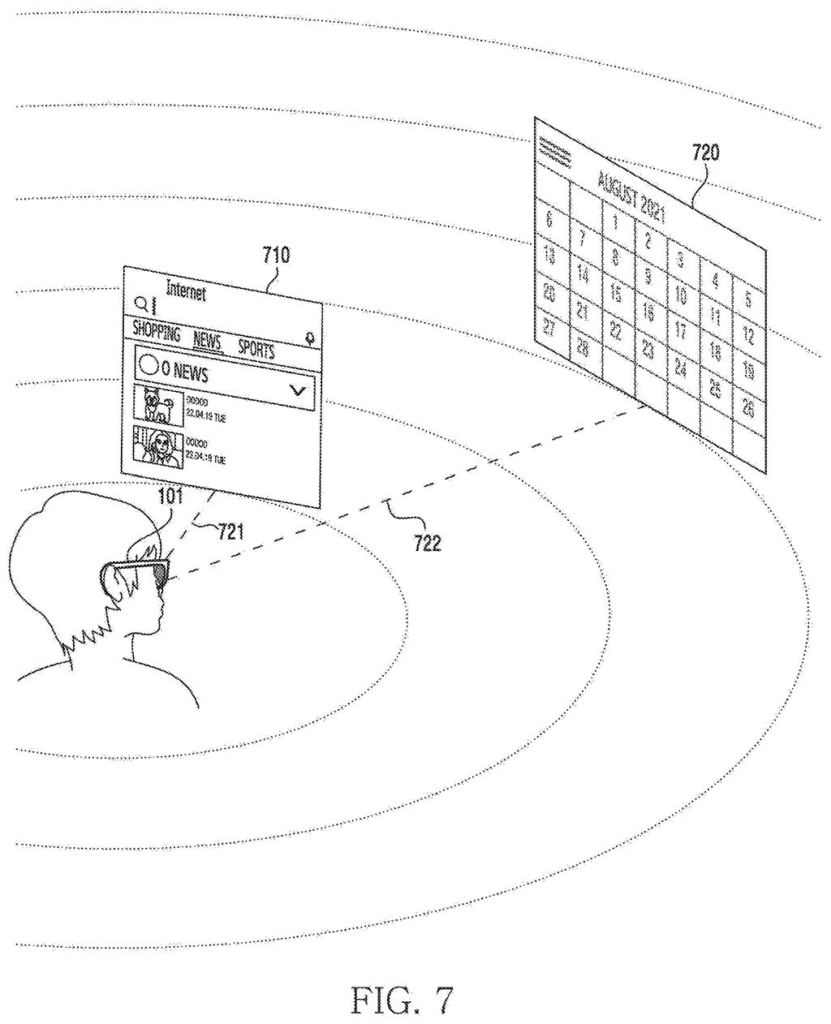
Samsung's patent tackles that problem at the device level. When you open an app, the headset figures out where in virtual 3D space the app's window is sitting, then uses that distance information to set the right resolution for that position. After generating the image at that resolution, it converts the single flat image into two slightly different images, one for each eye, which is what creates the sense of depth.
The whole process is meant to happen automatically, so the app itself doesn't need to be rebuilt or even aware that it's running on 3D hardware. Existing apps, in theory, just work.
… convert image information corresponding to the two-dimensional image of the application, generated in accordance with the resolution information, into dual image information corresponding to images for two eyes …
Translation: It takes flat app graphics and splits them into separate views for your left and right eyes.
How depth data drives the resolution and stereo split
The patent describes a pipeline inside an electronic device (a headset or similar display device) that intercepts the output of a standard 2D application and prepares it for stereoscopic display.
The key steps are:
- Depth detection: The device determines the depth of the area in 3D space where the app window is going to appear. Depth here means how far away from the viewer the virtual surface sits.
- Adaptive resolution: Based on that depth value, the system picks the appropriate resolution for rendering the app's image. An app window floating far away needs fewer pixels to look sharp; one close up needs more. Getting this wrong makes the image look either blurry or wastefully over-rendered.
- Stereo conversion: The single rendered image is then converted into dual image information, meaning two separate images with a slight offset between them, one for the left eye and one for the right. This offset is what tricks the brain into perceiving depth.
- Display output: The paired images are sent to the display and shown simultaneously.
The claim is broad enough to cover any 2D app, not just specially designed ones. The processor handles the whole chain, so the app's own code doesn't need modification.
… obtain depth information about an area in which an application is to be rendered in a three-dimensional space, determine resolution information for the application according to the depth information about the area …
Translation: The system figures out how deep the 3D space is and adjusts the app resolution to match.
What this means for running everyday apps on 3D headsets
For consumers, the appeal is straightforward: if you own a 3D headset, you shouldn't have to wait for every app developer to rebuild their app from scratch before it works properly. A system like this lets the hardware absorb the compatibility burden.
For Samsung specifically, this kind of technology matters a lot as the company develops its XR hardware. Samsung's bet on spatial computing shows up repeatedly in its patent activity. But the practical shipping distance here is real: the patent describes a software pipeline, which means it doesn't demand new sensors or displays, just the right software stack running on hardware that already renders stereo images. That makes the path to a product shorter than many XR patents, though questions about how well automatic depth detection handles complex or layered app layouts remain open.
Samsung filed its 54th application we've tracked in the AR glasses race since May, building on its eye-tracking lens work and fixed floating image work.
The core idea here is a software fix, not a hardware moonshot. It sits between an existing app and an existing headset screen, automatically adjusting sharpness based on how far away a window appears in virtual space. No new sensors, no new display panels required.
The main engineering challenge is handling messy real-world use: windows that overlap, move around, or resize on the fly. Getting those edge cases right is what separates a feature that feels seamless from one that just technically works.
That said, the shortest path from patent to product is unusually clear for this category, and the problem it solves, flat apps that look blurry or awkward inside a headset, is one anyone who has tried that experience will immediately recognize.
There are more where this came from
We read every patent application Big Tech publishes and send you the ones worth knowing. Plain English, free, every week.
The drawings
13 drawing sheets from US 2026/0289903 A1 · click any drawing to enlarge


Want this weekly breakdown for a company we don't cover? Patentlyze Pro →
Be the first to weigh in