
Qualcomm Patents a Way to Grade Its Own AI Cell-Tower Predictions
AI is increasingly making the call on which cell tower your phone connects to, but nobody has a great way to check whether that AI is getting it right. Qualcomm's new patent is essentially a report card system built directly into the network.
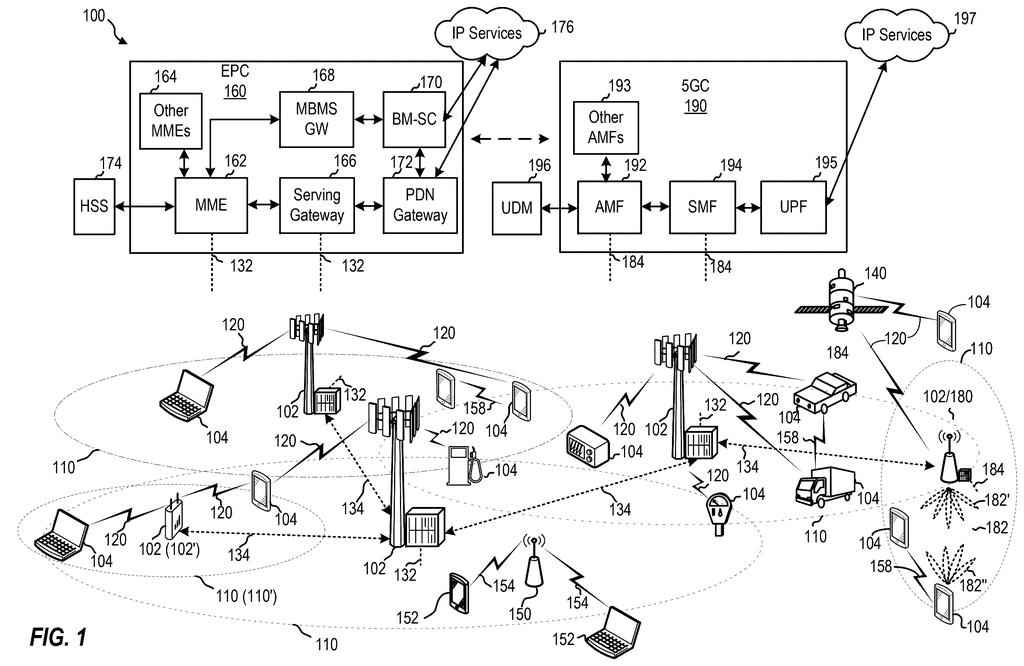
What Qualcomm's AI network self-grading actually does
Your phone is constantly deciding which cell tower gives you the best signal, and increasingly that decision is being handed to an AI model running in the network. The problem is that once the AI makes a prediction, there has been no standard way for the network to confirm whether the prediction was actually correct.
Qualcomm's patent sets up a two-track reporting system. The first track carries the AI's prediction itself, which tower to hand off your connection to and when. The second track carries a performance check: did the prediction pan out? Both reports are tied together so the network can match each prediction to its outcome.
The result is a feedback loop. The network gets a clear picture of where the AI is working well and where it is misfiring, without having to shut anything down to find out. Your connection quality benefits because bad prediction patterns can be caught and corrected faster.
receive a measurement configuration comprising one or more measurement object indications, the one or more measurement object indications indicating a first measurement object associated with radio resource management (RRM) prediction and a second measurement object associated with performance monitoring for the RRM prediction …
Translation: The system gets instructions to track both AI predictions and how well those predictions actually performed.
How the two-report system tracks and checks AI predictions
The patent describes a device-side architecture for handling two distinct measurement tasks simultaneously. A phone or modem receives a measurement configuration from the network that specifies two separate measurement objects.
- Measurement object one handles the actual radio resource management (RRM) prediction, which is the AI's forecast of which cell or frequency band a device should use next.
- Measurement object two handles performance monitoring for that prediction, tracking whether the handoff or resource assignment the AI recommended was actually beneficial.
The device then sends two corresponding reports back to the network. The second report (the performance check) includes a pointer back to the first measurement object, so the network can always link a monitoring result to the specific prediction it is evaluating. That linkage is the core novelty here: without it, the network might accumulate performance data but have no reliable way to attribute it to a particular AI prediction task.
The design fits inside existing 5G measurement and reporting frameworks, which means it does not require a new over-the-air protocol from scratch. It layers structured accountability on top of infrastructure that is already in place.
… transmitting a first report, based on the first measurement object, of a first result of the RRM prediction; and transmitting a second report, based on the second measurement object, of a second result of the performance monitoring …
Translation: It sends back one report with the AI guess and a second report grading how accurate that guess turned out to be.
What this means for AI-managed mobile networks
AI-driven network management is moving from research into commercial 5G deployments, and one of the open questions is how operators actually verify that their AI models are doing what they think they are doing. Without a formal feedback path, a poorly calibrated model could degrade handoff quality across thousands of devices before anyone notices. This patent gives operators a standardized, per-prediction audit trail.
For everyday users, the practical upside is faster course-correction when AI predictions go wrong. A bad handoff model could mean dropped calls or stalled video in a specific part of a city. A monitoring framework like this one gives the network the data it needs to fix that faster than waiting for complaint tickets to pile up.
Qualcomm's fifth filing we've tracked in AI guardrails since July builds on one on self-rated accuracy and one on reporting model errors.
The cost is concrete: every phone sends a second stream of reports on top of the first, purely to check whether the first stream was any good. In a city with millions of devices, that is a permanent tax on wireless capacity, paid whether or not the AI is misbehaving.
The trade only reads as worthwhile if the alternative is worse, and it probably is. An AI model giving bad routing decisions across an entire city, with no automated way to catch it, is a scarier failure mode than some extra uplink chatter.
The real risk is that the monitoring layer becomes shelfware: configured once, never tuned, and ignored when it flags anomalies no one has time to investigate. The architecture solves the detection problem but does nothing about the response problem, and that gap is where the value either holds or evaporates.
There are more where this came from
We read every patent application Big Tech publishes and send you the ones worth knowing. Plain English, free, every week.
The drawings
15 drawing sheets from US 2026/0304467 A1 · click any drawing to enlarge


Want this weekly breakdown for a company we don't cover? Patentlyze Pro →
Be the first to weigh in