
Qualcomm Patents a Way for 5G Devices to Report When Their AI Models Go Wrong
AI models embedded in your phone's wireless chip can drift and start making bad decisions. Qualcomm is patenting a way for the device itself to notice that drift and tell the network about it.
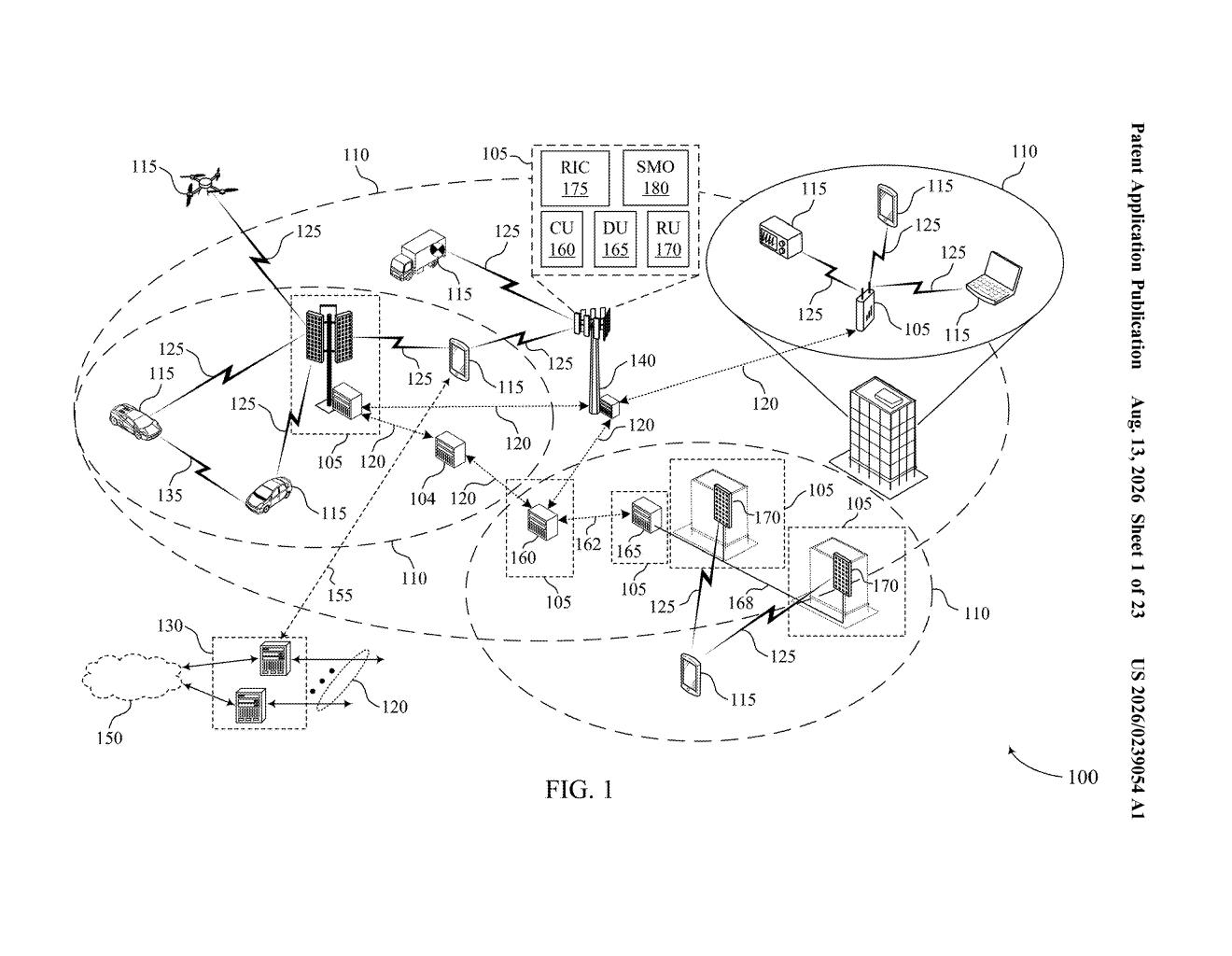
What Qualcomm's AI self-reporting system actually does
Ever wondered why your phone's signal strength seems fine on paper but calls still drop? Part of the answer is that the AI models handling wireless decisions inside your phone can go stale, trained on one set of conditions and then used in completely different ones.
Qualcomm's filing describes a system where your device keeps an eye on how well its own AI model is performing. When a specific trigger event happens, your phone sends a short report to the network summarizing how the model is doing. The network can then decide whether the model needs a tune-up or a replacement.
Think of it like a car's check-engine light, but for the AI running your wireless connection. Instead of waiting for something to visibly break, the system catches problems early and signals that maintenance is needed.
… a user equipment (UE) may receive a control signal indicating an event trigger for reporting a performance parameter associated with a machine learning model. Further, the UE may receive one or more signals indicating input data for monitoring a performance of the machine learning model by the UE.
Translation: Your phone will receive instructions on how to track and report when its internal AI makes a mistake.
How the device detects a trigger and files its AI report
The patent covers a feedback loop between a user device (your phone or a connected gadget) and the wireless network, focused specifically on machine learning model health.
Here is how the pieces fit together:
- The network sends your device a control signal that defines an event trigger, a threshold or condition that, when met, means something worth reporting has happened.
- Separately, the network sends input data the device uses to evaluate its own AI model's performance, essentially giving the device test material.
- When the trigger fires, the device transmits a performance parameter report back to the network, a compact summary of how well the model is doing against that test material.
The ML models in question are the ones that handle wireless-network tasks: predicting signal quality, managing handoffs between towers, or scheduling data packets. These models are trained in advance, but real-world conditions change, and a model trained on one city's traffic patterns may perform poorly in another environment.
Performance parameter is the patent's term for whatever metric the network cares about, such as prediction error rate or classification accuracy. The filing is deliberately broad about what that metric can be, which gives the standard flexibility to cover future model types.
What this means for AI-driven wireless networks
For everyday users, this kind of system would mean fewer silent failures in wireless performance. Today, a degraded AI model inside a 5G modem might cause slower speeds or dropped connections without any clear explanation. A self-reporting mechanism means the network operator could detect and fix the problem faster, before you notice it.
For the industry, this filing is part of a broader push to standardize how AI models embedded in wireless chipsets are managed over the air. Qualcomm's modems are inside a huge share of Android phones and laptops, so a monitoring framework it defines could become a de facto baseline for how AI model maintenance works in 5G and 6G devices. Anyone tracking new Big Tech patents in the wireless AI space will find this filing a useful marker of where chipmaker-driven AI standards are heading.
The shortest path from this patent to a shippable feature is actually quite short: everything described here is software and signaling protocol, with no new hardware required. The device already has an ML model and a radio; the patent adds a reporting layer on top of both. What has to exist first is a network-side standard defining which triggers to send and what to do with the performance reports when they arrive, which is 3GPP territory rather than something Qualcomm can engineer alone. So the real timeline is set by standards bodies at least as much as by Qualcomm's own roadmap.
There are more where this came from
We read every patent application Big Tech publishes and send you the ones worth knowing. Plain English, free, every week.
The drawings
23 drawing sheets from US 2026/0239054 A1 · click any drawing to enlarge


Want this weekly breakdown for a company we don't cover? Patentlyze Pro →
Be the first to weigh in