
Qualcomm Patents Technology to Link Distance and Direction Readings to Separate Objects
When a phone or base station bounces radio signals off multiple nearby objects at once, it gets back a jumble of distance readings and angle readings with no obvious label saying which belongs to which. Qualcomm's new patent is a systematic way to untangle that mess.
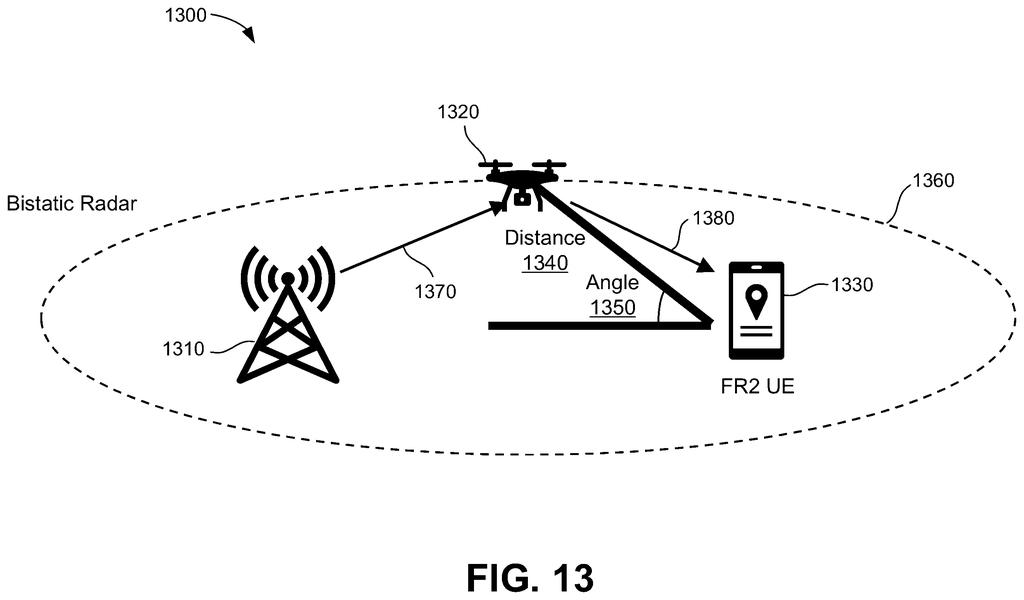
How Qualcomm links radar distance and angle to one object
Radio sensing in 5G works a lot like sonar: a device sends out a signal, waits for it to bounce back, and measures how far away things are and in what direction. The problem is that when several objects reflect signals at the same moment, the device ends up with a pile of distance numbers and a pile of angle numbers, but no built-in way to know which distance goes with which angle for each specific object.
Qualcomm's patent describes a method that assigns a matching weight to every possible distance-angle combination. Think of it like a scoring system: the device considers all the candidate pairings, scores how plausible each one is, and picks the best matches. The result is a cleaner list where each detected object gets its own confirmed distance-and-direction pair.
This matters because getting the pairing wrong means the device thinks an object is in the wrong place entirely. Fixing that is a basic prerequisite for any application that relies on accurate sensing of your surroundings.
measure a plurality of distances and a plurality of angles for a plurality of targets based on reflected sensing signals from the plurality of targets; and determine a plurality of matching weights for a plurality of distance-angle pairs …
Translation: It calculates distances and angles for multiple objects using bounced wireless signals and figures out which measurements go together.
How matching weights pair distance and angle per target
The patent covers a device (called a first network device, which could be a phone, a base station, or another wireless node) that performs multi-target sensing using reflected radio signals, similar in concept to radar.
Here is the core problem it solves: when signals bounce back from several objects simultaneously, the receiver extracts two separate lists:
- A list of distances (how far away each echo came from)
- A list of angles (the direction each echo arrived from)
These lists are not automatically paired. Three objects could produce three distances and three angles in any combination, giving nine possible pairings, most of them wrong.
Qualcomm's approach computes matching weights for every candidate distance-angle pair. A matching weight is essentially a confidence score (think of it as a probability that this distance and this angle actually belong to the same physical object). The device then resolves the full set of pairings by selecting the combination of matches that maximizes total confidence.
The patent does not specify a single fixed algorithm for computing those weights, leaving room for implementations based on signal characteristics, prior knowledge of typical object positions, or statistical models. The key protected idea is the structured pairing process itself.
Each distance of the plurality of distances can be matched with a respective angle of the plurality of angles as belonging to a respective target of the plurality of targets based on the plurality of matching weights.
Translation: The system uses calculated weights to successfully link each specific distance measurement to the correct object's angle.
What cleaner radar sensing means for 5G devices
Accurate sensing in 5G and beyond is expected to underpin features like detecting pedestrians near vehicles, monitoring occupancy in rooms, and tracking objects without cameras. All of those applications break down immediately if the device cannot correctly assign which distance reading belongs to which detected object. Qualcomm's method is a foundational step in making that sensing reliable when more than one object is present at the same time.
For everyday users, the practical payoff would show up indirectly: a phone or home router that uses radio sensing to detect how many people are in a room, or a vehicle system that correctly tracks several pedestrians at once, needs exactly this kind of clean data before any higher-level logic can run. Qualcomm's bet on integrated sensing and communications shapes a lot of its recent 5G filings, and this patent slots directly into that effort.
Qualcomm's 464th filing in our Qualcomm coverage since May adds to a run that includes a battery-saving 3D video sync idea and an AI tower-grading application.
The system works by weighing every possible pairing between distance readings and angle readings, then picking the best match. That sounds orderly until the scene gets crowded: more objects mean exponentially more combinations to evaluate, and the patent never specifies how those weights are actually calculated, leaving the hardest problem to whoever builds the real product.
That gap has a real cost. In a busy parking lot with dozens of vehicles, a mismatched pairing could assign a distance reading to the wrong object entirely, and whatever decision depends on that reading inherits the error silently.
The breadth is a deliberate legal choice, and it buys flexibility now at the price of reliability later. The trade makes sense for staking out territory in a new area, but it lands closer to a promising framework than a finished solution.
There are more where this came from
We read every patent application Big Tech publishes and send you the ones worth knowing. Plain English, free, every week.
The drawings
22 drawing sheets from US 2026/0304379 A1 · click any drawing to enlarge


Want this weekly breakdown for a company we don't cover? Patentlyze Pro →
Be the first to weigh in