
Google Patents a Way to Teach AI How Light Changes a Photo
Changing the lighting in a photo without making it look fake is one of the hardest things AI image editors try to do. Google's new patent describes a way to train that kind of AI more efficiently, by having a computer generate its own practice examples instead of collecting thousands of real photos taken under different lights.
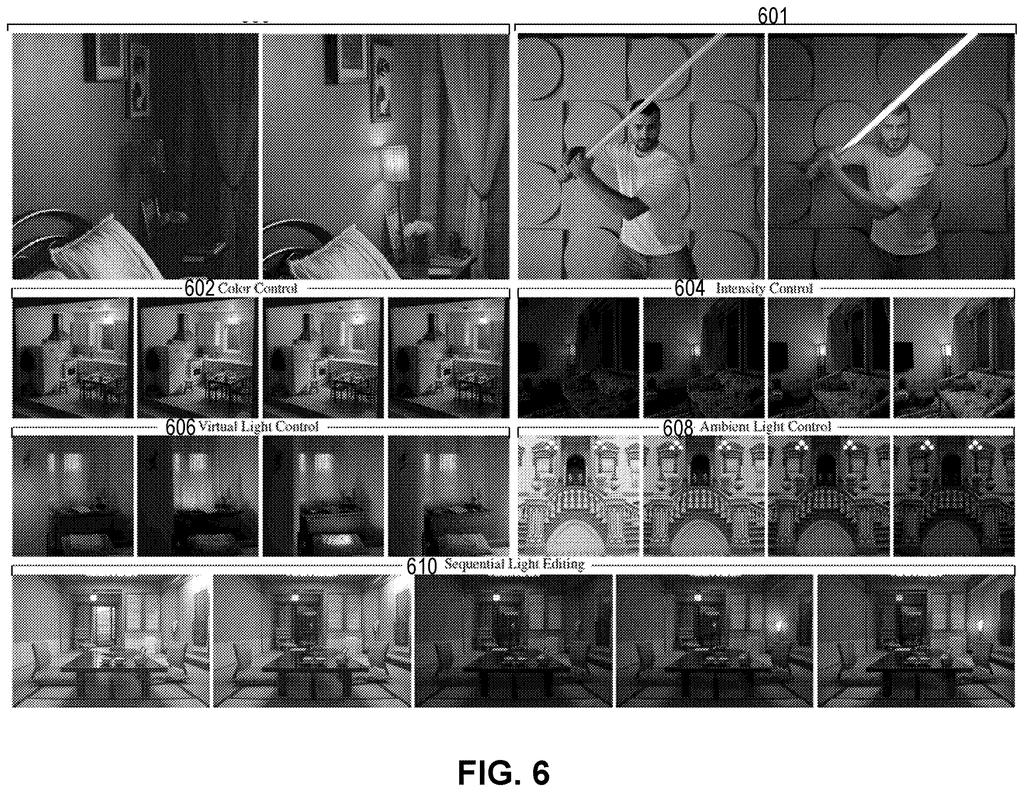
What Google's lighting-aware photo AI actually does
Ever tried to edit a photo and wished you could swap harsh midday sun for soft golden-hour light? That kind of edit is deceptively hard, because light doesn't just change brightness. It shifts shadows, colors, and the texture of everything in the frame.
To teach an AI to do this well, you normally need huge libraries of the same scene photographed under many different lighting conditions. That's expensive and slow to collect. Google's patent describes a shortcut: start with a smaller set of paired photos (same scene, two different light states), then use software to generate many more variations of those scenes at intermediate lighting stages. The computer fills in the gaps, building a much larger training set from a modest starting point.
The result is an AI model that gets far more practice data without anyone having to set up and photograph thousands of real-world scenes. For you, the end-user, that could translate into photo tools that handle lighting edits more convincingly.
obtaining a plurality of training examples, each training example comprising a respective first image depicting a corresponding scene when a target light source is in a first state and a respective second image depicting the corresponding scene when the target light source is in a second state …
Translation: The system starts with pairs of photos showing the same scene under two different lighting conditions.
How Google multiplies paired photos into training data
The system starts with a collection of training pairs: two photos of the same scene where the only difference is the state of a specific light source. Think of a lamp that's fully on versus fully off, or a window with bright sunlight versus overcast sky.
For each pair, the system generates a series of modified images showing that same scene at intermediate lighting states, essentially filling in a spectrum between the two original photos. These synthetic in-between images are produced algorithmically, not by physically re-photographing anything.
The patent then describes assembling an augmented training dataset from these generated images. Any two of the modified images for a given scene can be combined into a new training example, because they still represent the same scene under different lighting conditions. This multiplies the available training pairs many times over from the original set.
The augmented dataset is then used to train an image generation model (the AI that will ultimately perform lighting edits on new photos). Because the model sees a wider range of lighting transitions during training, it learns more generalized rules about how light behaves across a scene, rather than memorizing a narrow set of examples.
… generating, for each training example, a plurality of respective modified images that each depict the corresponding scene when the target light source is in a respective modified state …
Translation: It then creates extra versions of the photos simulating various other lighting adjustments.
What this means for AI photo editing tools
Training AI image models is bottlenecked by data. Collecting real paired photos of the same scene under different lighting conditions requires controlled setups, time, and significant cost. A system that synthetically expands that dataset could make high-quality lighting-edit AI much cheaper to build, which matters for both Google's own products and the broader field.
For everyday users, better training data means more convincing edits. Lighting changes that currently look obviously artificial could become indistinguishable from a real reshoot. Google already offers AI photo editing inside Google Photos, and Google has been filing around AI image editing and generation suggests this kind of training-data work is a foundational layer for those tools going forward.
Google's 62nd filing we've tracked since May in our AI photo editing watchlist adds to earlier work like their facial expression edits and tap-to-reframe camera applications.
The core cost here is simple: Google is teaching its image software to understand lighting by showing it artificial examples instead of real ones. That works if the artificial examples are accurate, but if the process that creates them gets shadows or color slightly wrong, the model learns those mistakes thousands of times over.
A system trained on subtly incorrect lighting could perform worse on real photos than one trained on a smaller set of accurate images. The entire trade depends on how precise the intermediate step is, and that step is exactly what the patent leaves undetailed.
As a method, using generated examples to fill gaps in training data is reasonable and the problem it targets, teaching software to predict how a room looks with the lamp off, is a practical one. But the value lives in an execution detail Google hasn't shown yet.
There are more where this came from
We read every patent application Big Tech publishes and send you the ones worth knowing. Plain English, free, every week.
The drawings
6 drawing sheets from US 2026/0301382 A1 · click any drawing to enlarge


Want this weekly breakdown for a company we don't cover? Patentlyze Pro →
Be the first to weigh in