
Nvidia Patents a Method to Train AI Systems on Multiple Image Types at Once
Training an AI to recognize objects usually means feeding it millions of labeled photos and waiting. Nvidia's new patent describes a shortcut: use one neural network to teach another, running both in parallel so each one gets smarter faster.
How Nvidia's image-recognition AI trains itself
A security camera stares at an empty parking lot all night. When a car finally pulls in, the camera's AI needs to tell that car apart from a pedestrian, a shopping cart, or a stray dog. Teaching it to do that reliably is expensive and slow.
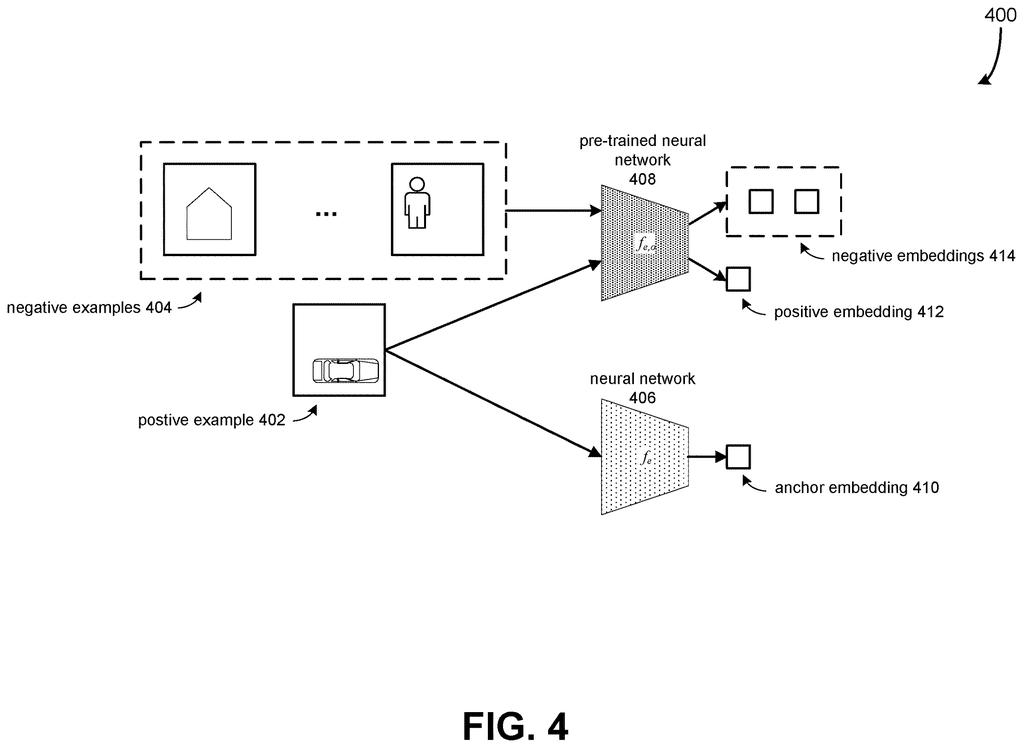
Nvidia's patent describes a training method where a set of pre-trained AI models, each already good at recognizing certain object types, guides a new AI as it learns to spot a different object type. The experienced models serve as coaches, and the student model learns by comparing its guesses against theirs, with all of this happening at the same time across multiple object categories.
The result is a faster, cheaper way to train image-recognition AI without needing humans to label every single training photo from scratch. You benefit any time an AI camera, a self-driving system, or a photo app gets more accurate without taking months longer to build.
apply one or more neural networks to input data comprising one or more images to detect one or more instances of an object type, wherein the one or more neural networks are configured to distinguish the one or more instances of the object type from one or more other object types …
Translation: The system uses neural networks to spot specific objects in images while ignoring other things.
How the two-network training loop actually runs
The patent describes a processor-level system built around two sets of neural networks working together. One set, the pre-trained networks, already know how to identify certain categories of objects (think: pedestrians, traffic signs). The second set, the networks being trained, are learning to identify a different category.
During training, the pre-trained networks look at the same images and output their judgments. Those outputs become a reference signal, a kind of answer key, that the new networks use to calibrate themselves. The key word in the claim is "in parallel": rather than training one object category at a time sequentially, multiple categories are handled simultaneously, cutting down total training time.
Once training is finished, the system moves to inference (actually using the AI on real images). The claim describes processors that:
- Feed input images into the trained network
- Detect specific instances of a target object type
- Distinguish that type from all other object types it has learned about
- Return a detection result listing what it found
The broader mechanism draws on the idea that knowledge about one object type can inform learning about another, a concept sometimes called cross-category transfer, meaning the AI is not starting from zero each time it learns something new.
… one or more second neural networks are used to train one or more first neural networks based, at least in part, on a first object type in one or more images and a second object type in the one or more images, in parallel.
Translation: Secondary AI models help train primary models to recognize multiple types of objects at the exact same time.
What this means for AI vision in cameras and cars
For anyone building AI that needs to see and understand the world, training costs are a real bottleneck. Labeling images by hand and running training cycles for each object class separately takes time and money. A method that lets multiple classes train in parallel, guided by networks that already know adjacent categories, would meaningfully reduce that overhead.
The practical applications sit right in Nvidia's core markets: self-driving vehicles need to recognize dozens of object types at once, and security and surveillance systems do the same. If this training approach scales, it could mean more accurate AI vision systems arriving faster and at lower cost, which eventually shows up in the products you use.
Nvidia's 13th filing we've tracked since July in the AI models working in teams area follows one routing questions to specialist AIs and one routing audio to processors.
Claim 1 covers any processor running a network that was trained by using other already-trained networks as guides, across more than one category of objects, at the same time. That combination, teacher networks plus multiple object types plus parallel training, is the full scope of the claim, and nothing in the text requires a specific architecture or a particular method beyond that basic structure.
In practice, that perimeter is wide. A developer building a system to recognize pedestrians and vehicles together, using pre-trained reference models to supervise the learning, could fall squarely inside it.
The parallel, multi-category requirement is the narrowing detail that prevents this from reading on all supervised machine learning at once. Whether that specific combination has enough distance from prior research to survive scrutiny will decide whether this claim becomes a real enforcement tool or sits on a shelf.
There are more where this came from
We read every patent application Big Tech publishes and send you the ones worth knowing. Plain English, free, every week.
The drawings
57 drawing sheets from US 2026/0300436 A1 · click any drawing to enlarge


Want this weekly breakdown for a company we don't cover? Patentlyze Pro →
Be the first to weigh in