Get the newsletter
Nvidia · AI / ML · Filed Jun 3, 2026 · USPTO published Oct 1, 2026 · Oct 1 release

Nvidia Patents a Method to Train AI Systems on Multiple Image Types at Once

Training an AI to recognize objects usually means feeding it millions of labeled photos and waiting. Nvidia's new patent describes a shortcut: use one neural network to teach another, running both in parallel so each one gets smarter faster.
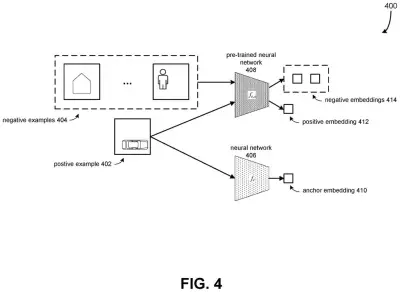
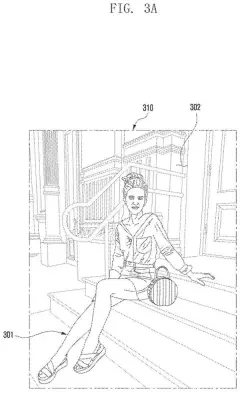
A positive example image of a car and negative example images of a house and a person are processed by neural networks to create embeddings. Drawing from patent filing US 2026/0300436 A1.
A positive example image of a car and negative example images of a house and a person are processed by neural networks to create embeddings.All 57 drawings ↓
Publication number
US 2026/0300436 A1(US20260300436A1)
Applicant
NVIDIA Corporation
Filed · Published
Jun 3, 2026 · Oct 1, 2026
Inventors
Zhiding Yu, Wuyang Chen, Shalini De Mello, Sifei Liu, Jose Manuel Alvarez Lopez, Anima Anandkumar
Status when we published
Waiting for an examiner
Document
20 claims
US classification
382/157
Parent application
Continuation of 17/127,680 (filed Dec 18, 2020)(17127680)

How Nvidia's image-recognition AI trains itself

A security camera stares at an empty parking lot all night. When a car finally pulls in, the camera's AI needs to tell that car apart from a pedestrian, a shopping cart, or a stray dog. Teaching it to do that reliably is expensive and slow.

Nvidia's patent describes a training method where a set of pre-trained AI models, each already good at recognizing certain object types, guides a new AI as it learns to spot a different object type. The experienced models serve as coaches, and the student model learns by comparing its guesses against theirs, with all of this happening at the same time across multiple object categories.

The result is a faster, cheaper way to train image-recognition AI without needing humans to label every single training photo from scratch. You benefit any time an AI camera, a self-driving system, or a photo app gets more accurate without taking months longer to build.

From the filing · CLAIM 1
apply one or more neural networks to input data comprising one or more images to detect one or more instances of an object type, wherein the one or more neural networks are configured to distinguish the one or more instances of the object type from one or more other object types …

Translation: The system uses neural networks to spot specific objects in images while ignoring other things.

How the two-network training loop actually runs

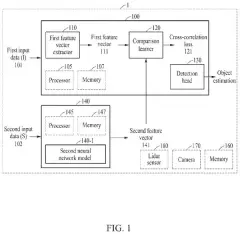
The patent describes a processor-level system built around two sets of neural networks working together. One set, the pre-trained networks, already know how to identify certain categories of objects (think: pedestrians, traffic signs). The second set, the networks being trained, are learning to identify a different category.

During training, the pre-trained networks look at the same images and output their judgments. Those outputs become a reference signal, a kind of answer key, that the new networks use to calibrate themselves. The key word in the claim is "in parallel": rather than training one object category at a time sequentially, multiple categories are handled simultaneously, cutting down total training time.

Once training is finished, the system moves to inference (actually using the AI on real images). The claim describes processors that:

  • Feed input images into the trained network
  • Detect specific instances of a target object type
  • Distinguish that type from all other object types it has learned about
  • Return a detection result listing what it found

The broader mechanism draws on the idea that knowledge about one object type can inform learning about another, a concept sometimes called cross-category transfer, meaning the AI is not starting from zero each time it learns something new.

From the filing · THE ABSTRACT
… one or more second neural networks are used to train one or more first neural networks based, at least in part, on a first object type in one or more images and a second object type in the one or more images, in parallel.

Translation: Secondary AI models help train primary models to recognize multiple types of objects at the exact same time.

What this means for AI vision in cameras and cars

For anyone building AI that needs to see and understand the world, training costs are a real bottleneck. Labeling images by hand and running training cycles for each object class separately takes time and money. A method that lets multiple classes train in parallel, guided by networks that already know adjacent categories, would meaningfully reduce that overhead.

The practical applications sit right in Nvidia's core markets: self-driving vehicles need to recognize dozens of object types at once, and security and surveillance systems do the same. If this training approach scales, it could mean more accurate AI vision systems arriving faster and at lower cost, which eventually shows up in the products you use.

Nvidia's 13th filing we've tracked since July in the AI models working in teams area follows one routing questions to specialist AIs and one routing audio to processors.

Source: US 2026/0300436 A1 at the USPTO (PDF). Full patent text and figures are in the official publication.

Get our take in your Top Stories

Liked this breakdown? Add Patentlyze as a preferred source on Google, and our plain-English take shows up more often in your Top Stories the next time Nvidia patent news breaks.

There are more where this came from

We read the new patents from Big Tech, carmakers and more and send you the ones worth knowing. Plain English, free, every week.

The drawings · 57 sheets

57 drawing sheets from US 2026/0300436 A1 · click any drawing to enlarge

Neural network training with examples., drawing sheet 1 from US 2026/0300436 A1
Sheet 1 Neural network training with examples.
Image processing for object detection., drawing sheet 2 from US 2026/0300436 A1
Sheet 2 Image processing for object detection.
Steps for training a neural network., drawing sheet 3 from US 2026/0300436 A1
Sheet 3 Steps for training a neural network.
Neural network processing image examples., drawing sheet 4 from US 2026/0300436 A1
Sheet 4 Neural network processing image examples.
Initial embedding space for images., drawing sheet 5 from US 2026/0300436 A1
Sheet 5 Initial embedding space for images.
Adjusted embedding space for images., drawing sheet 6 from US 2026/0300436 A1
Sheet 6 Adjusted embedding space for images.
Steps for training a neural network., drawing sheet 7 from US 2026/0300436 A1
Sheet 7 Steps for training a neural network.
Training hardware structure components., drawing sheet 8 from US 2026/0300436 A1
Sheet 8 Training hardware structure components.
Show the other 49 sheets
Nvidia Patents a Method to Train AI Systems on Multiple Image Types at Once patent drawing, sheet 9
Sheet 9
Nvidia Patents a Method to Train AI Systems on Multiple Image Types at Once patent drawing, sheet 10
Sheet 10
Nvidia Patents a Method to Train AI Systems on Multiple Image Types at Once patent drawing, sheet 11
Sheet 11
Nvidia Patents a Method to Train AI Systems on Multiple Image Types at Once patent drawing, sheet 12
Sheet 12
Nvidia Patents a Method to Train AI Systems on Multiple Image Types at Once patent drawing, sheet 13
Sheet 13
Nvidia Patents a Method to Train AI Systems on Multiple Image Types at Once patent drawing, sheet 14
Sheet 14
Nvidia Patents a Method to Train AI Systems on Multiple Image Types at Once patent drawing, sheet 15
Sheet 15
Nvidia Patents a Method to Train AI Systems on Multiple Image Types at Once patent drawing, sheet 16
Sheet 16
Nvidia Patents a Method to Train AI Systems on Multiple Image Types at Once patent drawing, sheet 17
Sheet 17
Nvidia Patents a Method to Train AI Systems on Multiple Image Types at Once patent drawing, sheet 18
Sheet 18
Nvidia Patents a Method to Train AI Systems on Multiple Image Types at Once patent drawing, sheet 19
Sheet 19
Nvidia Patents a Method to Train AI Systems on Multiple Image Types at Once patent drawing, sheet 20
Sheet 20
Nvidia Patents a Method to Train AI Systems on Multiple Image Types at Once patent drawing, sheet 21
Sheet 21
Nvidia Patents a Method to Train AI Systems on Multiple Image Types at Once patent drawing, sheet 22
Sheet 22
Nvidia Patents a Method to Train AI Systems on Multiple Image Types at Once patent drawing, sheet 23
Sheet 23
Nvidia Patents a Method to Train AI Systems on Multiple Image Types at Once patent drawing, sheet 24
Sheet 24
Nvidia Patents a Method to Train AI Systems on Multiple Image Types at Once patent drawing, sheet 25
Sheet 25
Nvidia Patents a Method to Train AI Systems on Multiple Image Types at Once patent drawing, sheet 26
Sheet 26
Nvidia Patents a Method to Train AI Systems on Multiple Image Types at Once patent drawing, sheet 27
Sheet 27
Nvidia Patents a Method to Train AI Systems on Multiple Image Types at Once patent drawing, sheet 28
Sheet 28
Nvidia Patents a Method to Train AI Systems on Multiple Image Types at Once patent drawing, sheet 29
Sheet 29
Nvidia Patents a Method to Train AI Systems on Multiple Image Types at Once patent drawing, sheet 30
Sheet 30
Nvidia Patents a Method to Train AI Systems on Multiple Image Types at Once patent drawing, sheet 31
Sheet 31
Nvidia Patents a Method to Train AI Systems on Multiple Image Types at Once patent drawing, sheet 32
Sheet 32
Nvidia Patents a Method to Train AI Systems on Multiple Image Types at Once patent drawing, sheet 33
Sheet 33
Nvidia Patents a Method to Train AI Systems on Multiple Image Types at Once patent drawing, sheet 34
Sheet 34
Nvidia Patents a Method to Train AI Systems on Multiple Image Types at Once patent drawing, sheet 35
Sheet 35
Nvidia Patents a Method to Train AI Systems on Multiple Image Types at Once patent drawing, sheet 36
Sheet 36
Nvidia Patents a Method to Train AI Systems on Multiple Image Types at Once patent drawing, sheet 37
Sheet 37
Nvidia Patents a Method to Train AI Systems on Multiple Image Types at Once patent drawing, sheet 38
Sheet 38
Nvidia Patents a Method to Train AI Systems on Multiple Image Types at Once patent drawing, sheet 39
Sheet 39
Nvidia Patents a Method to Train AI Systems on Multiple Image Types at Once patent drawing, sheet 40
Sheet 40
Nvidia Patents a Method to Train AI Systems on Multiple Image Types at Once patent drawing, sheet 41
Sheet 41
Nvidia Patents a Method to Train AI Systems on Multiple Image Types at Once patent drawing, sheet 42
Sheet 42
Nvidia Patents a Method to Train AI Systems on Multiple Image Types at Once patent drawing, sheet 43
Sheet 43
Nvidia Patents a Method to Train AI Systems on Multiple Image Types at Once patent drawing, sheet 44
Sheet 44
Nvidia Patents a Method to Train AI Systems on Multiple Image Types at Once patent drawing, sheet 45
Sheet 45
Nvidia Patents a Method to Train AI Systems on Multiple Image Types at Once patent drawing, sheet 46
Sheet 46
Nvidia Patents a Method to Train AI Systems on Multiple Image Types at Once patent drawing, sheet 47
Sheet 47
Nvidia Patents a Method to Train AI Systems on Multiple Image Types at Once patent drawing, sheet 48
Sheet 48
Nvidia Patents a Method to Train AI Systems on Multiple Image Types at Once patent drawing, sheet 49
Sheet 49
Nvidia Patents a Method to Train AI Systems on Multiple Image Types at Once patent drawing, sheet 50
Sheet 50
Nvidia Patents a Method to Train AI Systems on Multiple Image Types at Once patent drawing, sheet 51
Sheet 51
Nvidia Patents a Method to Train AI Systems on Multiple Image Types at Once patent drawing, sheet 52
Sheet 52
Nvidia Patents a Method to Train AI Systems on Multiple Image Types at Once patent drawing, sheet 53
Sheet 53
Nvidia Patents a Method to Train AI Systems on Multiple Image Types at Once patent drawing, sheet 54
Sheet 54
Nvidia Patents a Method to Train AI Systems on Multiple Image Types at Once patent drawing, sheet 55
Sheet 55
Nvidia Patents a Method to Train AI Systems on Multiple Image Types at Once patent drawing, sheet 56
Sheet 56
Nvidia Patents a Method to Train AI Systems on Multiple Image Types at Once patent drawing, sheet 57
Sheet 57
Patent filing page

Watchlists this filing belongs to

All watchlists →
Reader comments

No comments yet

Start the discussion

Real name or a handle, either is fine. Comments are read by a person before they appear, so allow a little time. Keep it about the filing.