
Sony Patents a Light-Filtering Method for Reading Surface Texture on 3D Objects
Getting a digital object to look truly realistic means capturing not just shape and color, but how rough or smooth the surface is. Sony has filed a patent for a camera-based system that does exactly that, using polarized light to measure surface texture automatically.
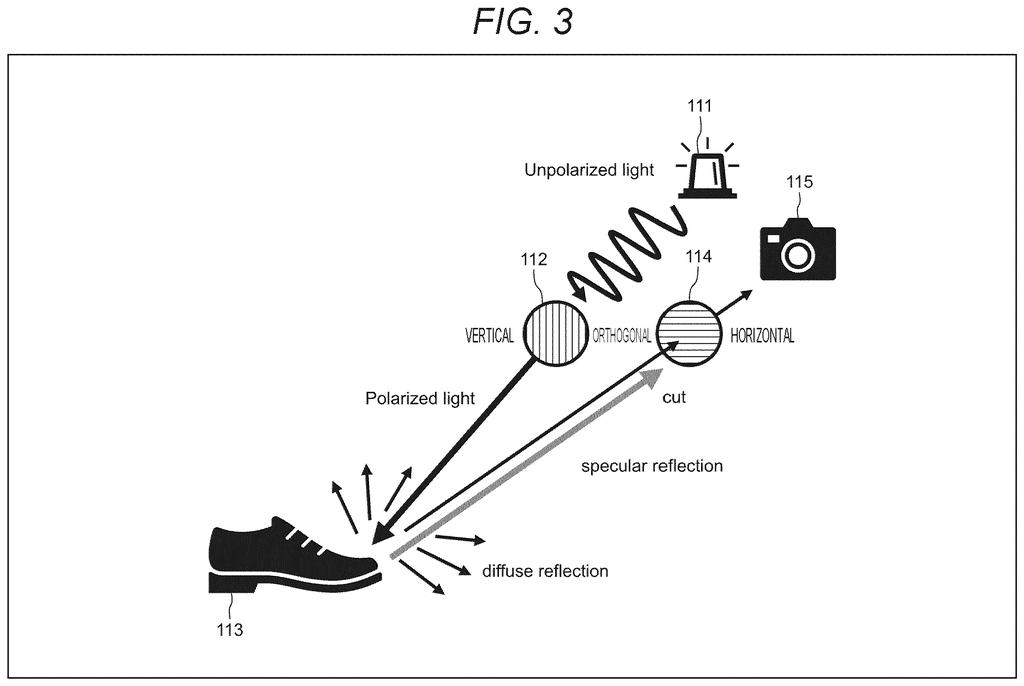
How Sony's dual-photo trick captures surface texture
You're a 3D artist trying to recreate a scuffed leather jacket or a scratched metal panel in a game or film. The hardest part isn't the shape or the color. It's capturing that micro-level texture that tells the eye whether something looks rough or polished.
Sony's patented system tackles this by taking two photos of the same object using polarized light filters, similar to the filters in polarized sunglasses. One photo captures light that bounces directly off the surface; the other captures light that has scattered inside the material. By comparing the two, the system can automatically work out how rough each part of the surface is and turn that into a detailed roughness map that 3D software can use directly.
The result is a way to digitize real-world surface texture from a photo session rather than painstaking manual artistry. For anyone building virtual worlds, product visualizations, or digital twins of physical objects, that's a meaningful time saver.
… roughness map generation unit that executes roughness estimation of estimating roughness of a surface of a 3D object using a cross-polarization image and a parallel-polarization image …
Translation: This part analyzes two kinds of filtered photos to map out how bumpy a three dimensional object is.
How cross- and parallel-polarization photos combine into a texture map
The system takes two distinct photographs of a physical 3D object under controlled lighting. Both shots use the same polarized light source, but a filter in front of the camera is rotated between shots.
- Cross-polarization image: The camera's filter is set perpendicular to the light source's filter. This blocks light that reflected straight off the surface, capturing only the light that entered the material and scattered back out, which reveals the object's base color and subsurface properties.
- Parallel-polarization image: The camera's filter matches the light source's filter. This captures both surface-reflected and subsurface-scattered light, giving a complete picture including specular highlights (glossy reflections).
A roughness map generation unit then compares the two images. The ratio of direct surface reflection to total reflection in each pixel is a reliable indicator of how rough that part of the surface is: rough surfaces scatter light more randomly, smooth ones reflect it more sharply. The output is a roughness map, a grayscale image where each pixel's brightness encodes how rough the corresponding point on the 3D object's surface is.
This map is a standard input for physically-based rendering (PBR) pipelines, the industry method for making digital materials look convincingly real under different lighting conditions. Capturing it from photography rather than manual painting removes a significant bottleneck in 3D asset production.
What this means for 3D graphics and digital materials
Physically accurate surface textures are the difference between a 3D object that looks like a prop and one that looks real. Today, creating a high-quality roughness map usually means a skilled artist painting it by hand or running expensive dedicated scanning hardware. A camera-based approach using polarized filters is far more accessible.
If Sony builds this into a product, it could speed up digital asset creation for industries ranging from film and gaming to e-commerce product visualization and architectural rendering. For digital twin applications, where real-world objects need accurate virtual counterparts, automating the texture-capture step removes a meaningful barrier.
Sony's 76th camera application we've tracked since May builds on earlier work like one covering moiré on LED sets and one on AI enhancement in harsh light, part of a growing run of camera patent filings from the company.
Claim 1 is fairly narrow as computer vision patents go. It is tied specifically to the two-photo, dual-polarization setup and the generation of a roughness map aligned to the parallel-polarization image. That specificity is a double-edged sword: it makes the claim defensible, but it also means anyone using a different light source arrangement, a single-shot polarization camera, or a non-photographic scanning method can work around it without much trouble.
The practical territory this covers is a specific slice of 3D scanning workflow: using ordinary polarized photography to automate roughness capture. That is a real and useful problem. But the technique itself, comparing cross- and parallel-polarized images to infer surface roughness, is well-established in computational photography research, which may give patent examiners something to think about.
Sony has been filing around computational imaging and 3D capture for several years, and this fits that pattern. Whether this particular claim survives prior-art scrutiny is the real question, because the underlying physics it relies on has been in the academic literature for a while.
There are more where this came from
We read every patent application Big Tech publishes and send you the ones worth knowing. Plain English, free, every week.
The drawings
23 drawing sheets from US 2026/0301302 A1 · click any drawing to enlarge


Want this weekly breakdown for a company we don't cover? Patentlyze Pro →
Be the first to weigh in