
Sony Patents a Camera System That Looks Up Settings to Prevent Moiré on LED Film Sets
Anyone who has filmed in front of an LED video wall knows the nightmare: a flickering, rippling interference pattern called moiré that ruins the shot. Sony's latest patent describes a way to skip the trial-and-error fix entirely.
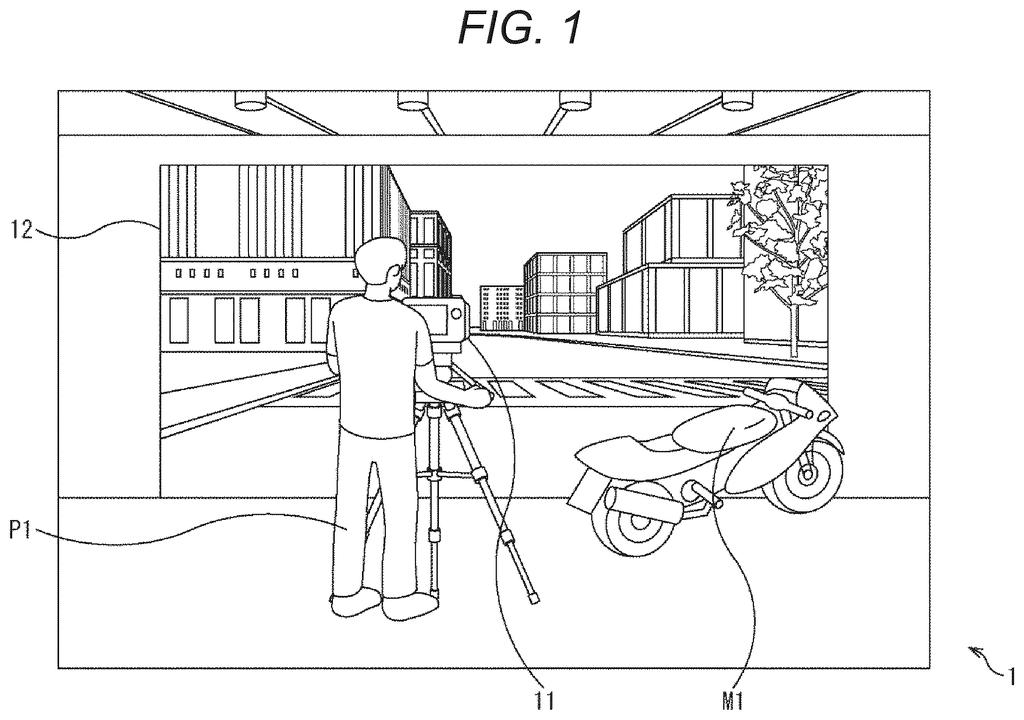
How Sony's moiré fix works on LED video walls
A film crew points a camera at a giant LED wall displaying a sunset backdrop. Almost immediately, a strange rippling grid appears in the footage, even though the set looks fine to the naked eye. That visual glitch is moiré, and it can cost hours of reshoots to eliminate.
Sony's patent describes a system that does the hunting for you. Instead of a camera operator manually tweaking shutter speed, frame rate, and other settings until the pattern disappears, the camera checks a stored database of known good settings. That database pairs specific camera parameters with a record of whether they caused moiré or not. The camera picks a setting already confirmed to produce a clean image.
The target use case is virtual production, the technique used on shows like The Mandalorian where actors perform in front of floor-to-ceiling LED walls instead of on location. Getting the camera and the wall to cooperate visually is one of the central technical headaches of that workflow, and Sony is pitching this as an automated shortcut.
… an imaging system used for virtual production in which a subject is imaged with an image displayed on an LED display as a background …
Translation: This technology works with virtual production stages that use massive LED walls instead of green screens.
How the database lookup sets camera parameters
The core of the patent is an imaging control unit that queries a database before a shot begins. The database stores reference imaging parameters (settings like shutter angle, frame rate, and sync timing that control how the camera captures light) alongside a flag for each entry indicating whether that combination produced moiré when filming a specific display.
Moiré happens when two repeating patterns, such as the pixel grid of an LED panel and the sensor grid of a camera, interact at slightly mismatched frequencies. The result is a third, unwanted pattern that neither grid actually contains. It is the same effect you see when you photograph a window screen.
Instead of detecting moiré in real time and correcting on the fly, this system is essentially lookup-first: find a parameter set already known to be clean, apply it, and skip the problem before it starts. The database could be built up over time from prior shoots or from manufacturer testing on specific LED wall models.
The patent places this squarely in the context of virtual production stages, where a camera images a subject with an LED display as the background. That context matters because the LED wall is always on and always displaying content, making moiré an ever-present risk rather than an occasional nuisance.
What this means for LED-volume film productions
Virtual production stages are expensive. Time spent diagnosing and correcting moiré between takes is money lost. If a camera can arrive at a known-good setting automatically, even non-specialist operators can shoot cleanly in front of LED walls without leaning on a dedicated technical supervisor to sort out the interference.
That said, the practical benefit depends entirely on how complete and accurate the database is. A lookup table only helps if it already contains an entry for your specific LED wall model, your specific camera, and your intended frame rate. For productions using unusual or newly released display hardware, the database may have gaps, and the system would fall back to manual guesswork. The concept is sound; the execution lives or dies in the data.
Sony's latest camera patent application is the 75th we've tracked since May in our Camera patent coverage, a series that includes one on AI in harsh light and one on light through surfaces.
Claim 1 covers any device that consults a stored table of camera settings, finds an entry marked as producing no visual interference pattern on screen, and automatically applies it. The claim does not require a specific screen type, a live detection process, or any real-time adjustment. The entire protected act is the lookup and the application.
That scope is wide enough to reach well beyond film studios. Any camera control software, on any platform, that pulls a recommended setting from a database to avoid screen flicker or grid patterns could fall inside this claim.
Whether the claim survives challenge depends on one question examiners will press hard: does saving settings that worked before and reusing them constitute a protectable invention? The answer shapes how much commercial leverage Sony actually holds here.
There are more where this came from
We read every patent application Big Tech publishes and send you the ones worth knowing. Plain English, free, every week.
The drawings
15 drawing sheets from US 2026/0303960 A1 · click any drawing to enlarge


Want this weekly breakdown for a company we don't cover? Patentlyze Pro →
Be the first to weigh in