
Samsung Patents a System That Decides Where Your Device Should Run Its AI Tasks
Not every AI task is worth doing on the device in your hand. Samsung has filed a patent for a system that reads the demands of an AI job and automatically decides whether to handle it locally or ship it off to another device better suited for the work.
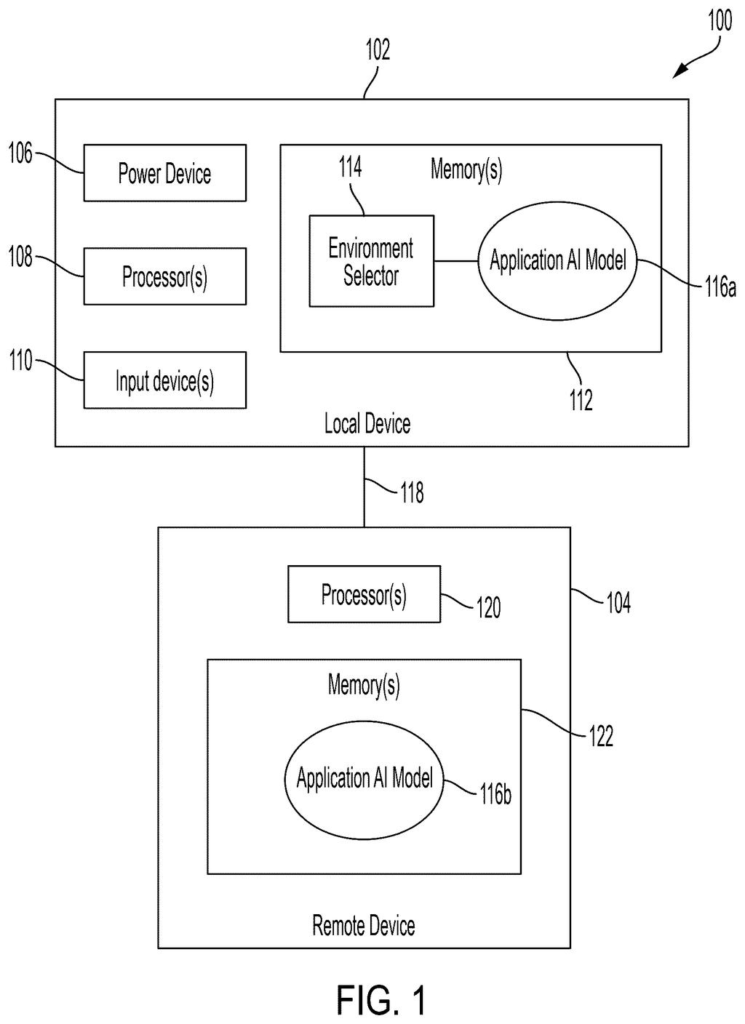
How Samsung's AI task-routing idea would work for you
A smartwatch asks its AI assistant to transcribe a long meeting recording. The watch is too small to do it well, so the work gets passed to the phone in your pocket, or the server in your home. That hand-off, done automatically, is exactly what this Samsung patent describes.
Samsung's idea is a routing layer that sits between your request and the hardware that actually does the work. Each time you ask a device to run an AI task, the system checks what that task needs, then picks the best available device from everything connected to your network. If your phone can handle it, great. If it can't, or if another device is much better suited, the request gets forwarded automatically, without you having to do anything.
The goal is to make AI feel fast and capable on any device, even the ones with modest hardware, by pulling in compute from nearby devices that have more to spare.
… selecting at least one computing environment from one or more computing environments for performing the AI task based on a set of characteristics associated with the AI task …
Translation: The system figures out where the AI work should happen based on the job's traits.
How the system picks a device for each AI job
The patent describes a method where a device receives a request to run an AI task and then evaluates a set of characteristics associated with that task before deciding where to run it. Those characteristics likely include things like how much processing power the task needs, how quickly it must finish, and whether sensitive data should stay on the local device.
If the task can be handled on the device making the request, the system runs it there. If the characteristics suggest a different computing environment would be more appropriate, the device transmits a command to a second device or server that is connected to it, telling that remote environment to take over the job.
The claim is written around multiple computing environments, which means the routing logic could choose from several candidates: a phone, a home server, a cloud endpoint, a wearable, or any other connected device. The selecting step happens based on matching task requirements to what each environment can offer.
The inventors are listed under Samsung Electronics, and the patent sits in the class covering task distribution and scheduling (USPC 718/102), which covers software-level decisions about where computation runs, not new chip designs.
… transmitting by the first device to a second device communicatively coupled to the first device, information on the second AI task to signal the second device to perform the second AI task …
Translation: Your primary device passes the heavy AI task over to a connected secondary device to handle.
What on-device vs. Offloaded AI means for your gadgets
As Samsung ships AI features across a wide range of devices from budget phones to high-end tablets and earbuds, the gap between what those devices can do on their own is enormous. A routing system like this could let even a low-end device feel capable by borrowing horsepower from a stronger nearby device, without the user needing to think about it.
For you, the practical payoff would be fewer moments where your phone or watch apologizes that it can't run a feature. The trickier question is latency: routing a task to another device takes time, and if that round trip is slower than just doing the task locally, the whole thing falls apart. How Samsung resolves that trade-off will matter more than the routing concept itself.
Samsung's tenth filing since July in our AI teams watchlist adds to a run that includes two AIs spotting objects and teams cleaning wireless signals.
The patent describes a purely software decision: when you make an AI request, your phone figures out whether to handle it locally or hand it off to another nearby device. No new chips or hardware are required, which means the main building blocks, connected devices and on-device AI, already exist in Samsung's current lineup.
The gap between this patent and a real feature is the coordination work underneath. Devices need to share a common language for tasks, the handoff has to happen fast enough that you never notice it, and the system has to behave gracefully when the "better" device is off or occupied. None of that engineering is addressed here.
So this reads as a directional stake in the ground rather than a blueprint for something shipping soon. The routing idea is sound and the hardware story is simple, but a patent that stops at the selection step leaves most of the actual work undescribed.
There are more where this came from
We read every patent application Big Tech publishes and send you the ones worth knowing. Plain English, free, every week.
The drawings
6 drawing sheets from US 2026/0300015 A1 · click any drawing to enlarge


Want this weekly breakdown for a company we don't cover? Patentlyze Pro →
Be the first to weigh in