
Qualcomm Patents a Way to Filter Out Bad GPS Satellites in Real Time
GPS goes wrong in predictable ways: sharp turns, overpasses, downtown canyons. Qualcomm has filed a patent that tries to catch those moments before your phone's map sends you the wrong way.
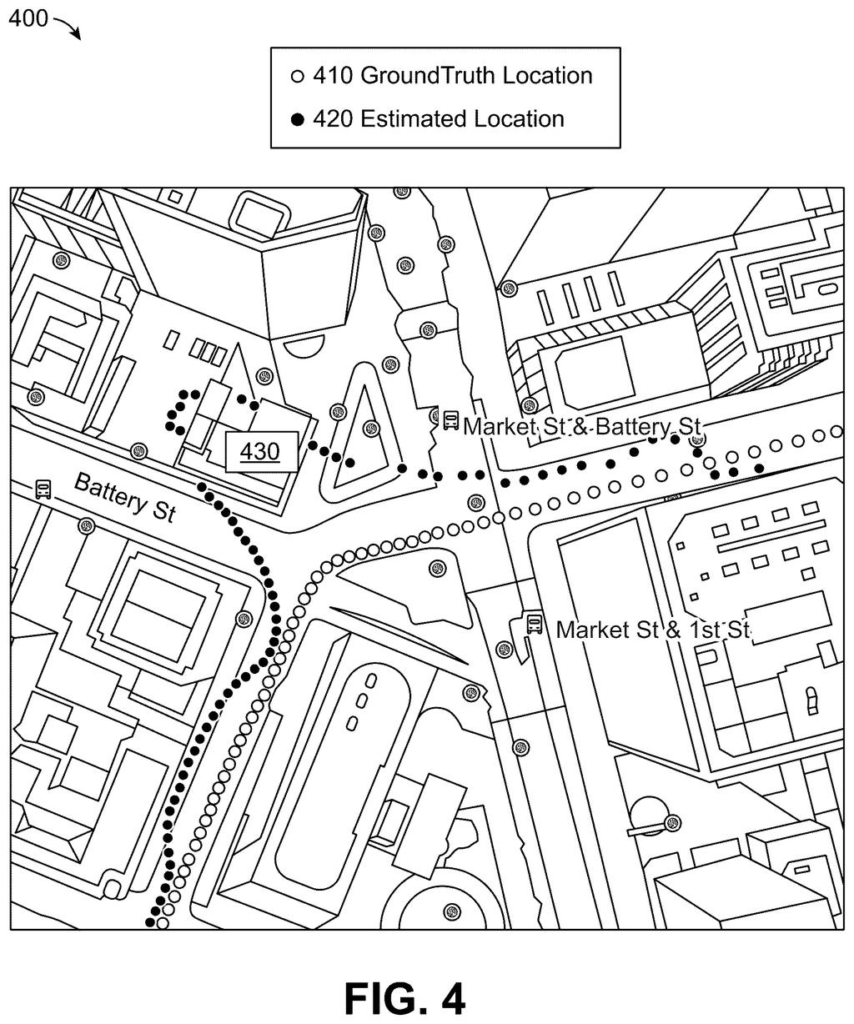
How Qualcomm's GPS fix handles tunnels and sharp turns
Imagine you're driving through a city and your phone's navigation suddenly jumps a block to the left. You didn't move that fast. What happened is that your GPS grabbed a signal from a satellite sitting nearly flat on the horizon, and that low-angle signal bounced off a building before reaching your phone, adding an invisible error.
Qualcomm's patent describes a chip-level process that watches for two specific warning signs: you're changing direction (a turn, a curve, a highway merge) and something is blocking some of your satellite signals. When both happen at once, the system gets selective. It drops satellites that are sitting too low in the sky or whose signals look too noisy, and recalculates your position using only the cleaner, higher-angle signals.
The goal is a location estimate that stays within a known error budget, even when conditions turn bad. You probably wouldn't notice the mechanism at all, which is exactly the point: your blue dot just stays where it should.
determine a positioning condition associated with a change in trajectory of a device and one or more signal obstructions affecting signals from a plurality of satellite vehicles (SVs) with respect to the device; …
Translation: The device notices when it is moving and when buildings or trees are blocking the satellite signals.
How the chip picks satellites by angle and signal error
The patent describes a processor-level system inside a positioning chip that monitors two conditions simultaneously: a change in the device's trajectory (detected movement pattern suggesting a turn or merge) and signal obstructions affecting one or more GPS or GNSS satellites.
When both conditions are detected together, the system triggers a satellite selection filter. It evaluates the full set of visible satellites and picks a subset based on two criteria:
- Elevation angle: satellites higher in the sky produce cleaner signals because the signal travels through less atmosphere and has fewer surfaces to bounce off.
- Measurement error: each satellite signal is assessed against the device's current horizontal estimated position error (HEPE), a running estimate of how far off the position fix might be. Satellites whose signals contribute errors larger than that threshold are excluded.
The system then calculates the device's position using only the filtered subset. The patent specifies that only a minimum necessary number of qualifying satellites are used, meaning the algorithm doesn't just discard bad signals; it actively limits the pool to the cleanest available signals that still satisfy a solvable geometry.
This all runs inside the chip without requiring any cloud connection or user input.
What this means for navigation on phones and in cars
For most everyday navigation, GPS is good enough. But the moments when it fails tend to cluster around exactly the situations this patent targets: downtown intersections, highway on-ramps, parking garage exits. A location error of 20 or 30 meters at those moments can mean a missed turn or a wrong street, and current receivers have no automatic way to know they're about to get it wrong.
Qualcomm makes the positioning chips inside a large share of Android phones and automotive navigation systems. A filtering approach like this, baked into the chip firmware, could improve location accuracy in those failure scenarios without any change to the apps you use. For drivers, that's the difference between a missed exit and a timely one.
Qualcomm's 44th filing we've tracked since July in our self-driving sensing race watch adds to a run that includes a point cloud compression fix and an AI road threat co-pilot.
Most GPS errors people notice aren't constant drift; they're sudden jumps, moments when a map suddenly places you half a block away for no obvious reason. This patent targets exactly that moment, specifically when a device loses clean sight of enough satellites and accepts a bad position rather than flagging the problem.
The fix is invisible when it works, which is the point. Someone navigating on foot through a dense downtown, or sitting in a car that just turned into a canyon of tall buildings, stays accurately pinned on the map instead of watching their dot teleport.
Whether that improvement shows up consistently depends on how often real-world conditions actually trigger this logic, and the patent makes no promises on frequency. But the failure it prevents, a sudden and silent position error, is one users feel immediately and blame instinctively on the app.
There are more where this came from
We read every patent application Big Tech publishes and send you the ones worth knowing. Plain English, free, every week.
The drawings
9 drawing sheets from US 2026/0299137 A1 · click any drawing to enlarge


Want this weekly breakdown for a company we don't cover? Patentlyze Pro →
Be the first to weigh in