
Verily Life Sciences Patents a Cancer-Detection Method That Reads Your Breath
A breathalyzer for cancer sounds like science fiction, but Verily Life Sciences has filed a patent describing exactly that: a method where you inhale (or receive) a tracer molecule that hunts down tumor cells, and your breath tells doctors whether they were home.
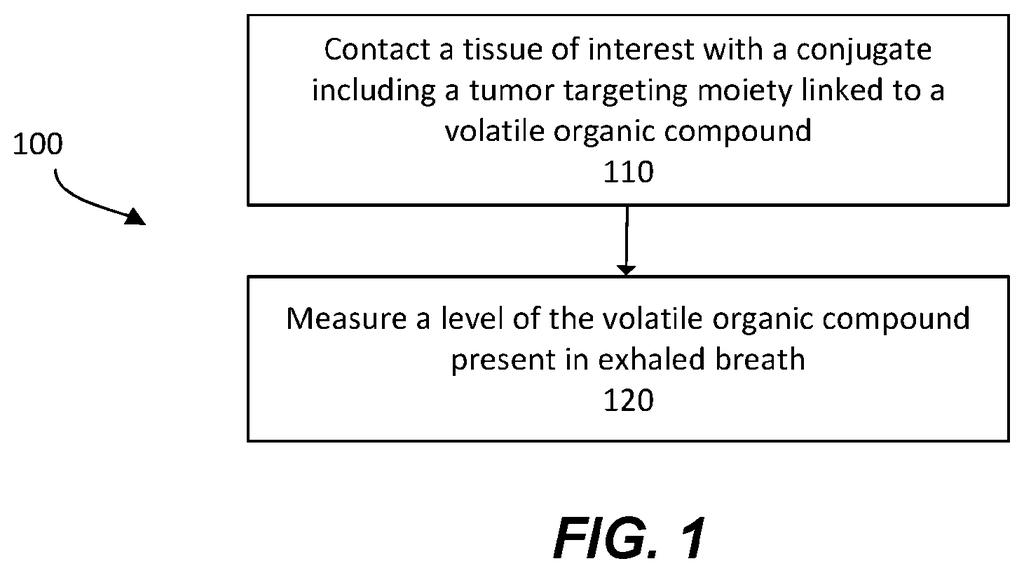
How Verily's breathalyzer approach to cancer screening works
Every time someone goes through a cancer screening, they typically face a biopsy, an imaging scan, or both. These procedures are uncomfortable, expensive, and often only happen after a doctor already suspects something is wrong.
Verily's patent describes a different approach. You receive a specially designed compound, a molecule built in two halves: one half is engineered to seek out and stick to tumor cells, and the other half is a volatile organic compound (a chemical that naturally turns into a gas at body temperature). If tumor cells are present, the compound attaches to them. As the body processes it, the volatile half escapes into the bloodstream and eventually into your exhaled breath, where it can be measured.
Because the volatile compound used is not one your body makes on its own, any trace of it in your breath is a direct signal that the tumor-seeking molecule found a target. Think of it like a dye that only stains what you're looking for, except instead of looking at a slide under a microscope, you just breathe into a device.
… contacting a tissue of interest with a conjugate including a tumor targeting moiety linked to a volatile organic compound, wherein tumor targeting moiety has affinity and specificity for tumor cells, wherein the volatile organic compound is a non-naturally occurring volatile organic compound …
Translation: A manmade chemical attached to a cancer hunter is applied to the suspicious tissue inside the body.
How the tracer molecule travels from tumor to exhaled air
The patent describes a two-part conjugate molecule: a tumor targeting moiety (a fragment engineered to recognize and bind to proteins found specifically on cancer cells, similar to how an antibody locks onto a specific target) linked to a volatile organic compound (VOC), a small molecule that vaporizes easily and can travel from tissue into the bloodstream and then into the lungs.
Critically, claim 1 specifies the VOC must be non-naturally occurring. Your body already exhales hundreds of VOCs from normal metabolism, so using a synthetic one eliminates background noise entirely. Any detection of that specific compound in breath is unambiguous evidence the conjugate found tumor cells.
The detection flow works like this:
- The conjugate is administered (injected, inhaled, or otherwise delivered) and circulates through the body.
- The tumor-targeting half binds to cancer cells at the tissue of interest.
- The VOC portion is released or reaches the lungs, where it enters exhaled breath.
- A breath sample is analyzed, and the amount of VOC detected correlates with the number of tumor cells present.
The claim covers not just presence or absence, but quantification: more VOC in breath suggests more tumor cells, potentially giving a rough measure of tumor burden without any imaging or tissue removal.
A conjugate is administered to the subject, wherein the conjugate includes a tumor targeting moiety linked to a volatile organic compound (VOC). The presence or amount of the VOC is detected as an indication of the disease state.
Translation: Patients take a special chemical compound that attaches to cancer cells and releases a gas doctors can measure.
What this could mean for routine cancer screening
For patients, the appeal is obvious: a breath test is far less invasive than a biopsy and far cheaper than a PET or MRI scan. If this approach proved out clinically, it could lower the barrier for routine or repeated cancer monitoring, the kind of check-up that today only happens when doctors already have reason to worry.
For Verily specifically, this fits its broader focus on early-detection diagnostics. Verily's interest in non-invasive diagnostic methods is reflected across multiple areas of its research pipeline. That said, the gap between a granted patent and a clinical tool you could actually use is enormous. The molecule described here would need to clear toxicology studies, clinical trials, and regulatory approval before it ever reached a doctor's office.
Google's 828th filing in our Google coverage since May adds to a health thread that includes a sleep-and-fall-risk wearable and a self-holding brain implant.
Claim 1 covers any tumor-seeking substance, any synthetic chemical signal attached to it, and any method of getting that combination into a person's body. That is a sweeping perimeter: it does not matter which cancer you are targeting, which synthetic marker you choose, or how you deliver the treatment.
The one real boundary the claim draws is that the detectable chemical must be man-made. That distinction keeps the reading honest, since a doctor measuring a lab-created compound in exhaled breath can be confident the signal comes from the treatment rather than ordinary biology.
If granted, this claim would give its holder a legal stake across an entire category of cancer detection, blocking others from building breath-based systems along these lines regardless of the choices they make downstream. Breath diagnosis for cancer remains an unsolved problem in medicine, which makes the breadth of this claim significant.
There are more where this came from
We read every patent application Big Tech publishes and send you the ones worth knowing. Plain English, free, every week.
The drawings
3 drawing sheets from US 2026/0294272 A1 · click any drawing to enlarge


Want this weekly breakdown for a company we don't cover? Patentlyze Pro →
Be the first to weigh in