
Microsoft Patents an AI System That Shares Spare Server Power Between Tasks on the Fly
Cloud operators routinely reserve far more computing power than any single task actually needs, just in case demand spikes. Microsoft's new patent describes a system that predicts those spikes ahead of time and lets tasks borrow spare capacity from each other, reducing the amount of computing power left sitting idle.
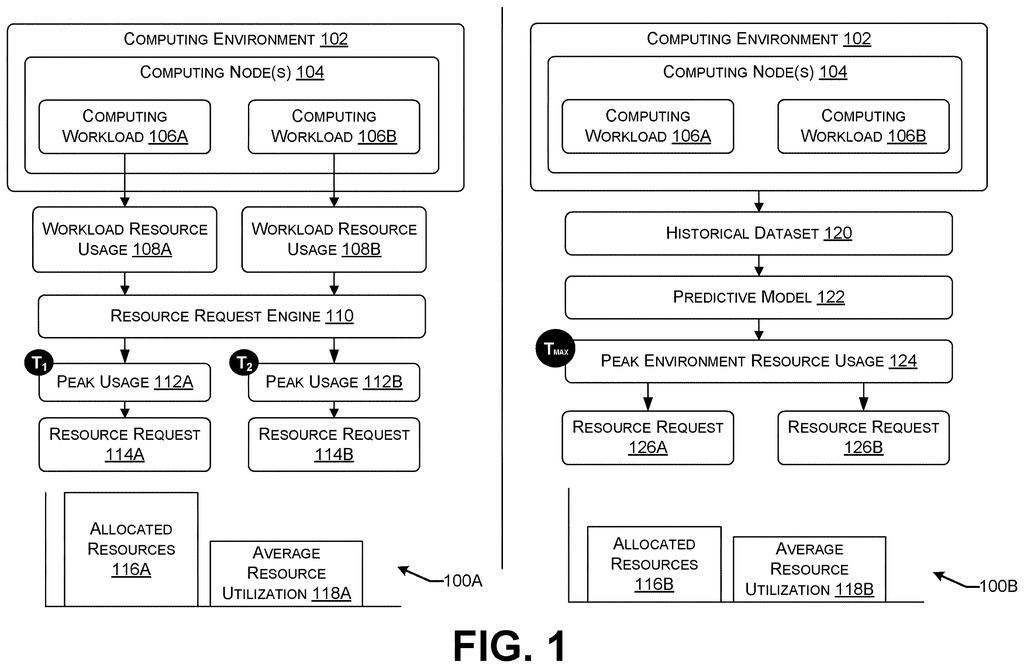
How Microsoft's server-sharing prediction actually works
Every time a cloud service handles a surge in traffic, the servers behind it scramble to find extra capacity. Most of the time, that capacity was already sitting there, reserved but unused, because nobody knew exactly how much each task would need.
Microsoft's patent describes a predictive system that studies past usage patterns and forecasts when demand will peak. It uses that forecast to set more accurate resource budgets for each task up front, rather than padding every task with a large safety margin.
The clever part is what happens at runtime. If one task is running hot and needs more computing power, and a neighboring task is running light, the system automatically moves spare capacity from the light task to the busy one. Your cloud workloads share a common pool rather than each hoarding their own private buffer.
… reallocating a portion of computing resources from the second computing workload to the first computing workload based on the first resource utilization being above the resource utilization threshold and the second resource utilization being below the resource utilization threshold …
Translation: The system instantly shifts spare server power from a quiet task to one that is struggling.
How the model predicts peaks and reassigns capacity
The system centers on a predictive model trained on historical data from the computing environment. It analyzes resource usage over a past window of time and calculates an expected peak for the current or upcoming period.
From that peak estimate, it derives a resource request for each individual workload (a discrete computing job, like a containerized application or a database process). Instead of letting each workload ask for however much it thinks it might need, the system sizes those requests relative to a shared predicted ceiling. The goal is to pack more workloads onto each physical server without any of them starving for resources.
Once workloads are running, the system monitors actual usage in real time. It compares each workload's current consumption against a utilization threshold:
- If a workload exceeds the threshold, it is classified as needing more resources.
- If a workload falls below the threshold, it has spare capacity to give.
- The system then moves a slice of capacity from the underused workload to the overloaded one, automatically and without human intervention.
This live rebalancing means workloads share a common buffer rather than each holding a private reserve. The patent frames this as reducing resource wastage, the gap between what is reserved and what is actually consumed.
Furthermore, computing workloads within a computing node are configured to share computing resources to accommodate sudden surges in demand.
Translation: Tasks running on the same server can pool their resources to handle unexpected traffic spikes.
What this means for cloud bills and overprovisioned servers
Cloud computing is expensive partly because overprovisioning is the safe default: operators reserve more than they need so nothing crashes under pressure. That idle capacity still costs money, and in large data centers, the waste adds up fast. A system that accurately predicts peaks and redistributes spare capacity in real time could meaningfully reduce that overhead.
For businesses running workloads on Microsoft's cloud infrastructure, this could translate to lower per-job costs or higher throughput without adding hardware. The patent is squarely aimed at the infrastructure layer, so end users would not see it directly. But the organizations paying cloud bills each month would feel it if the approach moves from patent to production.
Microsoft's 498th filing in our Microsoft coverage since May adds to a run that includes screen-reading AI and self-testing bug tools.
Microsoft's patent describes a system that watches how much computing power a cloud environment uses over time, spots the expected peak demand, and uses that single shared forecast to divide resources across every task running inside it. All of that happens in software, on infrastructure that cloud providers already operate today.
The shortest path to shipping this is direct. Usage history, scheduling systems, and pattern-reading models already exist inside large cloud platforms. The only missing piece is the specific forecasting logic described here, which could arrive as a quiet backend update invisible to most users.
Whether it delivers real improvement depends entirely on how much more accurate this shared prediction turns out to be compared to what cloud operators already do. The patent makes the architectural choice clearly but names no performance targets, so the answer will only show up once it runs at scale.
There are more where this came from
We read every patent application Big Tech publishes and send you the ones worth knowing. Plain English, free, every week.
The drawings
8 drawing sheets from US 2026/0300035 A1 · click any drawing to enlarge


Want this weekly breakdown for a company we don't cover? Patentlyze Pro →
Be the first to weigh in