
Samsung Files Patent for Tracking Your Phone's Location Using the Radio Wave Itself
Your phone could work out where it is by reading the exact point a radio wave has reached in its cycle. Samsung has filed a patent on how to choose which frequency to read.
What Samsung's radio-wave location idea means
Ever measured a long hallway with a short ruler, then lost count of how many times you flipped it end over end? You'd know the leftover bit at the end perfectly, but not the total. That's the puzzle behind this Samsung location patent.
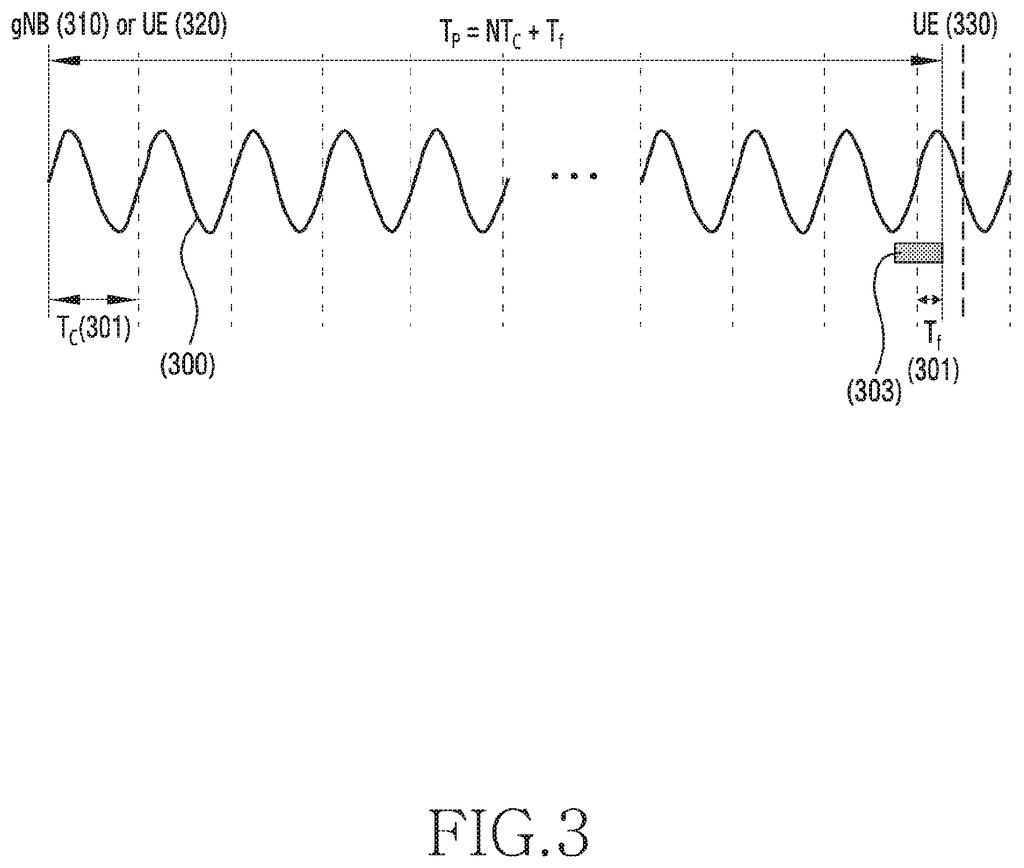
Radio signals travel as repeating waves. Your phone can read exactly where it is within one wave, which for a 3 GHz signal is only about 10 centimeters (roughly 4 inches). What it can't easily tell is how many whole waves the signal covered. Samsung's filing describes the phone taking that reading at the center frequency of the signal's band, then sending the result to the network's location server.
The filing also describes comparing readings at two nearby frequencies. Together they act like a much longer ruler, which makes the wave count far easier to pin down.
receive, from a location management function (LMF) entity, information associated with a carrier phase positioning (CPP); receive positioning reference signals (PRSs) on multiple resources; measure a carrier phase, based on a center frequency of a frequency band associated with the multiple resources; and transmit, to the LMF entity, a measurement report of the carrier phase.
Translation: Your phone gets tracking instructions, analyzes incoming radio waves, and sends back phase measurements to pinpoint its location.
How the phone reads the band's center frequency
The claims cover both ends of the exchange. The phone (called the UE, for user equipment) gets setup details from the network's location management function, the server that works out where devices are. It then receives positioning reference signals (known test signals the network sends for devices to measure) across several frequency slices. A separate set of claims covers the server's side.
The core step: the phone measures the carrier phase (where the radio wave sits in its up-and-down cycle) based on the center frequency of the band, then reports it. Dependent claims add options:
- Use a signal on a slice next to the center frequency.
- Pair the center with a second frequency: one a set offset away, the band's first or last, or one in a chosen range.
- Use how the readings vary across several slices.
Why two frequencies? One reading can't reveal how many whole waves a signal traveled (the integer ambiguity problem). At 3 GHz a wave is about 10 cm, finer than older location methods can count. Readings at 3340 and 3330 MHz act like a 10 MHz wave, about 30 meters long, which those methods can handle.
… measure a carrier phase on the basis of the center frequency of a frequency band associated with the plurality of resources; and transmit a measurement report on the carrier phase to the LMF entity.
Translation: It calculates exact wave cycles from cell towers to figure out where you are and reports it back.
Why this matters for 5G phone location
If phone location gets sharper, you could notice it in emergency calls and in any app that depends on knowing exactly where you are. The filing points to emergency services and commercial location apps as the growing demand behind this work. Because the method runs over the cellular network rather than satellites, it adds another way to locate a device, though the filing gives no accuracy figures.
The description also covers phone-to-phone positioning without a cell tower (it calls this sidelink), which could matter for devices that are out of coverage. None of it reaches your phone without support from carriers and chip suppliers, so treat it as groundwork for future 5G and 6G location features.
Samsung's 86th filing we've tracked since May in our 5G and network work watchlist follows earlier applications like one on location fallback and one on sharing 5G data faster.
Almost nothing in this filing needs new hardware. Phones already receive these location signals and already report measurements to the network's location server, so the claims mostly change which frequency the phone reads and what it sends back. On the phone side, that is a software and modem-firmware job.
The harder part is everything around it. The location server has to request these readings, base stations have to send the right signals, and the wireless standards body has to agree on the details, since the filing is written in that body's vocabulary. Those steps take years and involve many companies.
My read: this is a routine standards-style filing, useful mainly to phone makers, chipmakers and carriers. Don't expect the blue dot on your map to snap tighter next year because of it.
Get our take in your Top Stories
Liked this breakdown? Add Patentlyze as a preferred source on Google, and our plain-English take shows up more often in your Top Stories the next time Samsung patent news breaks.
There are more where this came from
We read every patent application Big Tech publishes and send you the ones worth knowing. Plain English, free, every week.
The drawings
8 drawing sheets from US 2026/0313608 A1 · click any drawing to enlarge


Want this weekly breakdown for a company we don't cover? Patentlyze Pro →
Be the first to weigh in