
Amazon Files Patent for Software That Ranks the Topics Callers Feel Strongly About
Amazon's filing describes software that listens for the moments a caller sounds happiest or angriest, then works out what they were talking about at that instant.
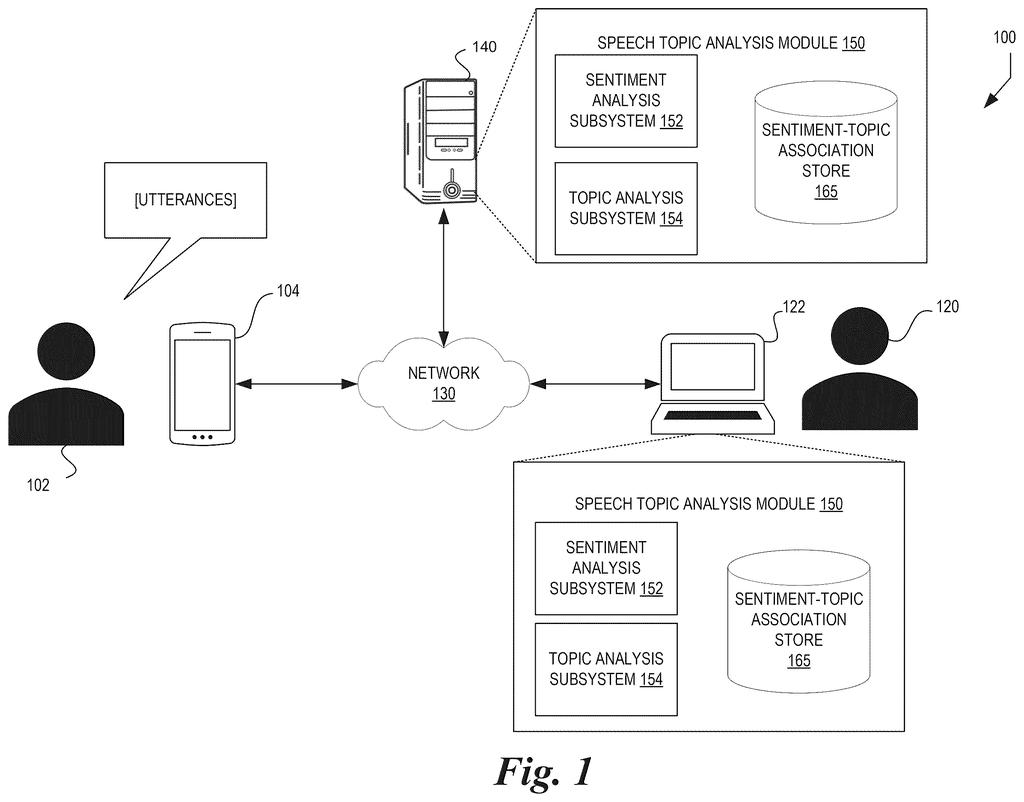
What Amazon's call-mood patent actually does
Ever been on hold with customer support, finally reached a person, and wondered whether anyone can hear how annoyed you are? A new Amazon patent application describes software that can. It listens to the tone of your voice during a call and flags the moments when you sound especially happy or upset.
Then it works out what you were talking about at those moments. In one version in the filing, the software writes out a transcript only for the emotional stretches and skips the calm parts, which saves computing power. Across many calls, it can rank topics by how strongly people feel about them, so a company can see which subjects make callers angriest.
The person on the other end of your call could see all of this on screen as it happens, with an escalation popup if things look heated.
… identifying, using a first machine learning model and based on a textual representation of the one or more utterances, a topic instance; determining, using a second machine learning model, a sentiment associated with the topic instance; …
Translation: AI models identify what people are talking about and how strongly they feel about it.
How the system ranks topics by emotion
The claimed method starts with audio of one or more people talking. A first machine learning model reads a transcript of that speech and picks out a topic instance, meaning a topic tied to a specific stretch of the conversation (the filing mentions windows such as 10 seconds or a single sentence). A second model then judges the sentiment, or emotional leaning, of that same stretch.
The system turns that judgment into a sentiment score. In the filing's example, a moment with a 0.8 chance of sounding positive and a 0.2 chance of sounding negative scores 0.6 (the difference). Anything above a set threshold, 0.5 in the example, is labeled a hot sentiment. Topic instances are then ranked by score, and the output includes the score and the topic.
The description lays out three ways to run it:
- Sentiment first: score the audio by tone, then transcribe only the strong moments to find the topic.
- Topic first: find topics in a transcript, then score the sentiment of each. This is the order the claim follows.
- Category driven: sort topics into a preset list such as cost or lifetime, using cosine similarity (a math measure of how close two pieces of text are in meaning).
Scores can also be averaged across many calls to find the most common feeling tied to a topic. A large language model (an AI that works from written prompts) can help pull out the topics.
… evaluate a first audio portion using a tone-based sentiment analysis model to generate sentiment probabilities. A system may determine a first positive sentiment probability exceeds a threshold.
Translation: The software checks the tone of a caller's voice to see if their positive feelings pass a certain limit.
Why customer service calls are the target
If you have ever called a company, the practical payoff is a support agent who gets warned when your frustration is climbing. The filing describes a popup that tells the agent to escalate the call once a topic and sentiment score cross a set line, with the display updating during the conversation.
For businesses, the bigger use is spotting patterns across thousands of calls. The filing says the results could feed word clouds and heat maps showing which issues annoy people most, or point to questions worth adding to a product's FAQ page. It also mentions other settings, such as an emergency hotline operator seeing a caller's mood, and in-person meetings.
Amazon's 12th filing we've tracked since May in our Alexa taking action watch extends the thread from browsing on your behalf and self-chosen AI personality.
Claim 2 is wide. It asks for five things: audio of someone talking, a topic found in the words, a feeling attached to that topic, a score for that feeling, and a ranking of that topic against another one. Nothing in it mentions phone calls, customer service, or a company support line.
The tone-of-voice trick from the abstract is missing from the claim. The claim says only that a second model judges the sentiment, and the follow-on claims allow that model to read text or listen to audio. Skipping the transcript for calm stretches, the money-saving idea in the description, does not appear in the claim either, and the claim itself relies on a transcript of the speech.
On paper, the claim would reach any tool that ranks conversation topics by how people feel about them, whether in a meeting, a support line or a sales call. That is a lot of ground for a fairly natural recipe, so the final wording may well end up tighter than this one.
Get our take in your Top Stories
Liked this breakdown? Add Patentlyze as a preferred source on Google, and our plain-English take shows up more often in your Top Stories the next time Amazon patent news breaks.
There are more where this came from
We read every patent application Big Tech publishes and send you the ones worth knowing. Plain English, free, every week.
The drawings
7 drawing sheets from US 2026/0311692 A1 · click any drawing to enlarge


Want this weekly breakdown for a company we don't cover? Patentlyze Pro →
Be the first to weigh in