
Qualcomm Files Patent for Phones That Tell Cell Towers Their AI Limits
Your phone shares its chip between many jobs, but the cell tower assigning it signal-forecasting work has no idea how busy it is. Qualcomm's filing fixes that with a simple note the phone sends ahead of time.
What Qualcomm's phone-to-tower capability note does
You're streaming a show on a train when your phone suddenly picks up a second job that hogs its chip. Meanwhile the cell tower keeps handing it extra homework, like forecasting which radio signal path will be strongest a moment from now. The tower can't see how stretched the phone is, so the phone can stumble.
Qualcomm's patent application fixes this with a simple handshake. Your phone first sends the tower a short note describing what it can handle: how accurate its forecasts can be, and how many signals it needs to look at to make them. The tower then only assigns jobs that fit that note.
If your phone's workload changes, it can send an updated note. And if one phone can't take a job, the tower can give it to another phone.
transmit a capability report associated with a beam prediction capability of the UE, the capability report indicating a target beam prediction accuracy …
Translation: The phone sends a report telling the cell tower how accurately its artificial intelligence can guess upcoming signals.
How a phone reports what AI work it can take
Modern 5G towers aim narrow streams of radio signal, called beams, at your phone. Beam prediction uses an AI model to look at past signal-strength readings and forecast which beams will be best next, so the phone doesn't have to measure and report everything constantly.
The filing points out that phones differ in how well they can do this. Some share the same chip hardware with higher-priority jobs, such as detecting when your body is close to the antenna or decoding incoming data in real time. When those jobs switch on, less hardware is left for prediction.
The claims cover a capability report that the phone sends to the network. It can include:
- A target accuracy, expressed as an average, maximum or standardized prediction error, either as one value or per beam.
- How many reference signals (the test signals the tower sends out) and what types the phone uses as inputs, plus how many past time slots it looks at.
- How many beams it can predict, what types, and how far ahead.
The report goes out through RRC signaling (the control messages that set up a connection) when the phone first connects. The tower then sends only matching requests. In the filing's examples, a busy phone reports two signals over three past time slots at an error of 6, while a free phone reports four signals over four slots at an error of 1. The claims also cover the tower's side, and the filing describes updated reports after the first connection.
… receive a request to perform a beam prediction task aligned with the capability report …
Translation: The tower asks the phone to predict signal paths based on the performance limits the phone just shared.
Why overloaded phone chips matter for signal
The practical payoff is a phone that gets fewer jobs it can't handle. The filing says overloading a phone with prediction work can cause it to malfunction or even restart, and can leave the predictions inaccurate. A tower that knows your phone's limits can avoid both, and can send the work to a different phone if yours is busy.
The idea matters more as AI moves into the radio itself. Phone chips are shared among many tasks, and the filing's own examples show a phone's capacity changing mid-use. Telling the network about those changes lets the network keep forecasting accurate without any extra effort from you.
Qualcomm's 56th filing we've tracked in the AI chip wars since July follows work on partial model updates and splitting power across processors.
Nothing in this filing needs new hardware. It describes a message your phone sends and a rule the tower follows, so it is a software and standards matter from top to bottom.
The slow part is agreement. The filing leans on predefined combinations that it says could be written into a 3GPP standard, so chip makers, phone makers and network equipment makers would all have to adopt the same format. Phones also need AI beam prediction on board, and networks need to ask for it.
The shortest route to something real is a proposal to the standards body, followed by years of testing. For you, this would show up as a phone that drops fewer connections, if it shows up at all. It is useful plumbing and routine in ambition, and it is a long way from a feature anyone would advertise.
There are more where this came from
We read every patent application Big Tech publishes and send you the ones worth knowing. Plain English, free, every week.
The drawings
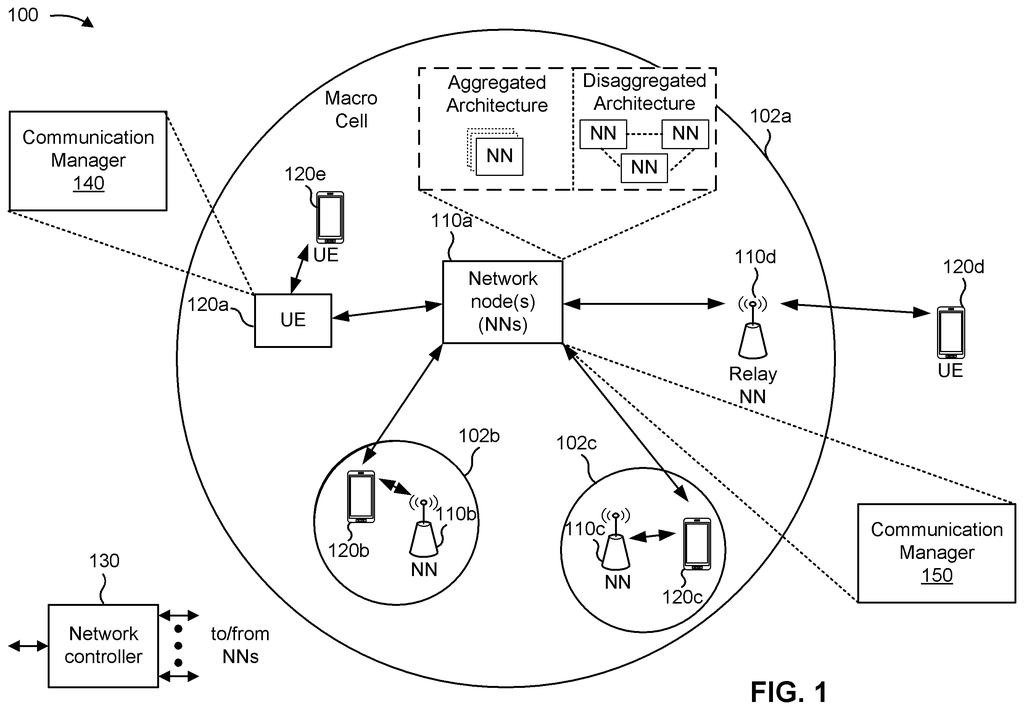
18 drawing sheets from US 2026/0312661 A1 · click any drawing to enlarge


Want this weekly breakdown for a company we don't cover? Patentlyze Pro →
Be the first to weigh in