
Apple Patents a Wallet Student ID That Shimmers Like Metal When You Tilt Your Phone
Apple's patent application gives a digital student ID a metallic shine that slides across the card as you tilt your phone. It's a small touch meant to make fakes easier to spot.
What Apple's shimmering Wallet student ID does
Ever wondered how a campus security guard or a library desk clerk is supposed to tell a real digital ID from a screenshot of one? Apple's patent application answers with a card that moves.
Here's the setup. A school (the filing's example is a made-up Lime University) sends your phone its logo, seal, name and school color. Your wallet app then draws your student ID with a metallic sheen, like stamped metal catching a spotlight. Tilt the phone and the shine slides across the card.
Apple says the goal is to help you recognize the right card at a glance and to make the card harder to copy or counterfeit. A different school sending different artwork gets a differently styled card, but the same shiny treatment.
The present disclosure generally relates to techniques for displaying a representation of a digital card with a visual effect …
Translation: The patent describes methods for making digital cards look dynamic on your screen.
How the card's metallic shine tracks your tilt
The claims cover a phone (or other computer system) that has received data for a digital card stored in its electronic wallet. That data includes visual assets (logos, colors, artwork) defined by an outside party, such as a school's own computer system. When you ask to see the card, the phone builds its look from that data and applies a visual effect on top. Different asset sets from the issuer produce different-looking cards.
In the dependent claims, the effect reacts to movement detected by the device. The main example is a metallic sheen that changes as you tilt the phone. It is generated with a metal shader (a graphics program that calculates how light would play across a metal surface), and the simulated lighting can include a spotlight effect.
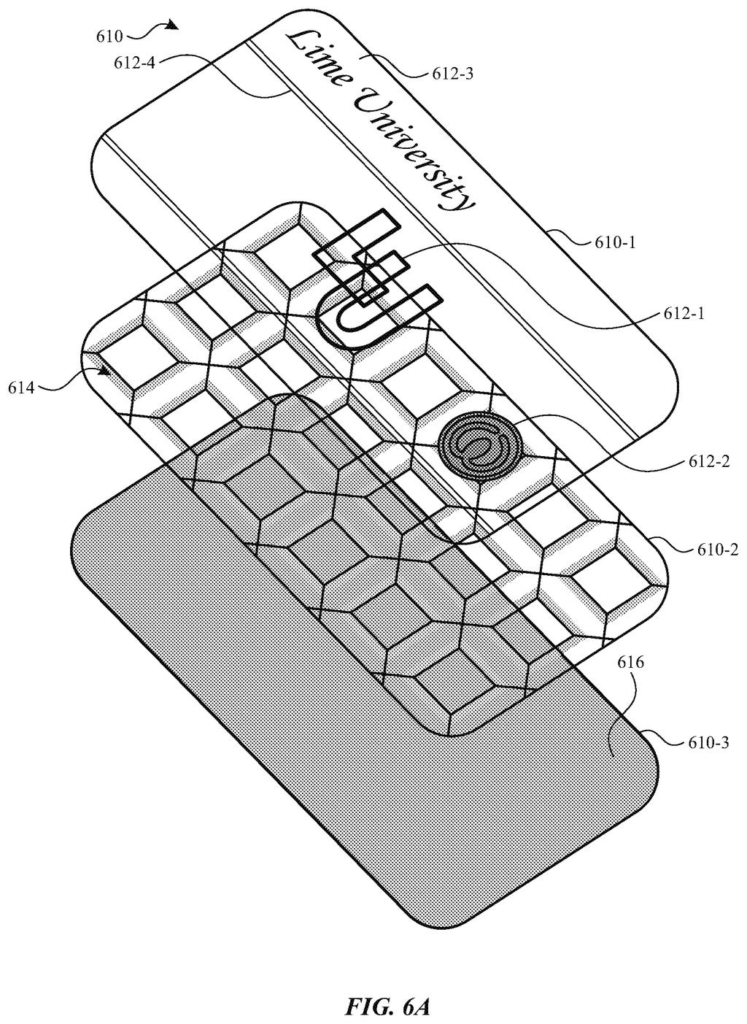
The filing also describes how the card is built in layers:
- One layer holds the issuer's assets, such as a logo, seal or school color.
- A second layer has a three-dimensional effect.
- A third layer holds colors, and a map defines a "metal value" for it (a setting for how metallic each area looks).
- A background region can skip the effect entirely and may show gridlines.
One more claim lets the phone change a particular asset from one defined look to another when a set of criteria is met. The claims leave open what those criteria are.
What this means for ID cards in your wallet
For you, the payoff is a phone ID that looks and feels like a physical card with a foil or metal finish, and that is easier to recognize as the card you picked. The filing's main example is a student ID, but it says the same approach could cover faculty IDs, badges and other digital cards.
For schools and other card issuers, the setup lets them supply their own logos, seals and colors while the phone handles the shine. Apple's stated goal is making cards quick to recognize and hard to copy or counterfeit. It's a patent application, so nothing in it says when, or whether, anything like this ships.
Apple's 528th filing in our Apple coverage since May builds on work like the room-scan correction patent and the virtual set-dressing patent.
A card that only comes alive when you tilt it asks the person checking you to wait for the tilt, and in a crowded doorway that is a few extra seconds nobody planned for. It also keeps your motion sensors and graphics chip busy whenever the card is on screen, which likely costs a little battery.
The bigger give-up is trust. A shimmer is easy for a person to spot, yet a video of a real card shimmering could imitate it, so the security story rests on a quick look by a human. Schools also hand over their logos and colors and then see Apple's metal look applied on top, so campus cards share a family resemblance.
Still, the trade reads as worth it. The costs are small, and a card that looks good gets opened and used. I'd call it a sensible bit of polish with a modest security bonus.
Get our take in your Top Stories
Liked this breakdown? Add Patentlyze as a preferred source on Google, and our plain-English take shows up more often in your Top Stories the next time Apple patent news breaks.
There are more where this came from
We read every patent application Big Tech publishes and send you the ones worth knowing. Plain English, free, every week.
The drawings
20 drawing sheets from US 2026/0311424 A1 · click any drawing to enlarge


Show the other 12 sheets


Want this weekly breakdown for a company we don't cover? Patentlyze Pro →
Be the first to weigh in