
Apple Files Patent for Room Scans That Fix Mistakes Without Starting Over
When your device realizes it was wrong about where it is, Apple's patent lets it shift an entire 3D room model in one cheap move instead of rebuilding it.
What Apple's room-scan correction actually does
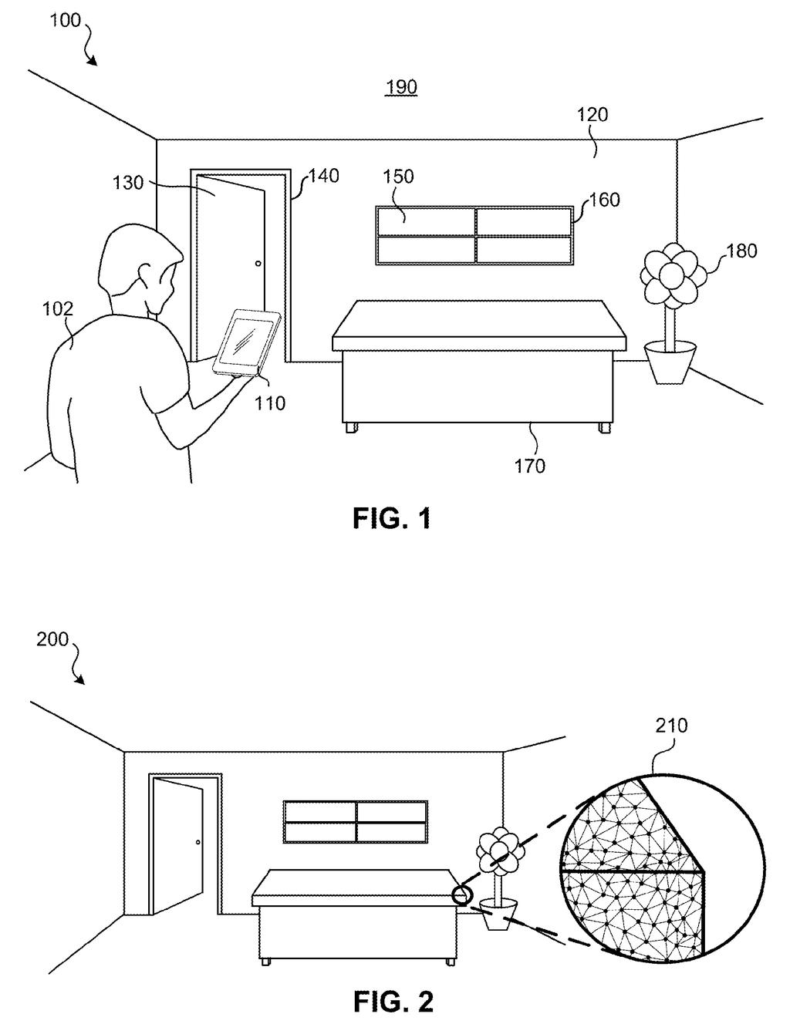
Scanning a room with a camera-equipped device means the device is constantly guessing where it is as you walk around. Those guesses slowly drift, and every so often the device's tracking system corrects itself. Without a shortcut, that correction can force the device to throw out parts of the 3D model it already built and rebuild them, which costs time and battery.
Apple's patent application describes that shortcut. When a correction arrives, the system works out how much of it is one big shift that moves everything the same way, and how much is a smaller local change. The big shift gets applied in a single cheap step, no rebuilding required. Only the small leftover pieces trigger a redo of part of the model.
The goal is a live 3D map of your room that stays lined up while you keep scanning.
… receiving correction data corresponding to a correction associated with the device poses; determining a global transformation and a change to a non-rigid component based on the correction data; and updating the 3D representation …
Translation: The system accepts a user fix and recalculates the room layout without starting the scan over.
How the scan splits big shifts from small ones
The claims cover a method for updating a 3D model of a room after the device's estimate of its own position gets corrected. The device collects frames of camera or depth data along with frame-to-frame motion data (a record of how the device moved between shots), each tied to a pose (the device's position and direction at that moment).
Later, a tracking process sends correction data. The description calls this process SLAM (simultaneous localization and mapping, the system that works out where a device is as it moves). The method splits that correction into a global transformation, one shift applied equally to everything, and a change to a non-rigid component, meaning the parts where positions move relative to each other.
- The global part is applied by moving anchors (reference points that link the model to the captured frames), without remeshing (rebuilding the model's surface).
- The non-rigid part triggers regeneration of only a subset of the model, such as re-meshing less than all of the mesh.
- Dependent claims also cover using a single anchor for all key frame poses, and handling large and small corrections with different processes.
The filing's title points to key frames, bundles of 2D image data picked as representative of the scene. Frames that are not picked get fused into the nearest key frame instead of being discarded, which cleans up noisy depth readings. The filing also describes switching between key frames and raw frames depending on how fast the device is moving.
Such fusing may reduce loss of information which would occur if frames not selected as key frames are simply discarded.
Translation: Instead of throwing away unused sensor data, the system blends it in to keep the 3D model accurate.
Why faster scan fixes matter for headsets and phones
Faster corrections mean the live preview of your scan can stay lined up as you walk around, and the device spends less power doing it. The description ties the savings directly to processing and power, which matter on anything you carry or wear.
The description names mobile devices, laptops and head-mounted displays as places this could run, and lists uses like 3D floor plans and boxes drawn around furniture. A device that keeps an accurate map of your room cheaply is useful for any app that needs to know where your desk, door or window sits.
Apple's 85th filing we've tracked since May, sitting alongside a food tracker that asks questions and avatars that hide detail by angle in our look at Apple's AR glasses work.
Nothing here needs new hardware. The description lists cameras, depth sensors and motion sensors, which a modern phone or headset already carries, so the shortest route to a product is an update to scanning software.
What has to exist first is a tracking system that sends back corrections, and the filing assumes one is already running. The remaining work is engineering: deciding how big a correction must be before it counts as one global shift, and testing it in real rooms where furniture has moved since the last scan.
This is a plumbing improvement. You would notice it only as a scan that stays lined up and a battery that lasts a little longer. That makes it a realistic feature, though one you would likely never see named on a product page.
Get our take in your Top Stories
Liked this breakdown? Add Patentlyze as a preferred source on Google, and our plain-English take shows up more often in your Top Stories the next time Apple patent news breaks.
There are more where this came from
We read every patent application Big Tech publishes and send you the ones worth knowing. Plain English, free, every week.
The drawings
8 drawing sheets from US 2026/0311432 A1 · click any drawing to enlarge


Want this weekly breakdown for a company we don't cover? Patentlyze Pro →
Be the first to weigh in