
Apple Files Patent for Virtual Walls and Furniture That Cover Up a Film Set's Flaws
A 180 degree camera sees the whole room, including the bolted-down machine and bare plywood you hoped to keep out of frame. Apple's patent has software paint over all of it.
What Apple's video-overlay patent actually does
Ever filmed a video in a room and spotted a bolted-down machine or a bare plywood wall right in the shot? Apple's new patent is about fixing that after the fact, with software instead of paint and furniture.
The idea starts with a wide-angle camera, such as a 180 degree one, which sees far more of a room than an ordinary camera does. That is great for immersive video, but it also captures the stuff you never meant to show. Apple's system picks a narrower area as the part that matters, then covers everything else with computer-generated objects. It can also repaint walls, put a new skin on a couch, or add a coffee table and TV that were never there.
Because the changes are digital, you can change your mind later. Want blue walls instead of pink? Swap a setting, not a paint can.
obtaining a video of a physical environment from a camera that is associated with a first field-of-view, wherein the video includes respective representations of a plurality of physical articles that are in the physical environment; …
Translation: The system records a wide-angle video showing all the physical items on a set.
How the wide camera feed gets painted over
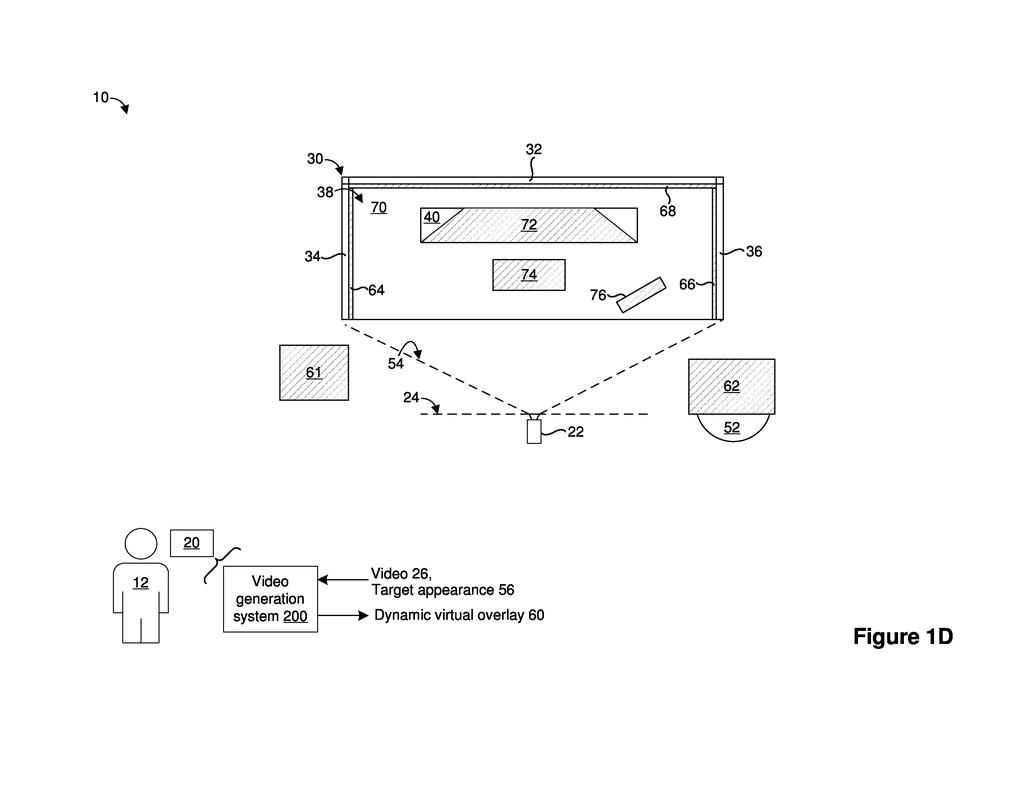
The camera records with a first field of view (how much of the scene the lens can see). The system then determines a second, narrower field of view, such as the width of the stage being filmed. A user can set it, or the device can estimate it from the size of the filming area. Anything outside the narrow area can be masked with virtual objects.
The overlay is built from a few inputs:
- Depth data (measurements of distance from a depth sensor) so each virtual object matches the shape and size of what it covers.
- A target appearance, meaning a description of how the room should look, such as wall colors, wallpaper, a couch finish, or even a reference to a previously filmed show.
- Lighting information from a light sensor or a 360 degree camera, so the fake objects get matching shadows and brightness.
The overlay is worked out frame by frame, so it can change as the video plays. The modified video is shown or sent out in place of the original. The virtual objects can sit on a separate layer that a viewer could switch off to see the raw footage.
The filing also describes combining several cameras into one wider view, masking a person such as a sound technician who wanders into one camera's view, and saving power by leaving a second, narrower camera turned off.
The device determines a dynamic virtual overlay for the video based on a second field-of-view that is smaller than the first field-of-view. The dynamic virtual overlay includes a set of virtual objects.
Translation: It creates computer-generated graphics meant to cover a smaller, tighter framing inside the wider shot.
Why this matters for cheap sets and VR video
If you make videos, even small ones, the cleanup before pressing record is a big chunk of the work. Apple's filing describes a camera that handles it for you: cover the clutter, recolor the walls, add the missing furniture, all in the finished clip. It could also let each viewer see a version tailored to them, such as their favorite wall color.
The filing points at headsets too. It mentions a head-mountable device and a video pass-through display, and it lists an 'advanced immersive video' camera among its examples. Wide-view footage is hard to stage because there is nowhere to hide, so tools that clean it up could make that kind of video cheaper to produce.
Apple's third filing we've tracked since September in the AI photo editing race follows one on fixing compressed video quality and one on auto-stylizing photos by subject.
Wide cameras have a plain problem: they see everything. A 180 degree lens catches the bolted-down machine, the support column and the unpainted plywood that a normal camera would have cropped out, and cleaning all that up takes real time and money on a set.
Painting over the footage with software fits the size of that problem well. It also solves a smaller headache, since the set dressing can change after the shoot. The filing relies on lighting and depth measurements to make the fakes look real, and that is where the quality will be decided.
Whether it looks convincing is the open question, because the patent text describes the goal but gives no results. For immersive video that viewers watch up close, a visible seam would defeat the point.
Get our take in your Top Stories
Liked this breakdown? Add Patentlyze as a preferred source on Google, and our plain-English take shows up more often in your Top Stories the next time Apple patent news breaks.
There are more where this came from
We read every patent application Big Tech publishes and send you the ones worth knowing. Plain English, free, every week.
The drawings
8 drawing sheets from US 2026/0311436 A1 · click any drawing to enlarge


Want this weekly breakdown for a company we don't cover? Patentlyze Pro →
Be the first to weigh in