
Google Patents a Toolkit That Turns Your Thumbs-Up Clicks Into AI Training
Those thumbs-up buttons under AI answers don't build themselves. Google has filed a patent application for a platform that hands developers prewritten feedback tools and uses the votes to improve their AI.
What Google's AI feedback toolkit actually does
Every time an AI app asks whether its answer was helpful and you tap a thumbs-up or thumbs-down, someone had to build that button, wire it up, and send your vote somewhere useful. Most small teams would rather spend that time on the AI itself.
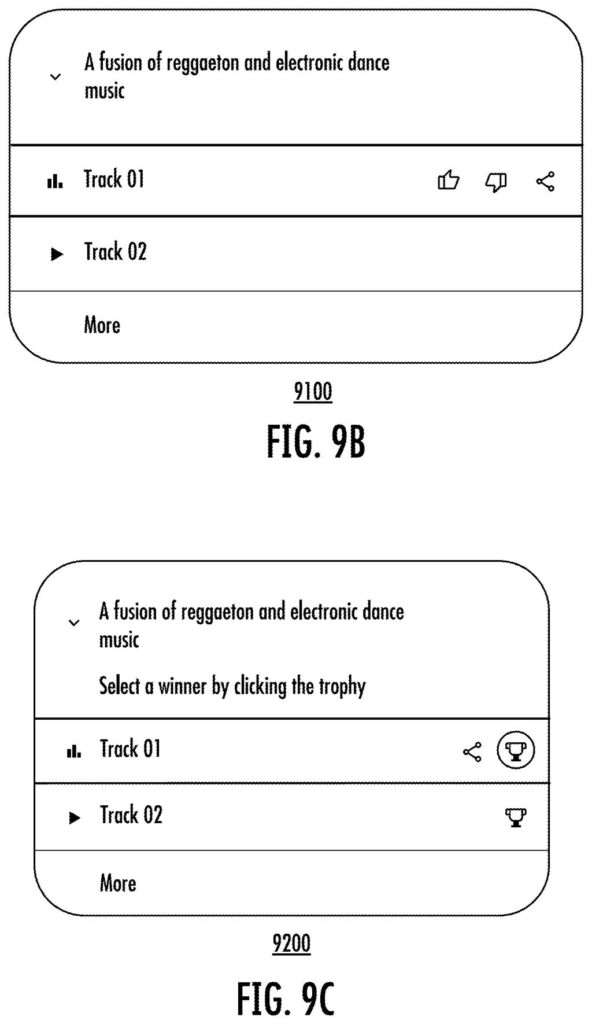
Google's patent application describes a platform that handles the chore. A developer hands over information about their AI model, picks from a shelf of prewritten feedback pieces (thumbs, star ratings, comment boxes, 'which of these two is better?' screens), and the platform assembles the feedback system for them.
The votes then flow back so the developer can improve the model. It works like a ready-made suggestion box for AI that you can attach to your own app.
… providing, by the computing system, predefined code segments for obtaining human-in-the-loop reinforcement learning (HITL RL) feedback with respect to the one or more machine-learned models …
Translation: The system offers ready-made programming blocks designed to gather human feedback for AI models.
How developers pick and assemble feedback pieces
The claims cover a platform that sits between an AI developer and the people who use their AI. It receives information about a machine-learned model (the trained AI) from an outside system, then offers predefined code segments (prewritten blocks of code, delivered as libraries or APIs) for gathering human-in-the-loop reinforcement learning feedback (people's reactions, used to reward or penalize the AI's behavior). It notes which segments get picked and generates a feedback framework to attach to the model.
The picking can be manual, with the developer choosing pieces, or automatic, based on the type of model or the content of what users type in. The filing also describes drag-and-drop builders, templates, live previews, and debugging tools. The feedback options listed in the claims:
- Binary feedback: a yes/no or thumbs-up/thumbs-down.
- Rating scales: for example, 1 to 5.
- Natural language feedback: free-form comments.
- Interactive feedback: such as steering an AI player in a game.
- A/B testing: two model versions shown to different groups of users.
Once votes arrive, the model is updated from them. Other claims cover running two models side by side, sharing feedback with another outside system, and filtering inputs (for example, blocking profane prompts) before the model sees them.
… generating a HITL RL framework configured to be applied to the one or more machine-learned models to obtain feedback associated with performance of the one or more machine-learned models …
Translation: It builds a custom feedback system that plugs directly into existing artificial intelligence software.
Why your thumbs-up on AI output could count more
If you've ever rated an AI-generated image or picked the better of two answers, you've done this kind of work. Behind each button sits a team that had to build it. A shared platform could mean more AI apps ship with those feedback prompts, and your taps could feed into more of what gets improved.
The filing's own examples are modest: rating a house generated for a city-building game, or giving a thumbs-up to AI-made study music. It also describes sharing collected feedback with other outside systems to refine their models, which raises a fair question about where your votes end up. The filing names no product, so read it as plumbing for AI developers.
Google files its 47th patent in AI training and infrastructure we've tracked since May, building on filings like one on makeup filter AI training and one on multi-size image training.
Claim 1 is short, and that is its defining feature. It has four steps: receive details about someone else's AI model, offer prewritten feedback code, note which pieces get chosen, and build the feedback system from them. Nothing in it names a feedback type, a kind of AI, or a training method.
That breadth is the story. As worded, the claim describes a general service for adding human feedback to AI, and the specifics (thumbs, star ratings, A/B tests, blocked prompts) sit in the later claims. If granted, language this wide could matter to other developer toolkits that hand out feedback code. Broad claims like this often get trimmed during review.
My read: a useful, ordinary idea wrapped in wide wording. Feedback buttons are everywhere already, and the document describes no new learning method.
Get our take in your Top Stories
Liked this breakdown? Add Patentlyze as a preferred source on Google, and our plain-English take shows up more often in your Top Stories the next time Google patent news breaks.
There are more where this came from
We read every patent application Big Tech publishes and send you the ones worth knowing. Plain English, free, every week.
The drawings
10 drawing sheets from US 2026/0310983 A1 · click any drawing to enlarge


Want this weekly breakdown for a company we don't cover? Patentlyze Pro →
Be the first to weigh in