
Samsung Patents Auto-Correction for Dark, Grainy Video in Headsets That Show Your Room
Samsung's patent has a mixed reality headset grade every frame of its camera view for brightness, contrast and grain, then fix the frame before you see it.
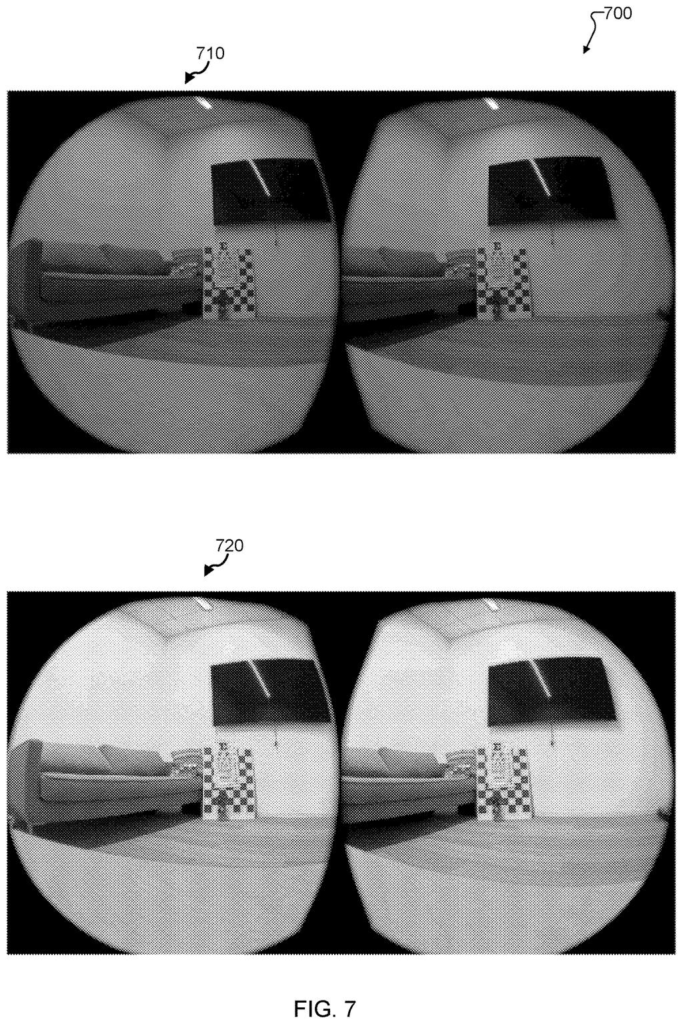
What Samsung's headset camera fix actually does
Ever put on a headset that shows you the real world through its cameras, only to find the picture dim and grainy? Walk from a bright window into a shadowy hallway and the video can turn murky or washed out. Samsung's filing says a poor picture can give you a wrong sense of your surroundings and may even cause motion sickness.
Samsung's answer is to have the headset check every frame of that camera video, a bit like a photo editor glancing at each picture before it goes out. It measures how bright, how sharp and how noisy the image is, both patch by patch and overall. Then it sorts the frame into a category such as too dark or too bright, picks the matching correction, and tunes its strength to that exact frame.
The cleaned-up video is what lands in front of your eyes, so the room looks natural whatever the lighting. If the headset tracks your gaze, it can focus the checking on the spot you are looking at.
… classifying, using the processor, the image into a quality category based on a comparison of the corresponding regional image quality map to the corresponding at least one criterion …
Translation: The system sorts the picture quality into categories by checking regional maps against specific targets.
How the headset grades each frame, patch by patch
The patent covers a processing pipeline that runs on frames from a device's outward-facing camera. For each frame, the processor builds a regional quality map (a pixel-by-pixel score) for every quality feature, plus global scores for the whole picture. The filing names three features: brightness, contrast and signal-to-noise ratio, or SNR (how much real picture there is compared with random grain).
Each pixel's score comes from a small window of neighboring pixels centered on it. Brightness is the average of the window, contrast is the standard deviation (how widely the pixel values spread), and SNR is a logarithm built from the average and that spread. Slide the window across the frame and you get a full map for each feature.
The device then compares the maps against preset criteria (thresholds) and sorts the frame into quality categories. In the main example, brightness and contrast are each low, normal or high, which gives nine combinations. The category decides what happens next:
- Each category gets its own recipe for computing the brightness and contrast settings from the frame's own numbers.
- The correction itself is a gamma curve (a standard formula for adjusting brightness) or a straight-line formula.
- If the frame is too noisy, noise reduction runs as well.
Optionally, eye tracking narrows the analysis to the area you are looking at. A pass-through transformation can also shift the view so it matches where your eyes actually are, before the frame is displayed.
… determining, using the processor, adaptive parameters for the image enhancement algorithm based on the regional image quality maps and the global image quality features …
Translation: It figures out how to adjust the enhancement settings based on both regional and overall image traits.
Why dim passthrough video matters for headsets
If you have used any headset that shows the real world through cameras, you know the weak spot: a dim room looks like static, and a sunny window blows out. This patent describes a way to keep that video watchable as the lighting changes, without you touching a setting. The filing links picture quality directly to comfort and says bad video can bring on motion sickness.
The method itself uses plain math: averages, spread and simple correction curves. That suggests it is meant to run on every frame as it arrives, and the filing's technical field mentions real-time use. Whether Samsung or anyone else ships it is unknown, since a patent application says nothing about product plans. Still, as camera-based headsets try to pass for clear glass, picture quality in bad light is a problem every maker has to solve.
Samsung's 62nd filing we've tracked in the AR glasses race since May revisits dim-room camera clarity for headsets, building on brightening headset camera views and an earlier dim-room filing.
Claim 1 is written broadly. It says an electronic device with an external camera measures quality patch by patch and across the whole picture, sorts the image into quality categories, picks a fix, tunes it, and shows the result. Nothing in that claim mentions a headset, eye tracking, or even video.
The specifics sit in the later claims: brightness, contrast and noise as the three measures, and a gamma curve or straight-line formula as the correction. As written, claim 1 would reach any device that follows that measure, sort, pick and tune sequence, including a phone camera preview.
The underlying idea is routine photo cleanup, the auto-adjust found in most photo apps. Samsung's contribution is wiring it into a headset's live camera feed, and the claim says nothing about speed. The wording is wide enough that an examiner will probably press on it.
Get our take in your Top Stories
Liked this breakdown? Add Patentlyze as a preferred source on Google, and our plain-English take shows up more often in your Top Stories the next time Samsung patent news breaks.
There are more where this came from
We read every patent application Big Tech publishes and send you the ones worth knowing. Plain English, free, every week.
The drawings
9 drawing sheets from US 2026/0311302 A1 · click any drawing to enlarge


Show the other 1 sheets

Want this weekly breakdown for a company we don't cover? Patentlyze Pro →
Be the first to weigh in