
Google Files Patent for a Search Tool That Researches Big Questions for You
Google has filed a patent application for a search tool that writes itself a research outline, runs a separate search for every sub-topic, and hands you an organized, sourced report. It is the difference between getting a pile of links and getting someone to read them for you.
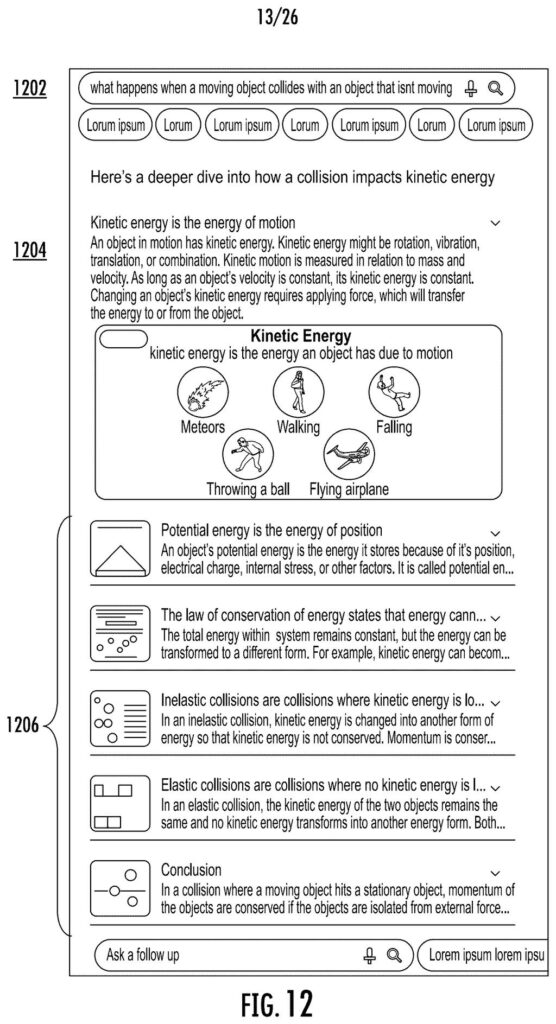
What Google's research-style search actually does
Every time you type a big question into a search box, like which hiking boots to buy or how the Roman Empire fell, you end up opening a dozen tabs and piecing the answer together yourself. Search engines are great at fetching pages, but they leave the reading and the connecting to you.
Google's patent application describes a search that does that legwork. It first decides whether your question is a big, research-style one. If so, it may ask you a few clarifying questions, then writes itself an outline: one main topic plus a handful of sub-topics. It runs a separate search for each, reads what comes back, and writes an organized report.
You would see the result at the top of the page, with sections you can expand and links back to the sources. You can then ask follow-up questions, and the system answers from the research it already did.
… processing, by the computing system, the search query with a generative model to generate a research outline, wherein the research outline comprises an overview topic prompt and a plurality of sub-topic prompts associated with a topic of the overview topic prompt …
Translation: The system uses AI to turn your search into an outline with main topics and smaller subtopics.
How the outline turns one query into many
The filing covers a pipeline built around a generative model (an AI that writes text, like a large language model). First, a small, fast classifier model sorts your query into a type: ordinary search, a medical image lookup, or a research task. Only research-style queries get the heavy treatment, which the filing says saves computing power.
For those, the model may ask clarifying questions, then builds a research outline: an overview topic, several sub-topic prompts, and a list of resources to search. From there:
- It writes a separate search query for the overview and for each sub-topic.
- It runs those searches and keeps a separate set of results for each one.
- It reads your query, the outline and the results, then writes a research synthesis, an organized distillation (a boiled-down summary) of what it found.
The synthesis can be shortened into a brief answer with embedded citations that link to the sources. Results are saved in a cache (temporary storage) so follow-up questions can reuse the same context. A second version of the idea shows an introduction, a conclusion, and bold sub-topic headers with collapsible descriptions. The filing also mentions an audio overview in podcast style and a generated webpage as output options.
… generating a model-generated research outline, performing a plurality of searches based on the model-generated research outline, and generating a model-generated response based on the search query, research outline, and search results.
Translation: It builds an outline, runs multiple searches from it, and creates a synthesized response.
What this means for Google Search users
If this ever lands in Google Search, a big question like which laptop to buy or what caused a war could return a structured report at the top of the page, with sections you open only when you care. The filing says these tasks can take people one to two hours when split across many searches, and it pitches the system as cutting that down.
The shopping angle stands out. The filing describes tracking shopping interactions for revenue sharing and personalization, so a research answer could also be a place where buying decisions happen. The embedded citations matter too: the filing says linking back to sources is meant to reduce made-up answers and make fact-checking easy.
Google's 48th filing we've tracked since May in agents that act for you, after one that researches photos and sensor data turned into actions, keeps building this patent picture.
The cost of this design is time. Running a plan, several searches and a write-up takes far more work than returning a page of links, so the filing limits it to questions that look like research.
That sorting step is where it could break: a wrong guess means a simple question gets a slow report or a big one gets a shallow answer. The clarifying questions add another toll, since you have to answer them before you get anything.
The bigger trade is control. A report with citations saves you hours, and the model also decides which sources count and what gets cut from the summary. For a shopping or history question that is a fair swap, and for a health or money decision you would still want to click through the sources yourself.
Get our take in your Top Stories
Liked this breakdown? Add Patentlyze as a preferred source on Google, and our plain-English take shows up more often in your Top Stories the next time Google patent news breaks.
There are more where this came from
We read every patent application Big Tech publishes and send you the ones worth knowing. Plain English, free, every week.
The drawings
26 drawing sheets from US 2026/0310701 A1 · click any drawing to enlarge


Want this weekly breakdown for a company we don't cover? Patentlyze Pro →
Be the first to weigh in