
A New Google Patent Trims Phone Battery Drain by Matching Cellular Power to Each App
Your phone's cellular chip may be running at full tilt while you stream a podcast. Google's patent application has the operating system ask each app what it needs and set the chip's power to match.
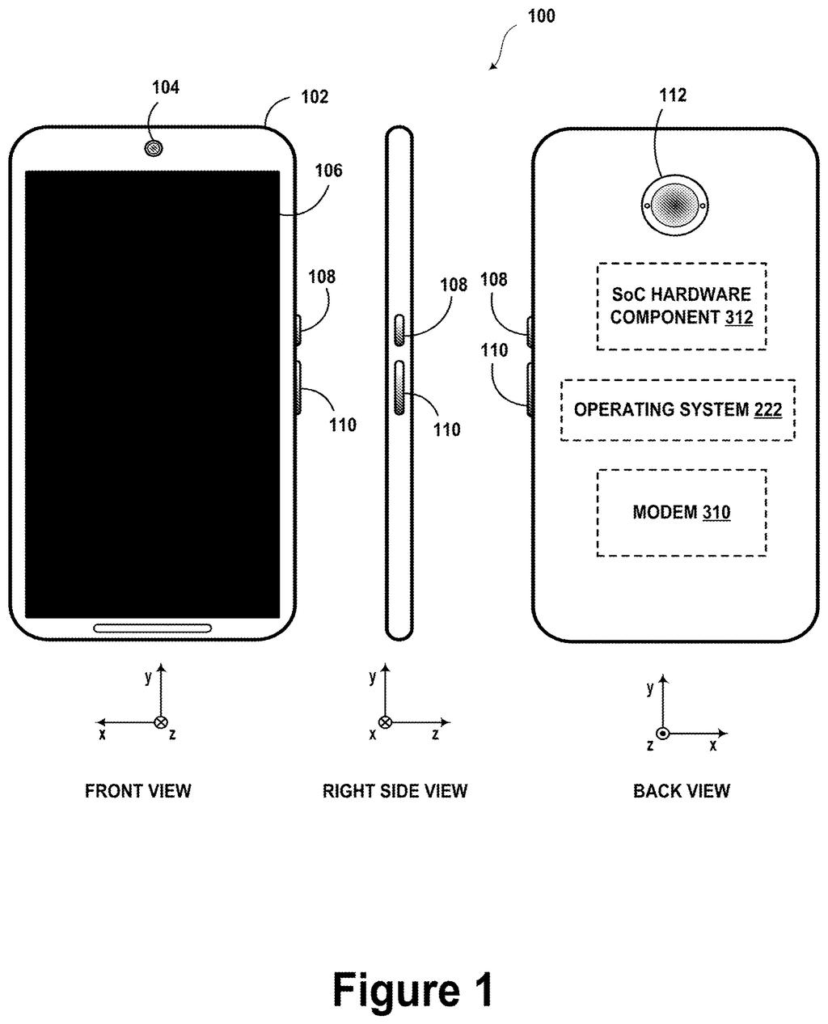
What Google's modem power-saving patent does
Right now, the cellular chip in your phone (the modem) can run at high speed and high power even when the app in front of you hardly needs it. Streaming a show doesn't take the same muscle as a speed test, but the hardware doesn't always know that, and the extra power comes out of your battery.
Google's patent application has the phone's operating system, the software that runs everything else, collect what each app needs: how fast the connection has to be and how quickly it has to respond. The operating system passes that to the modem, the modem replies with the power settings it can offer, and the system picks the lowest one that still does the job.
So a video stream could get a gentler setting, while a speed test gets full power. The filing also describes using a trained AI model to guess an app's needs from the task it is doing.
accessing first system communication requirements associated with running a first application on the mobile device; sending the first system communication requirements to a modulator-demodulator (modem) of the mobile device; and adjusting an operation mode of the modem based on the first system communication requirements …
Translation: The phone checks what kind of internet connection an app needs and tells the cellular modem to match it.
How the OS and modem negotiate a power mode
Under the hood, the operating system (the core software that runs your phone) gathers system communication requirements for an app. These are mostly two numbers: throughput (how much data per second the app needs) and latency (how long the app can wait for a response). It sends them to the modem, which answers with feedback listing its available operation modes. The operating system then selects one mode and tells the modem to switch to it. That sequence is what the first claim covers.
The filing describes several dials the modem can turn:
- Voltage and frequency: a low setting for light jobs like streaming and a high one for a speed test, scaled to the lowest level that still meets the need.
- Power state of the data link: the modem connects to the rest of the chip through PCIe interfaces (fast internal data connections). A low power state saves energy but takes longer to wake up, known as exit latency. If an app can tolerate 20 milliseconds, the system can pick a low state that wakes in 20.
- How many links are used: a light app might use one interface, while a heavy one gets several. In the filing's example, an app needing 750 MB/s gets a 1 GB/s interface instead of a 2 GB/s one.
With two apps running, the system picks the lowest setting that satisfies both. The operating system can also predict an app's needs with a trained machine-learning model (software that learns from past examples) based on the task, such as streaming. The filing says the same approach can apply to other chip parts, like memory.
… adjusting an operation mode of the hardware component based on the first system communication requirements and based on feedback received from the modem in response to sending the first system communication requirements to the modem.
Translation: The system changes how the modem runs by looking at app needs and what the modem says it can do.
What this means for your phone's battery life
If it works as described, the payoff is a phone that spends less battery on its cellular hardware during everyday things like streaming music or scrolling, since those jobs rarely need top speed. You would not see a new feature. You would just have a battery that holds up a bit longer through a normal day.
The idea also puts the operating system in charge of hardware that usually manages itself, using what apps say they need. The filing gives no battery-life numbers and does not tie the idea to a specific Google phone, so how much you would actually gain stays an open question.
Google's 30th filing we've tracked in our cell phone coverage since May adds to a run that includes a chip that predicts overheating and a camera focus that flags uncertainty.
Battery life is what people notice, and this idea goes after a hidden cause of drain: a cellular chip running faster than the app in front of you needs. Playing a podcast should not cost the same energy as a speed test, and this filing is built around that common-sense gap.
You would most likely feel it as a phone that reaches bedtime with a little more charge, with no setting to toggle and nothing to learn. The risk to you is a wrong guess. If the system picks too low a setting, a video call could stutter, so the filing's rule of choosing the lowest mode that still meets the app's stated needs matters.
The filing offers no numbers on savings. Treat it as a sensible, modest efficiency idea whose value depends on how much power the modem really wastes today.
Get our take in your Top Stories
Liked this breakdown? Add Patentlyze as a preferred source on Google, and our plain-English take shows up more often in your Top Stories the next time Google patent news breaks.
There are more where this came from
We read every patent application Big Tech publishes and send you the ones worth knowing. Plain English, free, every week.
The drawings
7 drawing sheets from US 2026/0310280 A1 · click any drawing to enlarge


Want this weekly breakdown for a company we don't cover? Patentlyze Pro →
Be the first to weigh in