
Google Patents a Way for Wireless Earbuds to Share Audio Between Each Other
When one of your wireless earbuds misses an audio packet, the usual fix wastes bandwidth retransmitting data both earbuds already know. Google's new patent takes a different route: let the earbuds talk directly to each other and share only what's missing.
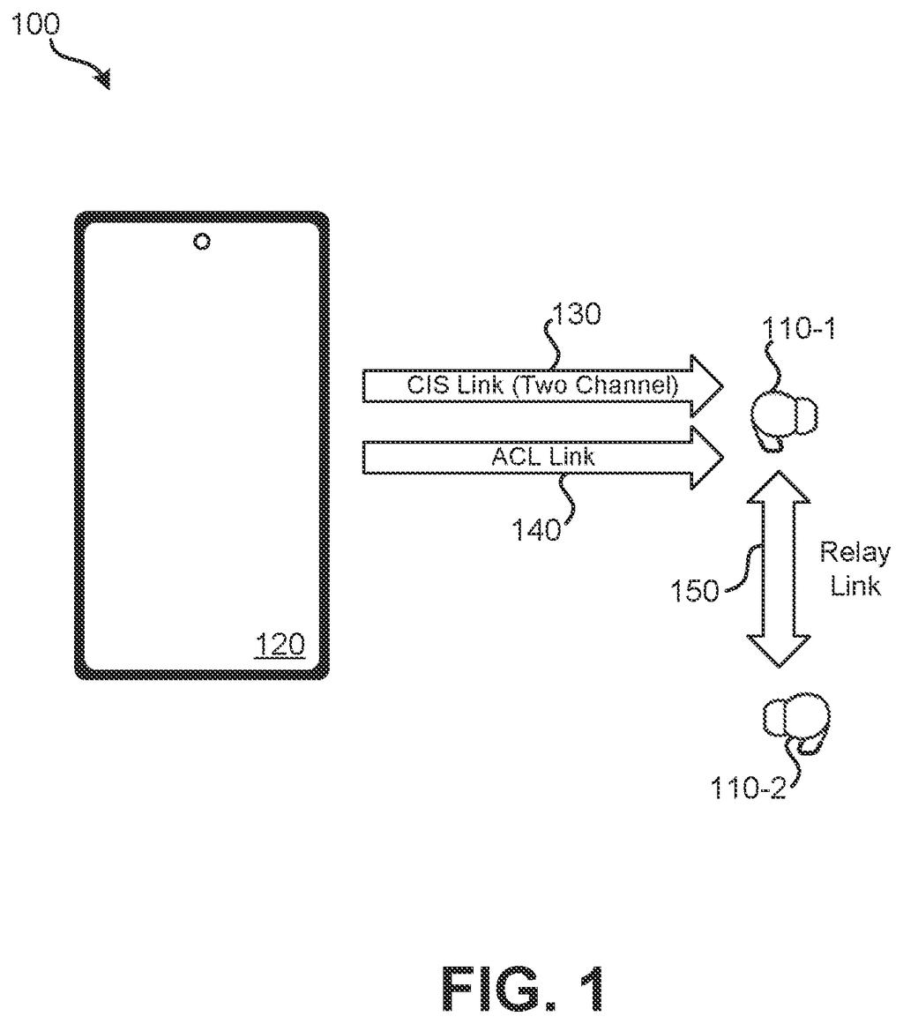
What Google's earbud-to-earbud audio relay actually does
Imagine you're listening to music through wireless earbuds and one earbud briefly loses its connection. Today, the fix typically involves your phone resending the whole audio chunk, which eats into wireless bandwidth and can still cause a small glitch.
Google's patent describes a smarter handoff. Stereo audio is already split into a left channel and a right channel. If one earbud drops a packet, it can ask the other earbud to send it only the channel it needs. The earbud that got the packet successfully passes along just that missing half, directly, without involving your phone or speaker at all.
The result: your left earbud plays its left-channel audio, your right earbud plays its right-channel audio, and the two earbuds sorted out the gap between themselves. Less wasted bandwidth, and a better chance of uninterrupted sound even when the wireless connection hiccups.
… transmitting, by the first earbud directly to the second earbud, audio data for only the second channel from the audio packet …
Translation: The working earbud shares just the missing channel straight to the other earbud.
How the left and right earbuds split and recover audio data
The patent describes a protocol for two earbuds to coordinate audio recovery without looping in the source device (your phone, laptop, or tablet).
Here's how the pieces fit together:
- Stereo audio arrives pre-split: The audio source encodes stereo as two separate mono channels inside a single packet. Each earbud is assigned one of those channels.
- One earbud misses the packet: The second earbud detects that its copy of the packet didn't arrive successfully, a determination made locally on the device.
- Peer-to-peer rescue: The second earbud sends a request directly to the first earbud. The first earbud then transmits only the second channel's audio data, not the whole packet, directly to its partner.
- Each earbud plays its part: The first earbud outputs its mono channel; the second plays the recovered mono channel. Together they reproduce the full stereo experience.
The key efficiency gain is specificity. By transmitting only the missing channel instead of the full stereo packet, the system uses roughly half the wireless bandwidth that a standard full retransmission would require. The earbuds handle the recovery themselves, so the source device doesn't need to detect the failure, queue a retransmission, or dedicate any of its own radio resources to the fix.
Various arrangements are presented that can help preserve bandwidth, such as for audio communications involving high fidelity audio being transmitted to wireless earbuds.
Translation: These methods save bandwidth when streaming high quality sound to wireless earbuds.
What this means for high-quality wireless audio reliability
Wireless audio quality has gotten very good, but it remains vulnerable to interference, especially in crowded environments like airports or offices. When packets drop, audio codecs can mask the gap for a fraction of a second, but repeated drops cause audible artifacts. The usual workaround, having the source device resend data, adds latency and congests the connection.
For Google, which sells Pixel Buds and develops Android's audio stack, this kind of earbud-to-earbud coordination is a natural direction. If it works as described, you'd notice fewer drop-outs in dense Wi-Fi environments without your phone doing extra work. It also points toward earbuds that act more like cooperative devices than two independent receivers, which matters as high-bitrate lossless audio formats become more common and leave less room for error.
Google's 12th filing in our Wearable patents we cover since May follows work like radar blood pressure sensing and voice rebuilt from head vibrations.
Wireless earbuds cutting out mid-song or during a call is a small but persistent annoyance, and it happens most reliably in the places where you most want clean audio: airports, open offices, crowded commutes. The problem is not cheap hardware. It is radio congestion, and buying more expensive earbuds does not make a crowded room less crowded.
The approach here is scaled appropriately to that frustration. When one earbud misses a chunk of audio, the other earbud sends it only the missing piece, keeping the recovery small and targeted rather than retransmitting everything from scratch.
The real test is whether the two earbuds can talk reliably to each other at the exact moment one of them is already struggling, since a congested environment rarely causes trouble in only one direction. That is a genuine constraint, and how well it holds up in practice will determine whether this solves the problem where people actually feel it.
There are more where this came from
We read every patent application Big Tech publishes and send you the ones worth knowing. Plain English, free, every week.
The drawings
8 drawing sheets from US 2026/0304086 A1 · click any drawing to enlarge


Want this weekly breakdown for a company we don't cover? Patentlyze Pro →
Be the first to weigh in