
Tesla Files Patent for a Protective Camera Cover That Fixes the Blur It Causes
The clear cover in front of a camera is there to protect it, but a curved one can blur the picture all by itself. Tesla's patent fixes that by making the cover thicker in some spots than others.
What Tesla's uneven camera cover actually does
You're sitting in a self-driving car, or standing next to a robot, and a camera behind a curved clear cover is trying to read the scene. The cover keeps dust and moisture off the lens. It also bends the light a little, so things look slightly closer than they are and the picture goes soft.
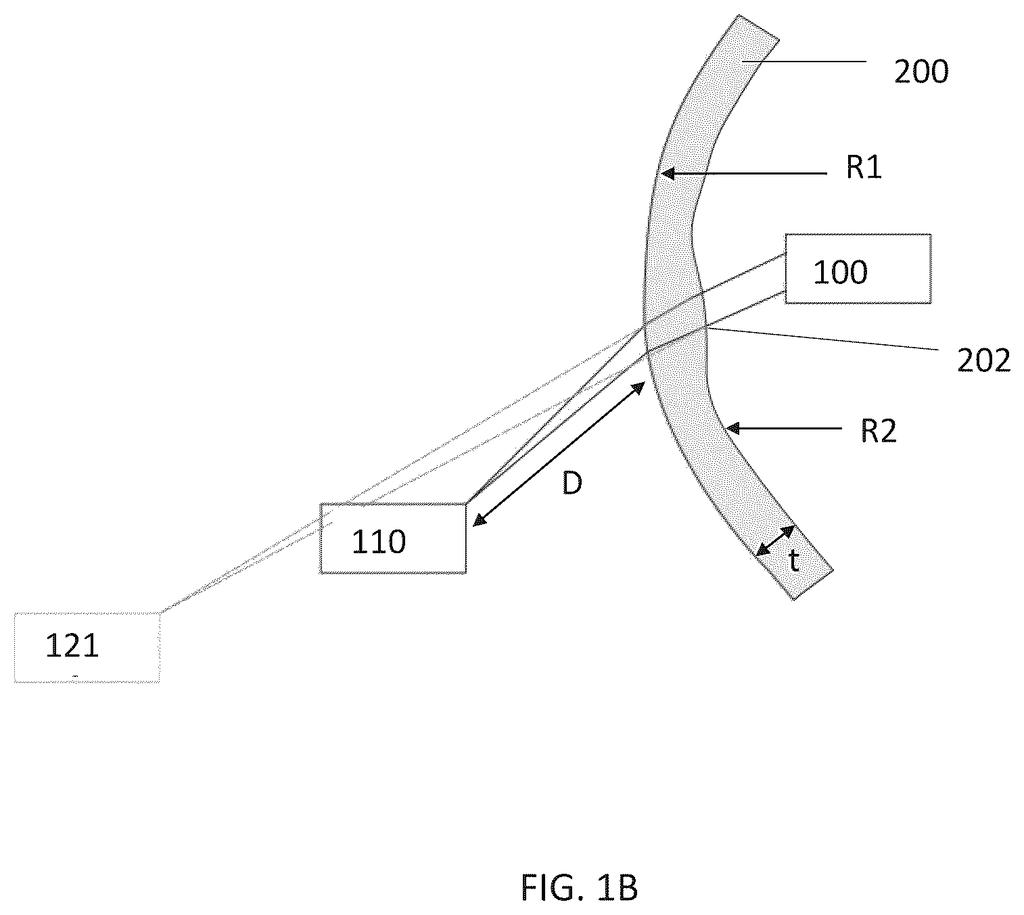
Tesla's patent fixes the cover instead of the camera. Rather than one even thickness, the inner surface of the cover is curved differently in different zones. The top, which mostly sees faraway things, gets one shape. The bottom, which sees things nearer the ground, gets another, so each part of the view stays in focus.
Because the correction lives in the shape of the clear plastic or glass, the camera and its software don't have to clean up the blur afterward.
When a curved shield with a uniform thickness is placed in front of a camera, the shield can create optical distortions.
Translation: Putting an even curved cover over a camera naturally causes the image to blur.
How the cover bends light differently by zone
A normal curved camera cover has the same thickness everywhere. That sounds neat, but it acts like a weak lens. The filing calls the effect negative vergence (how much light rays spread apart or come together), which makes objects appear closer than they are and blurs the image. One example in the filing shows distortion of up to -250 milli-diopters (a unit for lens strength), and it says the figure can reach 2000 or more depending on the shield's shape.
The fix is to change the cover's inner curvature radius (how tightly the inside surface curves) from one zone to the next, which makes the thickness uneven. The filing's independent claims cover three related ideas:
- A cover with upper, middle and lower portions, each with its own focus distance and an inner curve set from that distance.
- A manufacturing method that determines those focus distances and then forms the cover to match.
- A curved cover whose body adjusts vergence to cut blurring and keep the image within the camera's focus range.
The upper zone is tuned for distant objects and the lower zone for closer ones. The filing gives a formula linking the inner curve to the material's refractive index (how strongly it bends light), its thickness, and a target object distance. The outer surface can stay the same curve throughout.
The listed materials are PMMA (acrylic), polycarbonate and glass, optionally tinted, shaped in molds with non-parallel surfaces.
an upper portion configured to have a first focus distance, the upper portion having a first inner curvature radius and a first outer curvature radius …
Translation: The shield is split into distinct sections, each shaped with precise curves to correct the focus.
Why a blurry camera cover matters for Tesla
If a camera sits behind a curved cover, its picture can be soft before any software touches it. A cover built to keep both faraway and nearby things in focus gives whatever reads those images a cleaner starting point. The filing names autonomous driving, surveillance and high-quality photography as places where this helps, and its background mentions robots.
The appeal is that it changes the shape of a part that has to exist anyway. The filing also describes optional extras: a snap-fit mount for quick installation, a dust and moisture seal, recycling at end of life, and sensors that flag when a cover needs replacing. Those are variations, and the core claims are about the curves.
Tesla's 11th filing we've tracked since May in our camera-only bet work builds on ideas like nearby cars fixing GPS errors and faster AI training.
The path to a product here is short. The core idea needs no new sensors, no software and no new chips, just a molded piece of clear plastic or glass whose inside curve changes from top to bottom.
What has to exist first is a camera with a fixed spot on the vehicle or robot, because the curves are set from the distances each zone usually sees. Move the camera or change what it looks at, and the mold changes too. The filing supplies a formula for the math but no image tests beyond its distortion figures.
The shortest route is a mold swap at a parts supplier, with a custom cover for each camera position. That makes it a modest, sensible piece of engineering: a sharper picture for very little added complexity.
Get our take in your Top Stories
Liked this breakdown? Add Patentlyze as a preferred source on Google, and our plain-English take shows up more often in your Top Stories the next time Tesla patent news breaks.
There are more where this came from
We read every patent application Big Tech publishes and send you the ones worth knowing. Plain English, free, every week.
The drawings
4 drawing sheets from US 2026/0319245 A1 · click any drawing to enlarge


Want this weekly breakdown for a company we don't cover? Patentlyze Pro →
Be the first to weigh in