
Intel Files Patent for Letting Two Devices Agree on How to Pair Over Wi-Fi
Intel's patent application describes how two Wi-Fi devices could settle on a pairing method by themselves, whether that's a QR code, a PIN or a button push.
What Intel's Wi-Fi Direct pairing patent does
You're standing next to a new wireless speaker, phone in hand, trying to link the two. Does it want a QR code? A PIN? A button push? Intel's patent application is about getting the two devices to settle that between themselves.
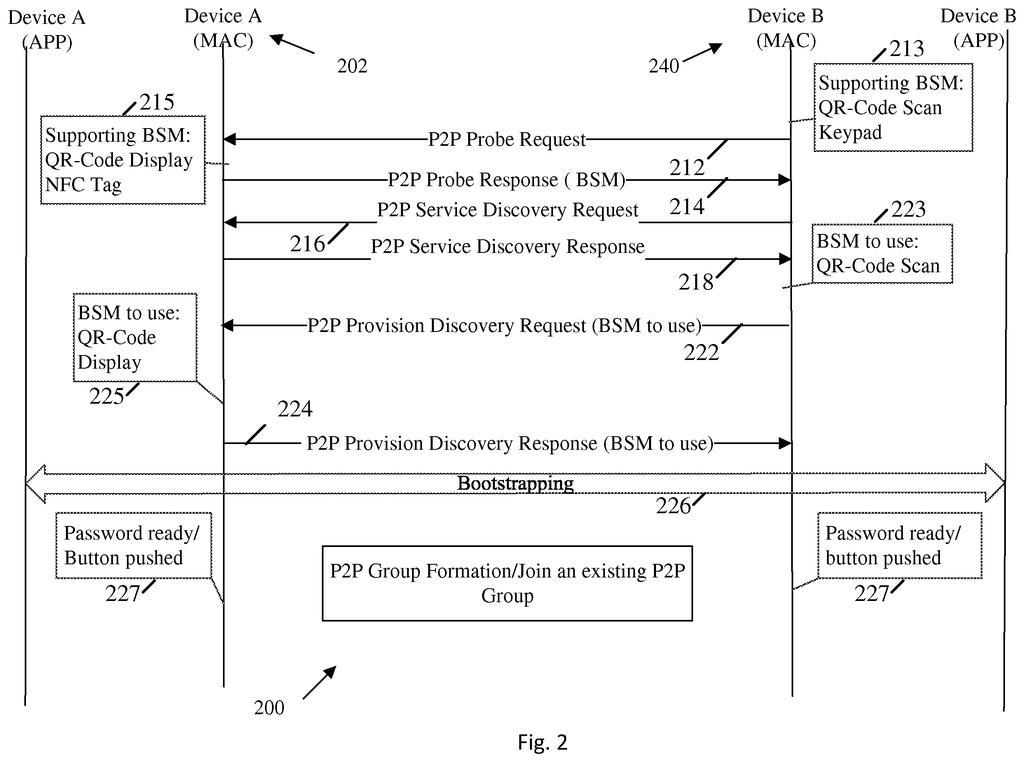
Here's the idea. Each device announces which pairing methods it supports, they compare lists, and they agree on one, such as scanning a QR code, typing a PIN or tapping an NFC tag. Once they're paired, they swap a few more messages to create a secret key that scrambles everything they send each other.
The filing says the goal is a faster, safer replacement for an older setup method with known security holes. By Intel's count, the new route needs only four key messages, where the old one needs more than ten.
determine a selected pairing bootstrapping method based on a first frame transmitted by the first wireless communication device and a second frame received by the first wireless communication device from a second wireless communication device …
Translation: The devices compare notes to figure out the best way to connect to each other.
How two devices agree on QR, PIN or button
The filing covers how two nearby devices set up a direct link using Wi-Fi Direct (a standard that lets two devices connect straight to each other, with no router in between). The claims focus on the first step: agreeing on how to pair.
The sequence runs like this:
- Each device sends a message listing the pairing methods it supports. The filing's list includes opportunistic (a push-button style setup), PIN code, passphrase, QR code and NFC tag (a tap-to-connect chip).
- One device sends a Provision Discovery request (a message saying "let's use this method"), and the other answers. If the second device needs time, say while it waits for you to type something, it can send a "comeback" reply asking the first to try again later.
- The two pair using the chosen method, which usually leaves them with a shared password.
Next, the devices build a master key. With a shared password, they run SAE (Simultaneous Authentication of Equals, a password-based handshake from WPA3 Wi-Fi security). With no shared password, as in a push-button setup, the filing describes a default PIN with SAE, or OWE (Opportunistic Wireless Encryption, which scrambles traffic without confirming who's on the other end).
Finally, a four-way handshake (a short exchange of messages) turns that master key into the actual encryption key for the connection.
… derive a Pairwise Master Key Security Association (PMKSA) based on a second message-exchange with the second wireless communication device, e.g., after pairing with the second wireless communication device …
Translation: They generate a shared security key after connecting to keep their communication safe.
Why replacing old Wi-Fi setup matters
If this approach reaches real devices, linking your phone to a speaker, laptop or other gadget could take fewer steps and fewer failed tries. The filing says the key step needs four messages, compared with more than ten messages and two connection set-ups for the older Wi-Fi Protected Setup method.
Security is the other half. The filing says the older method has known weaknesses, including exposure to brute-force attacks (someone trying passwords until one works), and may fall short of what 6 GHz Wi-Fi requires. The replacement builds on WPA3 password security, which is what modern Wi-Fi networks use. Whether any maker adopts it is a separate question, since this document is a patent application and not a product.
Intel's 177th filing in our Intel coverage since May adds to a run that includes work on safer direct Wi-Fi pairing and faster VR head-turn response.
Pairing gadgets is a small annoyance almost everyone has hit, and the filing points to a bigger flaw underneath: the older setup method has known holes, including exposure to repeated password guessing. A problem that common and that old deserves a fix. The fix here is sized to match.
It is plumbing: a shared set of rules so two devices can agree on how to link up, then lock the connection. If it works, you will notice fewer failed connections and little else.
The filing is written around Wi-Fi Direct and Wi-Fi Alliance specifications, so it only pays off if other makers follow the same rules. A patent application on its own settles none of that.
Get our take in your Top Stories
Liked this breakdown? Add Patentlyze as a preferred source on Google, and our plain-English take shows up more often in your Top Stories the next time Intel patent news breaks.
There are more where this came from
We read every patent application Big Tech publishes and send you the ones worth knowing. Plain English, free, every week.
The drawings
7 drawing sheets from US 2026/0322872 A1 · click any drawing to enlarge


Want this weekly breakdown for a company we don't cover? Patentlyze Pro →
Be the first to weigh in