
Qualcomm Files Patent for Letting Your Phone Skip Its Cell Tower Check-Ins
Every time your phone crosses into a new patch of the cell network, it normally has to wake up and announce itself. Qualcomm's new patent describes a 'welcome message' that tells it to skip that step.
What Qualcomm's phone 'welcome message' does
You're on a train, phone in your pocket, screen dark. Each time the train crosses into a new zone of the cell network, your phone has to wake up, connect, tell the network where it is, and then go back to sleep. Do that all day and it adds up.
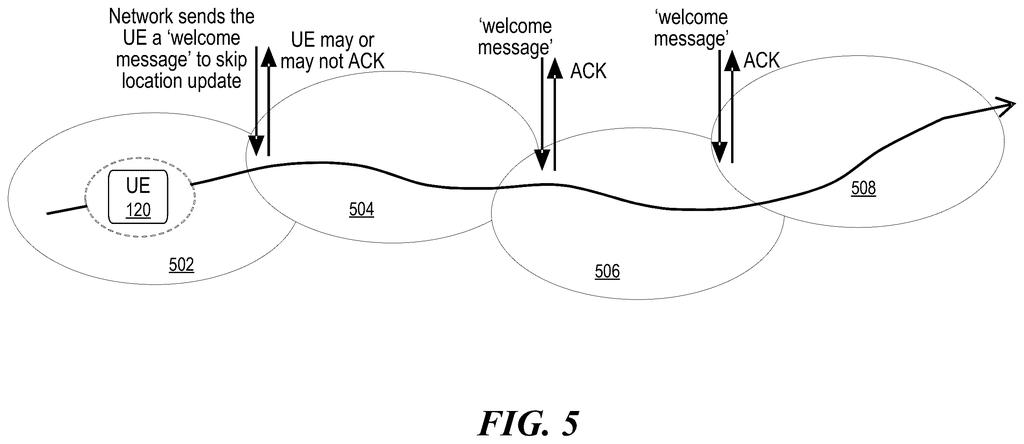
Qualcomm's patent describes a shortcut. As your phone enters a new zone, the network can send a 'welcome message' that says, in effect, you're fine, don't bother checking in. Your phone skips the routine and saves battery. If no message arrives before a timer runs out, it checks in the old-fashioned way, so nothing gets lost.
The filing also covers your other gadgets. A phone could speak up for a paired watch or smart glasses, so only one device does the checking in for the whole group.
to receive an indication of whether to skip a registration and location update in response to entering a new area; to move to the new area while in idle/inactive mode; to skip the registration and location update in the new area, in response to receiving the indication when the indication instructs the UE to skip the registration and location update; …
Translation: The phone gets instructions to ignore cell tower check-ins when moving into a new zone while idle.
How a phone knows when to skip a check-in
When a phone is idle, the network still needs a rough idea of where it is so it can find the phone when a call or message arrives. Today the phone reports in whenever it enters a new tracking area (a cluster of cells the network treats as one zone). Each report means setting up a connection, receiving new settings, and tearing the connection down again, which costs energy for both the phone and the network.
Under the patent, the network sends an indication (the filing calls it a 'welcome message') as the phone enters a new area. It says either skip or don't skip. If no indication arrives, or it says don't skip, the phone sends its location update as usual. The claims cover the phone's side, the network's side, and a method. The filing says the message could ride on the paging signals that idle phones already listen for.
The filing adds several supporting pieces:
- Fallback timer: starts when the phone enters the new area, counted in sleep-wake cycles or seconds. If it runs out with no skip message, the phone checks in.
- Delegates: one device, such as a phone, can pass the message along to others in its group and do location updates for them.
- Support reporting: a phone can tell the network it supports skipping, and phones fall back to the old routine where a cell does not.
- Check-in schedule: the message can also change how often the regular periodic check-ins happen.
A phone may also reply with an estimate of where it is heading.
The processor(s) is still further configured to transmit, to a network entity, the registration and location update in the new area, in response to not receiving the indication or in response to the indication instructing the UE not to skip the registration and location update.
Translation: Otherwise, the device automatically sends its regular location update to the network as it normally would.
Why your battery and the network both gain
If this ever ships, the payoff is battery life you can't see but might feel. Phones that move a lot, in a car or on a train, check in the most, so they would save the most. Small gadgets matter too: the filing says the problem is worse for low-power Internet of Things devices like trackers and sensors, and a watch or smart glasses could rely on your phone instead of reaching the network themselves.
Networks gain as well. Fewer check-ins mean fewer connection set-ups for towers to handle, which the filing says can improve use of both energy and radio spectrum. The patent frames the idea for 5G, though it says it could apply to older network generations too.
Qualcomm's 494th filing in our Qualcomm coverage since May adds to a run that includes the battery-saving tower patent and the camera location cross-check.
On paper, the road to a shipping feature is short. Nothing here needs new hardware: it is a new message and a new rule for how phones and towers behave, which is firmware and network software work.
The hard part is that both sides have to agree. Carriers must send the welcome message and phone makers must listen for it, and that usually means writing the rule into shared 5G standards first. The filing helps by letting a phone report that it supports the feature and by falling back to the old check-in routine when a tower does not.
My verdict: useful plumbing, and you would never see it on screen. If it appears at all, expect it as a line in a standards document long before it shows up as a longer-lasting battery.
Get our take in your Top Stories
Liked this breakdown? Add Patentlyze as a preferred source on Google, and our plain-English take shows up more often in your Top Stories the next time Qualcomm patent news breaks.
There are more where this came from
We read every patent application Big Tech publishes and send you the ones worth knowing. Plain English, free, every week.
The drawings
7 drawing sheets from US 2026/0313581 A1 · click any drawing to enlarge


Want this weekly breakdown for a company we don't cover? Patentlyze Pro →
Be the first to weigh in