
Intel
Intel · Software · Filed Jun 10, 2026 · USPTO published Oct 8, 2026 · Oct 8 release
Intel Files Patent for Data Centers That Shift Work Between Chips Mid-Job
Intel is asking for rights to a cloud scheduler that can move pieces of a running job from one group of chips to another, graphics chips included, as demand shifts. The paperwork traces back to a 2016 provisional application.
- Publication number
- US 2026/0310502 A1(US20260310502A1)
- Applicant
- Intel Corporation
- Filed · Published
- Jun 10, 2026 · Oct 8, 2026
- Inventors
- Francesc Guim Bernat, Evan Custodio, Susanne M. Balle, Joe Grecco, Henry Mitchel, Slawomir Putyrski
- Status when we published
- Waiting for an examiner
- Document
- 25 claims
- US classification
- 718/102
- Parent application
- Continuation of 18/109,774 (filed Feb 14, 2023)(18109774)
What Intel's cloud job-shifting patent does
Imagine you run a busy restaurant kitchen. One cook is fastest on the grill, another handles desserts, and a third is best at prep. When the grill backs up, a good manager moves part of the order to whoever has free hands, so the customer never notices the scramble.
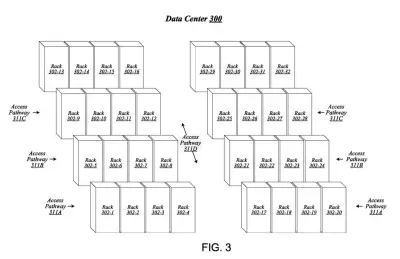
Intel's patent application applies that idea to the giant data centers behind cloud services. A management program splits a job into pieces, runs the pieces at the same time on groups of virtual computing resources, and moves some pieces to a different group when needed. It decides using three things: what kind of job it is, how busy the specialized chips (graphics chips included) are, and what the customer asked for.
The hardware can sit in nearby machines or far-off ones. That is the hidden plumbing that could shape how quickly your cloud-based apps get their answers.
… dynamically reallocating, by the management resources, one or more of the multiple portions of the at least one workload to be concurrently executed by at least one other set of the multiple virtualized resources …
Translation: The system shifts active tasks to different chips while the job is still running.
How Intel's scheduler splits and moves jobs
Claim 1 covers a cloud system built from physical processors (CPUs), memory, graphics chips (GPUs) and management software. The job being handled is a virtual machine (a software-made computer running inside a real one) or a container (a lightweight bundle of an app and everything it needs to run).
The management software does two things:
- Schedules multiple pieces of the job onto a set of virtualized resources, which run those pieces concurrently (at the same time).
- Dynamically reallocates one or more pieces to a different set of virtualized resources while the work continues.
Both choices rest on three kinds of data: workload type (what sort of job it is), accelerator utilization (how busy the specialized chips are), and workload request data (what was asked of the system). The physical resources can be spread across multiple local and remote hosts.
Dependent claims add a directory listing each accelerator's identity and architecture, software-defined infrastructure (hardware pooled and controlled by software), cloud service types, and storage. The description explains the earlier version: a management engine reads a customer's request, such as a target delay or throughput, picks a matching accelerator from the directory, and swaps in a replacement if one falls behind.
… determine at least one accelerator device capable of processing a workload in accordance with the at least one request parameter, transmit a workload to the at least one accelerator device, receive a work product produced by the at least one accelerator device from the workload …
Translation: It finds the best specialized chip for the job, sends the work there, and collects the final result.
Why Intel's data center chips need a job-mover
If you use a cloud service for encryption, compression, image processing or AI work, a scheduler like this sits behind the scenes deciding which chip handles your piece of the job. Moving work off a busy or failing chip could mean fewer slowdowns, and it lets a data center get more out of pricey specialized hardware.
For Intel, the filing records its idea of pooling chips across racks and handing them out as needed. The family goes back to a 2016 provisional application, so the core ideas are old. This new application is a continuation, a follow-up that lets the company pursue fresh claims on the same disclosure.
Intel's 49th filing we've tracked since May in our AI chip competition watchlist builds on one on instant AI network answers and one on CPU memory guessing.
Source: US 2026/0310502 A1 at the USPTO (PDF). Full patent text and figures are in the official publication.
Get our take in your Top Stories
Liked this breakdown? Add Patentlyze as a preferred source on Google, and our plain-English take shows up more often in your Top Stories the next time Intel patent news breaks.
Add Patentlyze on Google
One click.
There are more where this came from
We read the new patents from Big Tech, carmakers and more and send you the ones worth knowing. Plain English, free, every week.
The drawings · 18 sheets
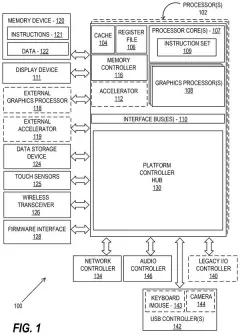
18 drawing sheets from US 2026/0310502 A1 · click any drawing to enlarge


Show the other 10 sheets


More from Intel
All 199 Intel patents →
More in Software
All 816 Software patents →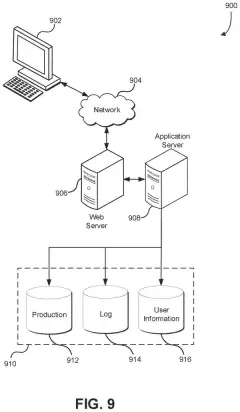
Amazon
Amazon Patents a System That Pauses an Unfinished Job and Resumes It on a Different Server
Nvidia
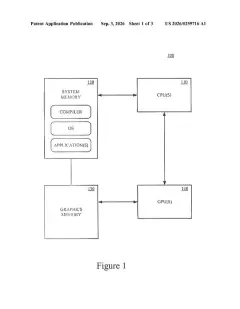
Nvidia Patent Routes Compiled Code Dynamically to Different Processor Targets at Runtime
AMD
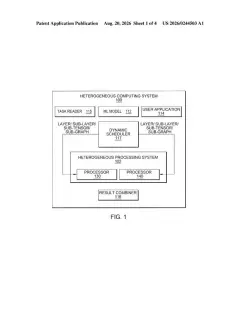
AMD Patents a System That Splits AI Work Across Different Chips on the Fly
Nvidia
No comments yet