
Apple Files Patent for Headsets That Tell Apps Whether Your Fit Is Good Enough
Your headset never sits on your face quite the same way twice, and for a medical app that can matter. Apple's patent application lets an app ask the headset whether your current fit is good enough for the job.
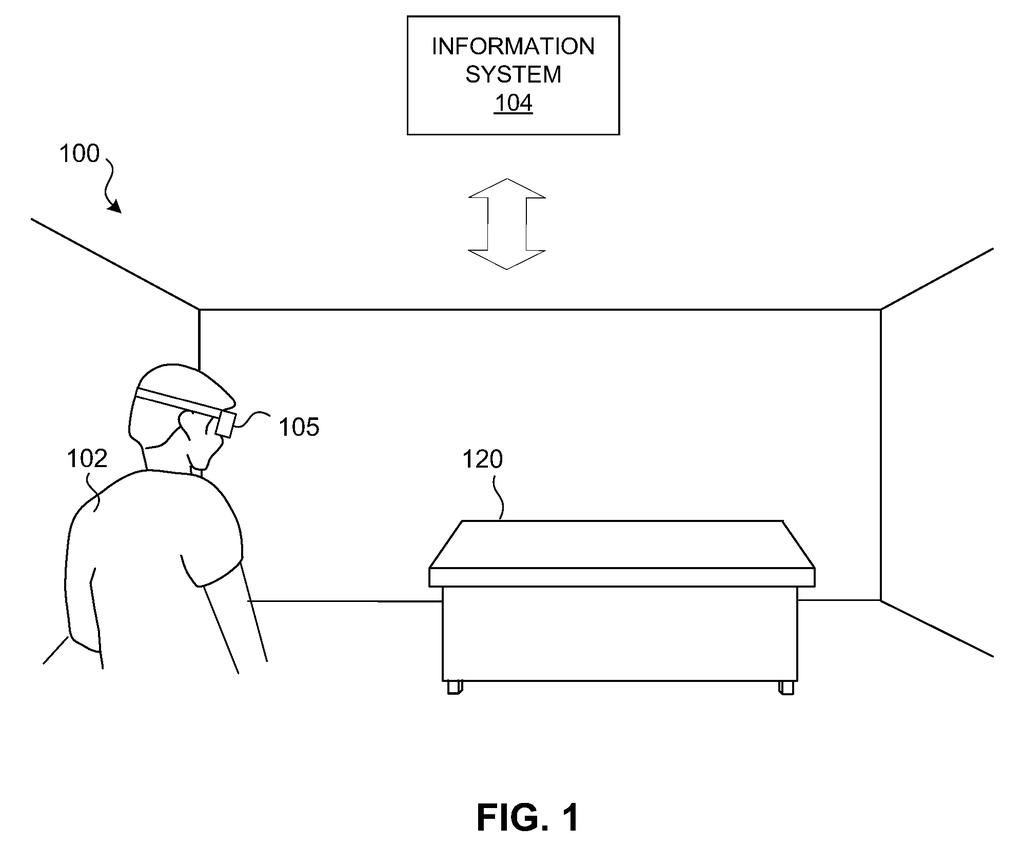
What Apple's headset fit check actually does
Every time you slide a headset onto your face, it lands a little differently than it did yesterday. Nudge it slightly, or put on glasses first, and how much of the screen you can actually see changes. For most apps that hardly matters. For a medical vision test, it can ruin the result.
This patent application describes a way for an app to simply ask the headset whether your current fit is good enough. The headset checks where your eyes sit relative to the display, works out what you can really see, and answers with a pass or fail.
If you fall short, the app can tell you to adjust the headband or reposition the device. It can also alert a doctor on a nearby tablet, or refuse to run at all. The answer can even be a plain yes or no, so the app never has to see your raw eye data.
receiving a request for an application, the request corresponding to the wearable electronic device satisfying a performance requirement required for the application to perform a function while the wearable electronic device is worn by a user …
Translation: An app asks if the headset is currently being worn well enough to work properly.
How the headset simulates light reaching your eye
Claim 1 describes a simple three-step exchange on a wearable device. An app sends a request asking whether the device can meet a performance requirement (a minimum standard the app needs, such as a certain viewing angle) while a person is wearing it. The device gathers data about what it can deliver to that wearer right now, then sends back an answer based on both.
The filing says that data can come from sensors and includes:
- Where your pupils sit relative to the lenses, and which way you are looking
- The distance between your eyes
- Whether you are wearing glasses
- Known details of the display and lenses
To judge what you can actually see, the filing describes a ray-tracing model (a simulation that follows light from each display pixel, through the lenses, to your pupil). The checks cover field of view (how wide a picture you see), distortion, color fringing, sharpness and color. Apps ask through an API (a standard doorway apps use to request information from the system).
The answer can be a pass or fail, calculated values, or a yes that hides your actual measurements. The filing also describes two developer modes: preset viewing zones numbered 1 to 4, or custom boundaries drawn with rays from the pupil. A 90-degree minimum is given as one example.
… enable an application to query a wearable device to determine whether current use of the wearable device by a user satisfies a performance requirement.
Translation: Apps can check the headset fit to see if performance meets their needs.
Why medical and training apps need this check
If you ever use a headset for something that has to be exact, like a vision test or a training simulation, this gives the app a way to confirm the setup is good enough before it counts your results. You would get plain instructions, such as tightening the headband or repositioning the device, instead of a bad reading nobody notices.
For app makers, it turns headset fit into something they can check against a requirement, including legal ones like the FDA rules the filing mentions for peripheral vision testing. The privacy angle helps too: an app can learn that a minimum was met without seeing your raw eye-tracking data. The filing describes head-mounted devices throughout, so headset apps are the obvious home for it.
Apple's 92nd filing we've tracked since May in our AR glasses work adds to a run that includes one on posture-aware headset views and one on 3D music surrounds.
Claim 1 is written broadly. It says an app asks a wearable whether it can meet a requirement while worn, the device collects performance data, and it sends back an answer. Nothing in that wording mentions eyes, screens or headsets.
Those details show up in the dependent claims: light simulated toward the eye (claim 3), a graphical pass or fail indicator (claim 6), and parameters like field of view and sharpness (claim 9). If granted as written, the broad version could reach any wearable that answers an app's fit check, a wide net for a plain ask-and-answer exchange.
That breadth makes it a modest idea with a large claim, and the final scope will probably depend on how much gets narrowed along the way. The practical bet is clear: Apple wants apps to be able to verify headset fit, and medical tools are where that matters most.
Get our take in your Top Stories
Liked this breakdown? Add Patentlyze as a preferred source on Google, and our plain-English take shows up more often in your Top Stories the next time Apple patent news breaks.
There are more where this came from
We read every patent application Big Tech publishes and send you the ones worth knowing. Plain English, free, every week.
The drawings
10 drawing sheets from US 2026/0319828 A1 · click any drawing to enlarge


Show the other 2 sheets


Want this weekly breakdown for a company we don't cover? Patentlyze Pro →
Be the first to weigh in