
Sony Files Patent for Drones That Dodge Fast Objects After One Laser Scan
Sony's drone patent teaches a flying robot to be honest about how much it knows: the fewer laser points land on an object, the more cautiously it guesses where that object is going.
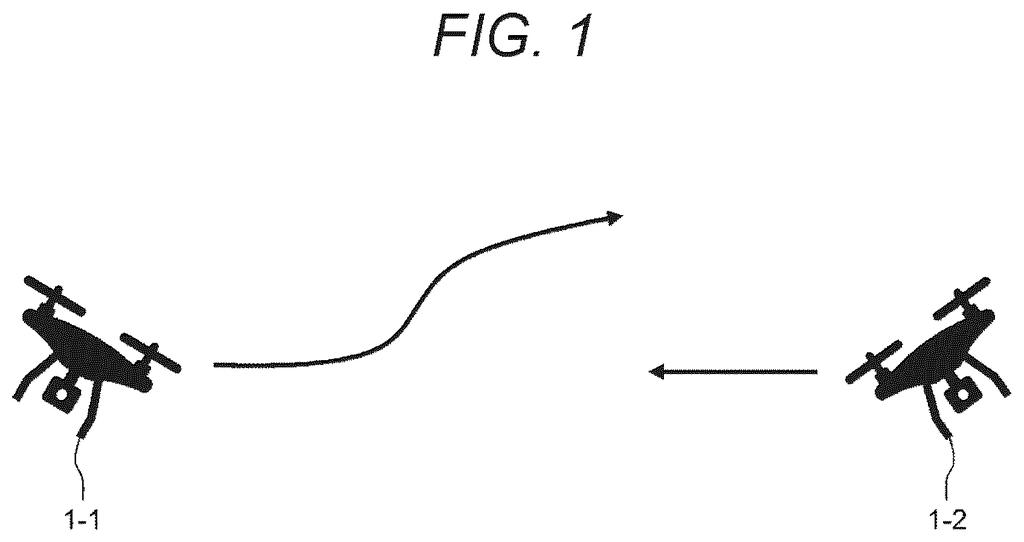
What Sony's drone-dodging laser patent does
Imagine you're flying a drone through a park and another one comes straight at you. Camera-based systems usually need several images to realize something is moving, and when two aircraft close in on each other, that delay can turn a near miss into a crash.
Sony's filing relies on a special laser sensor that can tell how fast something is moving toward or away from it, in the very first scan. The twist is that the drone adjusts how confident it is based on how many laser points land on the object. With one point, it only knows the object might be coming your way, so the drone slows down or holds still. Two points narrow the direction to a line. Three or more pin it down, so the drone can steer around the object.
… predicting the motion of the object with different prediction accuracy according to the number of distance measurement points of the FMCW LiDAR on the object.
Translation: The system adjusts how precisely it tracks an object based on how many laser points hit it.
How one, two or three laser hits change the guess
The sensor is called FMCW LiDAR (a laser scanner that sends out light whose frequency keeps shifting, then reads the change in the reflection). From that change it gets distance and also speed along each laser beam, using the Doppler effect (the same shift in pitch you hear when an ambulance passes). The catch is that each beam only measures motion along its own line, so one reading can't say which way something is truly moving.
That is where the point count comes in. The claims cover predicting motion with different accuracy depending on how many laser points hit the object:
- One point: the true motion could be any direction on a flat plane, so the system mainly learns whether the object might be heading toward it.
- Two points: two planes cross in a line, which narrows the direction to that line.
- Three or more points (not in a straight line): three planes meet at a single spot, which gives one direction.
To find moving objects, the system subtracts the drone's own speed from each reading, and whatever motion is left marks something moving. Dependent claims add a route planner that avoids the predicted direction, a lower speed limit when only one point is available, and a camera that can help spot objects. The description also covers keeping relative speed at zero to follow a car.
… in which the direction in which the plane including the candidate vector that may be the motion vector representing the direction in which the object is moving is located is set as the prediction result of the motion of the object …
Translation: Even with just one laser point, it calculates a narrow range of possible directions the object could be heading.
Why Sony's drone patent favors slowing down early
For anyone who lives near a delivery route or flies a camera drone, reaction time is the whole game. The filing's own background says image-based systems need several pictures taken at different moments before they can spot something moving, which is slow when two aircraft head straight at each other. Reading speed directly from a single scan could cut that wait. The description also says this kind of laser ranging holds up in fog and rain.
The patent names drones as its example and says the idea could apply to other moving machines, but it names no product. The cautious-by-default design is the practical part: with only one laser point on an object, the drone slows or holds in place until more points arrive, trading a little speed for safety.
Sony's 37th robotics filing we've covered since May follows a button-pressing clip-on and a LiDAR alignment system.
Claim 1 is short and wide. It covers getting motion information from this type of laser scanner, finding an object with it, and guessing that object's motion with more or less accuracy depending on how many laser points hit it. It says nothing about drones, steering, or what the guess should look like.
Those details sit in the dependent claims: the one-point, two-point and three-point rules, the slowdown, the route that avoids the predicted direction. So the broad claim rests on a single idea, that confidence should scale with how many points land on the target. If granted as written, it would reach any robot or vehicle using this sensor that works that way.
The idea itself is easy to follow: when you've seen little, guess cautiously, and when you've seen more, commit. Sony's own background favors acting on one scan over waiting for several, and that is the argument that makes this filing worth a look.
Get our take in your Top Stories
Liked this breakdown? Add Patentlyze as a preferred source on Google, and our plain-English take shows up more often in your Top Stories the next time Sony patent news breaks.
There are more where this came from
We read every patent application Big Tech publishes and send you the ones worth knowing. Plain English, free, every week.
The drawings
24 drawing sheets from US 2026/0319099 A1 · click any drawing to enlarge


Show the other 16 sheets


Want this weekly breakdown for a company we don't cover? Patentlyze Pro →
Be the first to weigh in