
Samsung Files Patent for a TV That Stops Listening Once You Get What You Asked For
Your TV may keep listening long after you've found what you asked for. Samsung's patent application describes a way for it to stop on its own once the job is done.
What Samsung's TV voice-mode patent does
Today, a TV that has just heard its wake phrase tends to keep listening for a while, whether you still need it or not. During that wait, a listening icon can sit over your show, and a nearby conversation can get mistaken for an order. Samsung's patent application tries to fix this by having the TV work out when you're done.
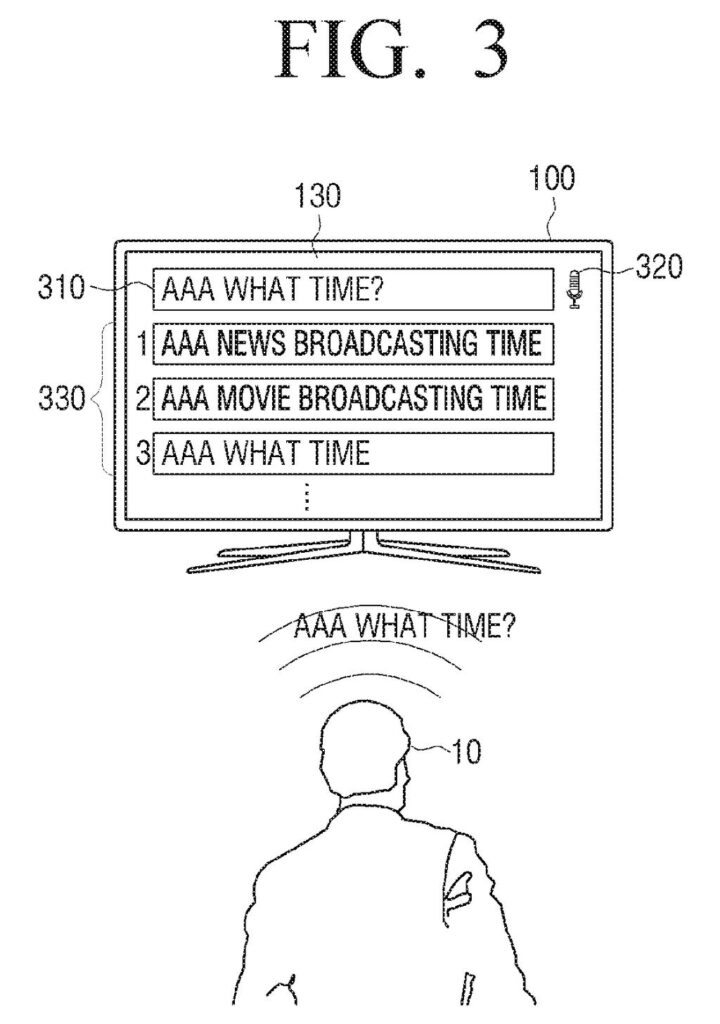
Here's how it plays out. Say the wake phrase, then something simple like "turn up the volume," and the TV does it and stops listening right away. Ask for something open-ended, like an actor's name, and the TV pulls up a list of results and keeps listening, because you'll probably want to pick one.
Once your pick starts playing, the TV shuts the listening mode off on its own, so you don't have to say anything more or wait out a timer.
… based on a predetermined command related to the display apparatus being included in a second voice input received through the voice receiver while awaiting a user voice input in the entered voice input mode, perform an operation corresponding to the predetermined command and release the voice input mode …
Translation: When you give the TV a direct command, it executes it and stops listening.
How the TV tells a command from a search
The claims cover a TV with a microphone input, a screen, a processor, and a link to a server. When it hears a preset trigger phrase, it enters a voice input mode (a stretch of time when it is actively listening for your orders).
What happens next depends on the next thing you say:
- If it contains a built-in command such as turn on, turn off, volume up or down, or channel up or down, the TV carries it out and leaves voice mode immediately.
- If it does not, the TV gets search results from the server, shows them, and stays in voice mode.
The results can appear as a list, laid out horizontally or vertically, with thumbnail images. While the list is on screen, the TV waits a preset standby time (the description gives 30 seconds as an example) for a follow-up. If you say which result you want, the TV shows that item and exits voice mode. If your pick leads to another list, it keeps waiting.
Other claims cover saying a keyword and a command together, such as a show title plus "play," which opens the right app and starts the content before exiting voice mode. A microphone-style graphic appears while the mode is on and is deleted when it ends. The description adds that the speech-to-text step can happen on the TV itself or on a separate server.
… awaiting input of a subsequent voice of the user during a predetermined standby time in response to determining that the speech of the user has not finished; and releasing the voice input mode in response to determining that the speech of the user has finished.
Translation: The TV stays alert for more commands until it realizes you have finished talking.
Why TV voice control needs an off switch
If you've ever wondered whether your TV is still listening, this is the situation the patent addresses. Ending voice mode as soon as a show starts playing would clear the listening icon off your picture and shrink the window in which background chatter could be misheard as a command.
For Samsung, the payoff is polish. Voice control on a TV only works if it is quick to start and quick to get out of the way, and this filing covers that handoff. The description also floats letting a server make the "you're done" call, which keeps that work off the TV itself. As a patent application, it says nothing about when or whether any TV will work this way.
Samsung's 26th filing we've tracked since June in our on-device AI privacy watch follows earlier work like animating a face from voice and a speaker that goes quiet.
The problem is small and easy to recognize. A TV that keeps its microphone open after you've found your show can mishear the people in the room, and a listening icon can sit on top of the picture. Nobody loses money or data over it. It still irritates, and it happens every time you use voice.
The fix matches that size. Sorting a short list of spoken commands from open-ended requests takes little machinery, and ending the mode once a show starts playing is plain common sense.
The filing says it continues applications that trace back to a 2013 Korean filing, which tells you how old this idea is. Treat it as a tidy refinement of TV voice control, useful and modest.
Get our take in your Top Stories
Liked this breakdown? Add Patentlyze as a preferred source on Google, and our plain-English take shows up more often in your Top Stories the next time Samsung patent news breaks.
There are more where this came from
We read every patent application Big Tech publishes and send you the ones worth knowing. Plain English, free, every week.
The drawings
9 drawing sheets from US 2026/0321265 A1 · click any drawing to enlarge


Show the other 1 sheets

Want this weekly breakdown for a company we don't cover? Patentlyze Pro →
Be the first to weigh in