
Samsung Files Patent for Cameras That Measure Distance While Trimming Images to Save Battery
Shrinking a camera image to save power usually makes a device worse at judging distance. Samsung's patent application shrinks the picture in just one direction, and the amount depends on how strong your chip is.
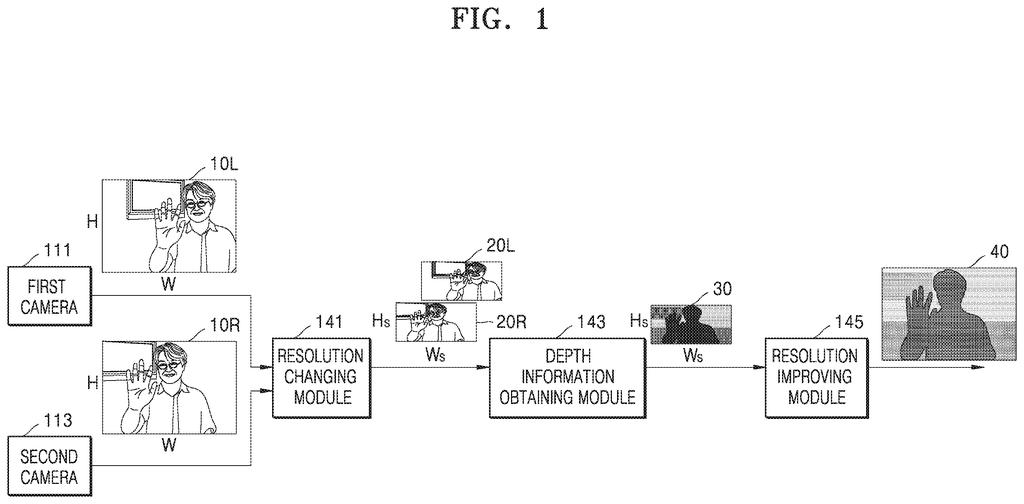
What Samsung's adjustable depth camera does
Every time a device with two cameras works out how far away your hand or a coffee table is, it compares two slightly different pictures, one from each camera, the way your eyes do. The bigger those pictures are, the more math the chip has to chew through, and the more battery it burns.
The usual fix is to shrink the pictures, but that can make the distance estimates fuzzy. Samsung's patent application takes a narrower route. It squeezes the pictures top to bottom by an amount based on how powerful your device's chip is. That cuts the workload, while the left-to-right detail, which matters most for judging distance, can stay intact.
The filing also lets the device factor in which app you're running, how busy the chip already is, and how much battery you have left. An app that needs fast answers, such as one tracking a moving object, could get quicker, lighter depth readings.
… adjusting a first direction resolution of the left-eye image and a first direction resolution of the right-eye image to obtain an adjusted left-eye image and an adjusted right-eye image, respectively, based on computational performance information of a processor of the electronic device …
Translation: The phone scales down image quality to match what its processor can handle efficiently.
How Samsung squeezes images top to bottom
The device takes a left-eye image and a right-eye image from two cameras, much like a pair of eyes. Software then finds where the same point shows up in each picture. The shift between the two positions (called disparity) reveals how far away that point is, and the result is a depth map, a picture where each pixel holds a distance.
Before that step, the patent has the device resize both images. Claim 1 ties the resize to the processor's computational performance, which can be judged from things like core count, clock speed or a FLOPS rating (floating-point operations per second, a measure of raw math speed). In the main example the height is cut to H times k, where k is 1 or less, while the width stays put. A lookup table can map a chip's rating to a suitable image size.
The filing describes several other inputs:
- Width: can be adjusted separately, based on how finely the device must tell apart different distances, using the camera spacing and focal length.
- App: real-time uses such as object tracking, games, driving or medical imaging can trigger a lighter, faster setting.
- Chip load and battery: a busy processor, a low battery or an unplugged device can also push the images smaller.
Afterward, the depth map can be upscaled with a super resolution model (software that fills in extra detail between pixels). The depth itself can come from classic matching methods or a trained AI model.
obtaining a left eye image of an object using a first camera and obtaining a right eye image of the object using a second camera …
Translation: Two lenses capture simultaneous perspectives to mimic how human eyes see depth.
Why this matters for AR glasses and battery life
If you wear smart glasses or use a phone that places virtual objects in your room, the device is estimating depth constantly. That drains the battery and competes with everything else running. A system that scales its workload to the chip, the app and the battery could keep things responsive when you need speed and save power when you don't.
The filing also describes a development shortcut: one adaptive method instead of separately tuning a depth model for every processor. That matters for a company whose devices run on very different chips. The patent names no specific product, though smart glasses are its lead example.
Samsung's 151st filing we've tracked in our camera sensor push since May builds on the motion photo sharpness application and the bright-light autofocus application.
If this works, you will mostly notice nothing, and that is the point. Your glasses or phone would keep placing virtual objects on your table or tracking your hand without lag, even when the battery is low or another app is hogging the chip.
The idea is easy to follow. Distance depends mostly on the left-to-right difference between the two pictures, so trimming the height first saves work and keeps more accuracy. You might see a cost when the device is trimming hard: depth readings can come out less fine-grained.
By itself it is a modest optimization: a sensible piece of plumbing for devices that need depth all day.
Get our take in your Top Stories
Liked this breakdown? Add Patentlyze as a preferred source on Google, and our plain-English take shows up more often in your Top Stories the next time Samsung patent news breaks.
There are more where this came from
We read every patent application Big Tech publishes and send you the ones worth knowing. Plain English, free, every week.
The drawings
9 drawing sheets from US 2026/0320814 A1 · click any drawing to enlarge


Show the other 1 sheets

Want this weekly breakdown for a company we don't cover? Patentlyze Pro →
Be the first to weigh in