
Samsung Files Patent for a Protective Edge Coating on Foldable Phone Screens
The weakest spots on a foldable phone screen may be its edges, and Samsung Display's patent application covers a bead of resin shaped to guard them.
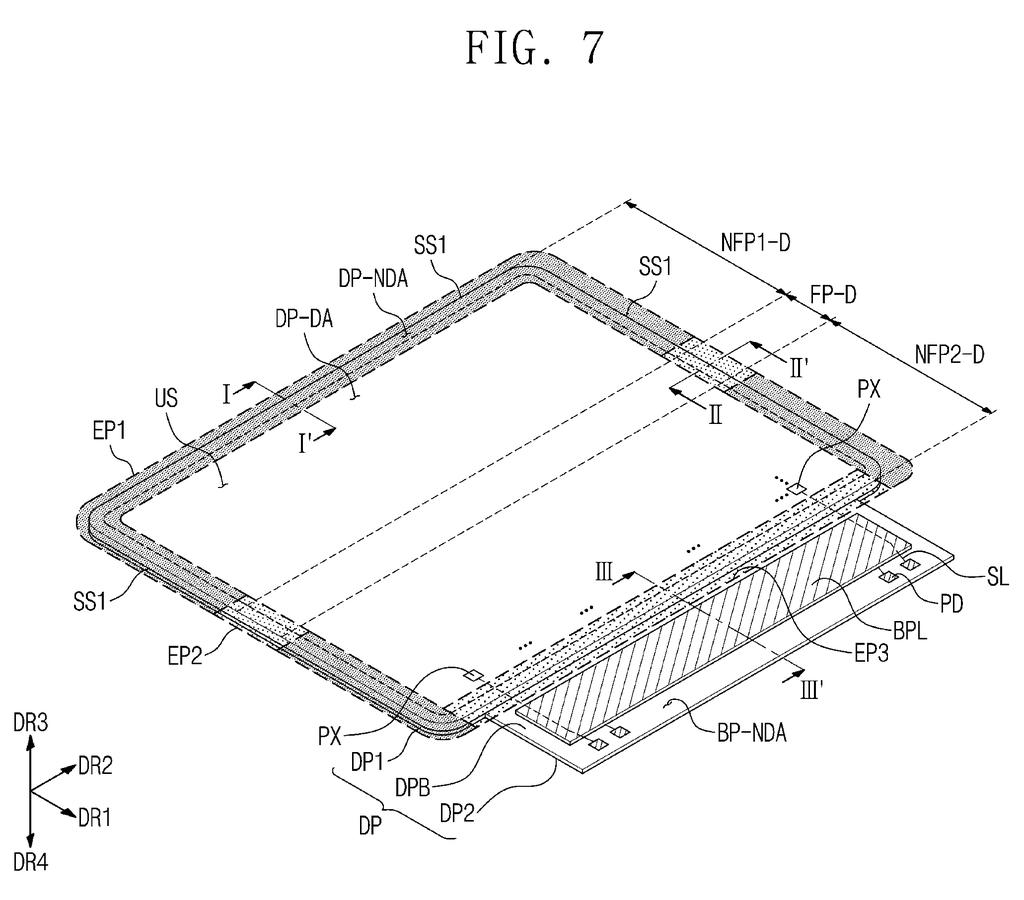
What Samsung's foldable edge coating does
You toss your foldable phone into a bag next to your keys, and the edge of the screen takes a knock. On a flat phone that's usually fine. On a foldable, the thin glass on top and the delicate strip where the display wraps around to the back are both exposed at the edges.
Samsung Display's patent application covers a fix: a thin bead of resin (a liquid plastic that hardens) laid around the outside of the screen. It covers the sides of the glass and the display, plus a small strip of the top surface near the spot where the panel bends under. The resin is shaped differently in different places: a rounded bulge along the sides and a sloped ramp near the bend.
The filing says the goal is a more reliable device, one that holds up to impacts and keeps dust off the panel's edges. It also suggests the coating could let makers trim the border around the screen.
… an edge member covering the plurality of second side surfaces of the upper member, the plurality of first side surfaces, and a portion of the first upper surface that is adjacent to the bending portion.
Translation: A protective strip wraps around the vulnerable edges of the screen and its layers near the fold.
How the resin bead is shaped and applied
The claims describe a display panel in three parts: the main section you look at, a bending portion (a strip that curls around to the back so wiring can hide behind the screen), and a second section that ends up underneath. A protective film and a glass window sit on top, and a support layer sits below.
The addition is an edge member, a resin coating over the sides of the top layers, the sides of the panel, and a slice of the top surface next to the bend. One independent claim covers a foldable version with a folding area between two flat areas. Another says the coating has two parts with different outer shapes.
- Along the long sides, the coating bulges outward in a convex curve.
- Near the bend, it slopes, and it can overlap a protective layer already covering the bend.
- A separate reinforcing member can fill the gap inside the curl to support the bend.
The description offers sample numbers: resin at least 2,000 cPs (a measure of thickness; higher means it holds its shape), about 100 micrometers deep, and still soft at minus 20 degrees Celsius. It can be black, which blocks stray light and makes flaws easy to spot during factory inspection. A fine nozzle jets it on.
An electronic device includes a display panel including a first portion including a first upper surface and a plurality of first side surfaces connected to the first upper surface, a bending portion, and a second portion …
Translation: The phone uses a flexible screen design split into flat sections connected by a folding area.
Why foldable screens need edge protection
Foldable phones carry a reputation for fragility, and edges are where trouble starts: a corner hits a table, dust creeps under a layer, a thin glass edge chips. A coating that seals those edges goes after the everyday wear you would notice over a year of use.
There's a design payoff too. The filing says covering the edges can shrink the room the layers need to slide against each other while folding, which lets the border around the screen get narrower. For you, that could mean more screen in the same body. The filing lists phones, tablets, laptops, smart watches and car displays as possible uses, though the main examples are foldables.
Samsung's 90th filing in our foldable phone patent watchlist since May follows ideas like moving apps from the fold and resting the screen on the battery.
The price of this design is a softer, thicker edge. The resin has to stay flexible enough to survive folding in freezing weather (the filing gives a stiffness figure at minus 20 degrees Celsius), and a material that bends that easily will not stop a hard corner-first drop onto concrete. It looks built for everyday scrapes and dust, and the filing promises only improved reliability.
The second cost sits in the factory. Two edge shapes mean two sets of dispensing settings, and the description gives tight windows, such as a coating 50 to 150 micrometers thick laid down without a break over the strip near the bend. Any gap in that coating defeats its purpose.
Still, the trade looks worth it. A bead of resin is cheap next to a cracked foldable screen, and a narrower border is a gain you can see. The open question is how the edge looks and feels in your hand, and the filing says nothing about that.
Get our take in your Top Stories
Liked this breakdown? Add Patentlyze as a preferred source on Google, and our plain-English take shows up more often in your Top Stories the next time Samsung patent news breaks.
There are more where this came from
We read every patent application Big Tech publishes and send you the ones worth knowing. Plain English, free, every week.
The drawings
26 drawing sheets from US 2026/0319552 A1 · click any drawing to enlarge


Show the other 18 sheets


Want this weekly breakdown for a company we don't cover? Patentlyze Pro →
Be the first to weigh in