
Samsung Patents a Three-Layer Waterproof System for Foldable Phones
Foldable phones are already harder to waterproof than ordinary slabs, and having two screens makes the problem worse. Samsung's latest patent tries to solve that with a three-piece sealing system that plugs the hole where the two display layers meet.
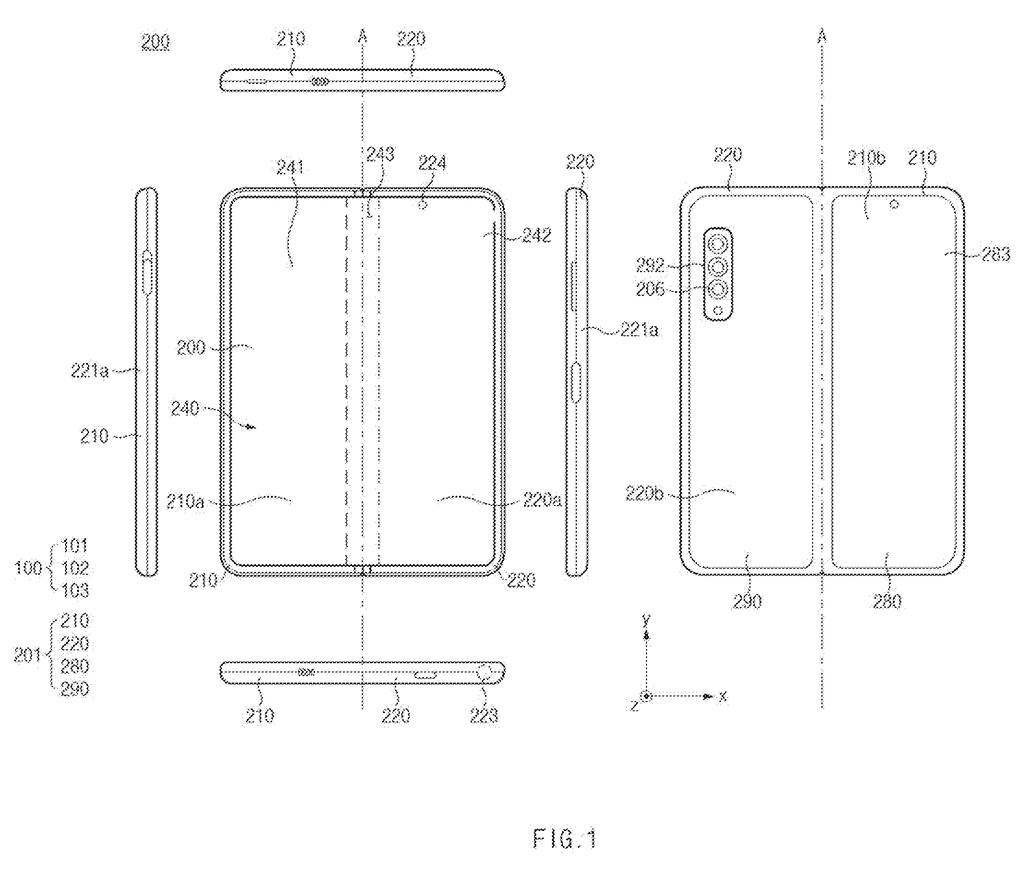
How Samsung keeps water out of a two-screen folding phone
Every time you bring your foldable phone anywhere near a sink, a pool, or a rain shower, water looks for the tiniest gap to get inside. A foldable phone has extra gaps because it folds, and Samsung's Galaxy Z Fold phones also have a second screen on the outside of the device, which means another seam for water to sneak through.
This patent describes a way to seal that trouble spot using three waterproof pieces that work together. Two flat gaskets sit on either side of a small channel that passes through the phone's frame. A third filler piece is poured or pressed into that channel to bridge the two gaskets, forming one continuous barrier.
The channel itself is angled rather than straight up-and-down, which helps the filler material lock in place and prevents water from sliding through at an angle. The goal is a phone that holds together as a watertight unit even though it has holes in the frame connecting one display assembly to the other.
… a first waterproof member disposed between the second surface of the first housing and the second display, and overlapping at least a first portion of the through-hole; …
Translation: A primary seal sits beneath the second screen to block moisture from entering the housing hole.
How three interlocking seals plug the gap in the housing
The patent addresses a structural challenge specific to foldable phones that carry two separate displays: an inner screen (the big folding one) and an outer screen (the cover display you use when the phone is closed).
Because both displays attach to the same housing, the frame needs a through-hole, a channel that passes completely through the housing wall, to route cables or allow components from one display layer to connect to the other. That hole is a weak point for waterproofing.
Samsung's solution uses three distinct waterproof members:
- First waterproof member: a gasket or seal sitting between the housing's inner surface and the outer display, overlapping one end of the through-hole.
- Second waterproof member: a separate gasket sitting nearby, overlapping the other end of the through-hole, but physically separate from the first.
- Third waterproof member: a filler material packed directly into the through-hole itself, physically connecting the two outer gaskets into a single sealed path.
The key engineering detail is that the through-hole is inclined, meaning it passes through the housing at an angle rather than perpendicularly. That slope gives the filler material a longer, more complex path to adhere to, reducing the chance that pressure or flexing will push water through the joint.
What better waterproofing means for foldable phone buyers
Water resistance is now a basic expectation for flagship smartphones, but foldable phones have historically trailed behind. Standard Galaxy S models have carried IPX8 ratings (meaning they can survive a meter of water for half an hour) for years, while foldables have taken longer to match that standard because their mechanical complexity creates more potential leak points.
A robust seal around the dual-display housing would let Samsung market foldable phones with the same water-resistance claims buyers expect from a premium device. For you as a buyer, it means less anxiety about using a $1,800 folding phone anywhere near water, which is a meaningful quality-of-life improvement for an already expensive category.
This marks Samsung's 75th filing we've tracked since May on foldable phone designs, building on work like a motor that slides screens and a battery system for folding displays.
Samsung already makes foldable phones with two screens, so the physical category this patent describes already exists in stores. What's new here is a more deliberate approach to sealing the small holes that run through the phone's frame, using angled channels and layered gaskets rather than a flat seal.
That geometry shift is the real signal. When engineers start thinking about the angle of a channel rather than just adding more sealant, they're responding to how water pressure actually behaves when a hinge flexes under stress. That's a refinement to assembly, not a ground-up redesign, which means the path from patent to production revision is short.
Whether this shows up in a next model is speculative, but the pieces are already in place: the hardware category exists, the materials are standard, and the change is incremental enough to drop into existing manufacturing without rebuilding a supply chain.
There are more where this came from
We read every patent application Big Tech publishes and send you the ones worth knowing. Plain English, free, every week.
The drawings
25 drawing sheets from US 2026/0277273 A1 · click any drawing to enlarge


Want this weekly breakdown for a company we don't cover? Patentlyze Pro →