
Qualcomm Files Patent to Have Pedestrians' Phones Alert Cars Only in Danger Zones
Your phone could stop shouting its location to every car nearby and save the broadcast for places where walking gets dangerous, like a school zone at drop-off time.
What Qualcomm's pedestrian safety alert does
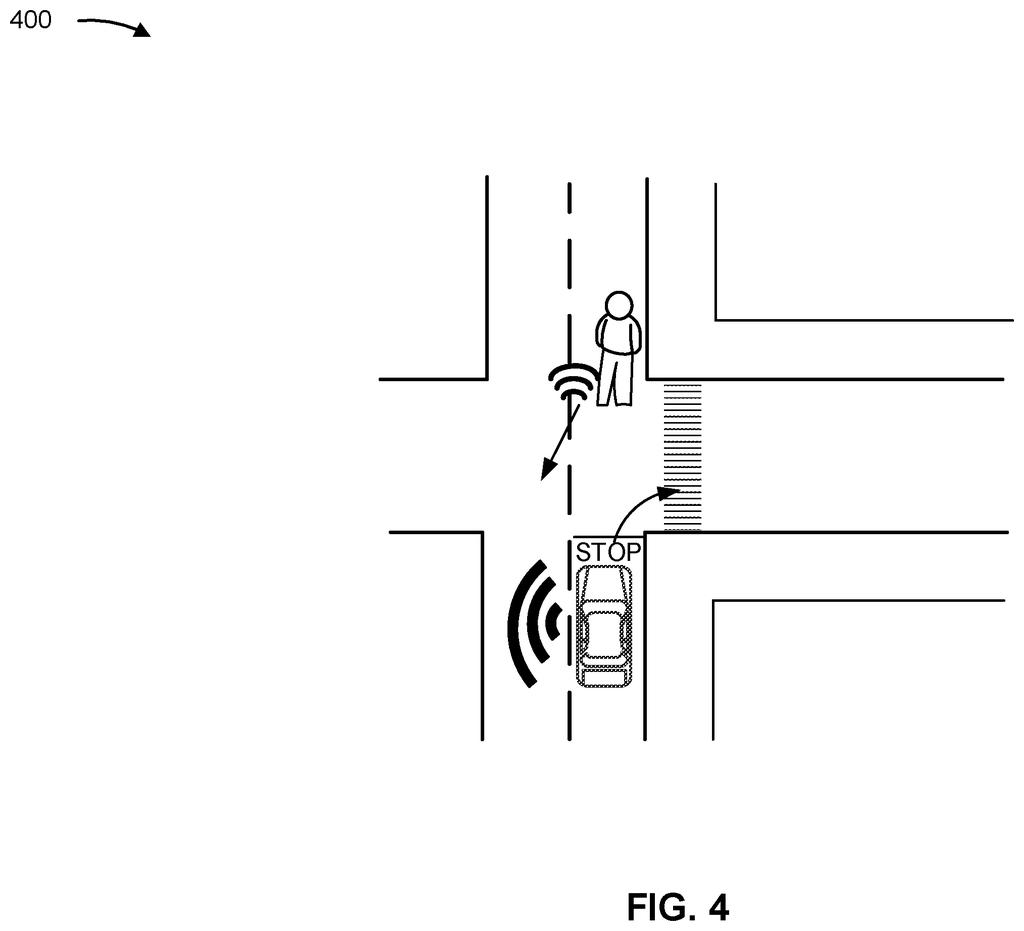
You're walking toward a busy crosswalk outside a school at 8 AM, phone in your pocket. A driver waiting at the stop sign is looking the other way. If your phone could tell nearby cars exactly where you are and which way you're heading, that car could slow down before anyone gets hurt.
The catch is that a phone doing this nonstop would burn battery and crowd the airwaves, even on an empty side street at midnight. Qualcomm's patent application has your phone send these safety messages only when you step into a zone flagged as high-risk, and only during the hours that matter, like a school zone in the morning and afternoon.
Everywhere else, your phone stays silent. It can also hold back when its location guess is too fuzzy to help, and one phone can speak for a whole group of people walking together.
detect an event involving a vulnerable road user (VRU) associated with the UE; and transmit, to one or more receiving nodes and based at least in part on the event being detected, a personal safety message (PSM) that indicates information associated with the UE.
Translation: A pedestrian phone notices trouble and automatically broadcasts a safety warning to nearby vehicles.
How a phone knows it has entered a risk zone
The claims describe a phone (the patent calls it a user equipment, or UE) that spots an event involving a vulnerable road user, meaning a pedestrian, cyclist, scooter rider, road worker or wheelchair user. When that event happens, the phone sends a personal safety message to receiving nodes, a term that covers vehicles, roadside units (radio boxes along the street) and network towers.
The main trigger in the dependent claims is the person entering a high-risk zone, sometimes only during certain hours. The filing's examples include an intersection from 8 AM to 8 PM and a school zone from 7 to 9 AM and 4 to 6 PM during the school year. Zones can be fixed, updated from real-time traffic data, or broadcast by a network tower. The message carries position, speed, heading, acceleration and recent path.
The filing also describes extra controls:
- Stop sending when location accuracy is too low to help a driver.
- Rank messages so a pedestrian alert in a high-risk area outranks one from a medium-risk area and a car's own basic safety message.
- Let the network set the pace, from every 100 milliseconds on a quiet channel to every 1000 on a busy one, with fewer retries at the slower pace.
- Let one phone send combined information for several nearby walkers.
Why quieter pedestrian phones help drivers too
Pedestrian alerts only help if phones keep sending them, and phones only keep sending them if the battery and data costs stay low. Sending only in high-risk places at the right hours is one way to strike that balance. If you walk past a school every morning, your phone could do its job where it counts and rest everywhere else.
The filing notes that vulnerable road users may account for almost half of road accident victims. By dropping messages with weak location data and slowing the pace when the airwaves get crowded, the design aims to keep alerts useful to drivers and light on the network. It's a rulebook for phone-to-car messaging, and it only pays off if many phones and cars listen for the same messages.
Qualcomm's 47th filing we've tracked since July in the self-driving sensing race builds on earlier work like one fixing bad GPS data and one spotting hidden cars and signs.
Claim 1 is short and wide. A phone detects an event involving a pedestrian or cyclist, then sends a safety message about itself. That's the whole claim. The words "high-risk zone" don't appear until claim 2.
Because claim 1 never says what counts as an "event," a claim worded this way, if granted, could reach many ways of deciding when to send a safety message, with zones being just one example. The specifics sit in the later claims: time windows, a cutoff when location is too fuzzy, message priority, and a network-set sending pace.
Our verdict: a sensible answer to a real battery and airwave problem, wrapped in a very broad opening claim. How far that wide first claim survives will depend on how the patent office treats it.
Get our take in your Top Stories
Liked this breakdown? Add Patentlyze as a preferred source on Google, and our plain-English take shows up more often in your Top Stories the next time Qualcomm patent news breaks.
There are more where this came from
We read every patent application Big Tech publishes and send you the ones worth knowing. Plain English, free, every week.
The drawings
8 drawing sheets from US 2026/0333002 A1 · click any drawing to enlarge


Want this weekly breakdown for a company we don't cover? Patentlyze Pro →
Be the first to weigh in