
Qualcomm Files Patent for Software That Spots When Cars and Signs Are Partly Hidden
A camera can see a car and still be fooled if half of it is hiding behind a truck. Qualcomm's patent application describes a way to measure how much of an object is blocked, using nothing but the photo itself.
What Qualcomm's blocked-view detector actually does
Ever squinted at a stop sign half hidden behind a tree branch? You still know it's a stop sign, but you also know you're not seeing all of it. Cameras on cars face the same puzzle, and software that reads their images does better when it knows how much of an object is blocked.
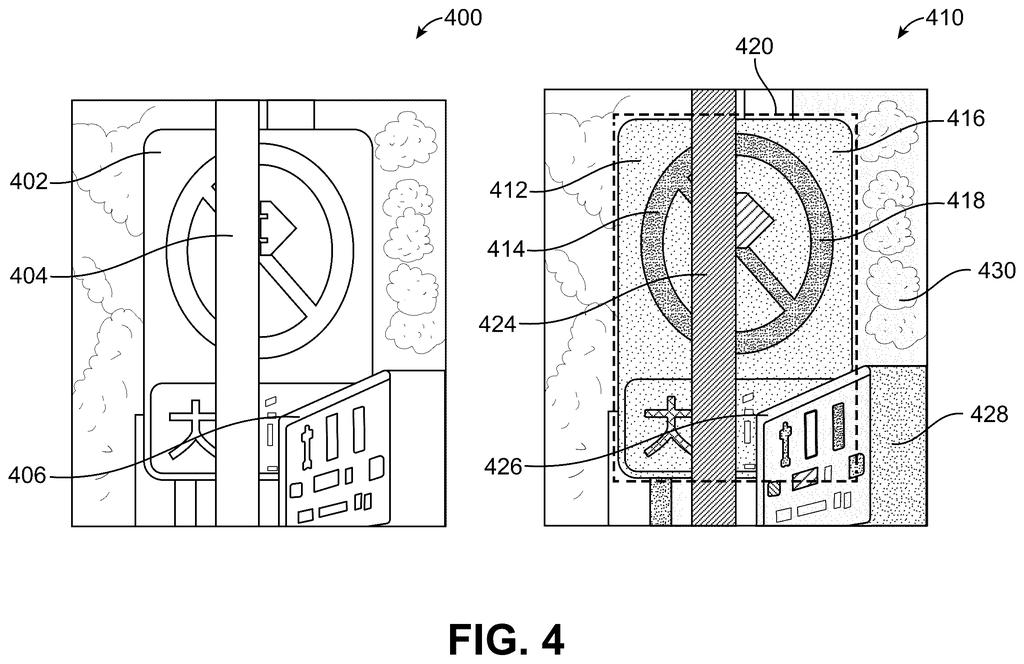
Qualcomm's patent application describes a way to figure that out from a single photo. First, software finds an object, such as a car or a sign, and draws a rectangle around it. Then it cuts the area around that rectangle into separate pieces, one for each thing it sees. If the pieces belonging to the car only fill part of the rectangle, or if another object's piece pokes across the rectangle's edge, something is probably in the way.
The result can be a simple yes or no, or a percentage, like a car being 20% hidden. The same photo-only approach avoids the extra 3D data that older methods need.
… determine a bounding box based on the object in the image; determine an image patch of the image based on the bounding box; segment the image patch into a plurality of segments; and determine that the object is at least partially occluded in the image based on the bounding box and the plurality of segments.
Translation: The software draws a box around a detected item, chops it into pieces, and checks if parts of it are hidden.
How the box-versus-segments check works
The filing is built around a five-step chain. An object detector (a trained AI model that finds things like cars, pedestrians, traffic lights and signs) marks an object with a bounding box, the smallest rectangle that holds it. The system then crops an image patch, which is that rectangle plus a margin of extra pixels on every side. A segmenter (the description names a Segment Anything Model as an example) splits the patch into outlined regions, roughly one per object. Finally, an occlusion determiner decides whether the object is at least partly blocked.
The description gives three ways to make that final call. They can be combined by taking the worst result or by averaging:
- Fill ratio: compare the area of the object's own segments to the area of the box. In the examples, a vehicle filling under 50% of its box, or a sign filling under 75%, counts as occluded.
- Boundary crossing: a segment sitting partly inside the box and partly outside is treated as something standing in front of the object.
- Feature comparison: an encoder (a model that turns an image into a list of numbers describing what it shows) processes the patch. The blockers are then painted over, the patch is encoded again, and the system measures how much the numbers changed.
The object's class name, such as "vehicle," can also be turned into numbers by a text encoder and used in the comparison. A separate set of claims covers a vehicle that changes its path, steering, braking or lane position, or shows a message on its display. Most of the description, though, focuses on grading and training object detectors.
What this means for training car-vision AI
If a car's camera system misses a pedestrian, it matters a lot whether the person was in plain view or mostly behind a parked van. This patent describes a way to tag every example image with how hidden the object was. Engineers could then see where their AI fails and train it on the right mix of easy and hard images. The description says the method works from the image alone, while older methods rely on point clouds (large sets of 3D measurement points), which it calls expensive to compute and harder to collect than ordinary photos.
For you, the effect would be indirect: driver-assist and camera systems that cope better with partly blocked views. The filing also lists phones, headsets and security cameras as possible uses, plus vehicle responses like braking or changing lanes. It's a patent application, so nothing here says any product uses the method.
Qualcomm's 45th filing we've tracked since July in our self-driving sensing watchlist follows the GPS satellite filter and the point cloud fix.
Partial blockage is an everyday fact for any camera on a road: parked trucks, trees, other cars, signs behind poles. A system that can't tell a clear view from a half-hidden one has no way of knowing why it got something wrong. That makes the problem a costly one, and the cost shows up in the mistakes you'd least want a driver-assist system to make.
The approach fits the size of the problem. It stacks familiar pieces: a box from a detector, cutouts from a segmentation model, and simple area math. The example cutoffs in the description (50% for a vehicle, 75% for a sign) are the sort of numbers engineers would tune. That simplicity is an advantage, because it could be run over huge piles of training photos.
The big unknown is accuracy, since the filing shows no test results. As a way to sort a mountain of images by how hidden things are, it looks like sensible, routine engineering.
Get our take in your Top Stories
Liked this breakdown? Add Patentlyze as a preferred source on Google, and our plain-English take shows up more often in your Top Stories the next time Qualcomm patent news breaks.
There are more where this came from
We read every patent application Big Tech publishes and send you the ones worth knowing. Plain English, free, every week.
The drawings
10 drawing sheets from US 2026/0311492 A1 · click any drawing to enlarge


Want this weekly breakdown for a company we don't cover? Patentlyze Pro →
Be the first to weigh in