
Waymo Files Patent for Cars That Remember Pedestrians They Can No Longer See
Waymo's driving software could keep treating a pedestrian as real even after a parked van hides them from every sensor. The filing describes a memory for vanished objects, with strict rules for what to remember and when to forget.
What Waymo's vanished-object memory does
You're stepping off a curb when a delivery van pulls up and blocks the view between you and a waiting self-driving car. To the car's sensors, you've just vanished. A car that only trusts what it can see right now might decide the crosswalk is empty and roll forward.
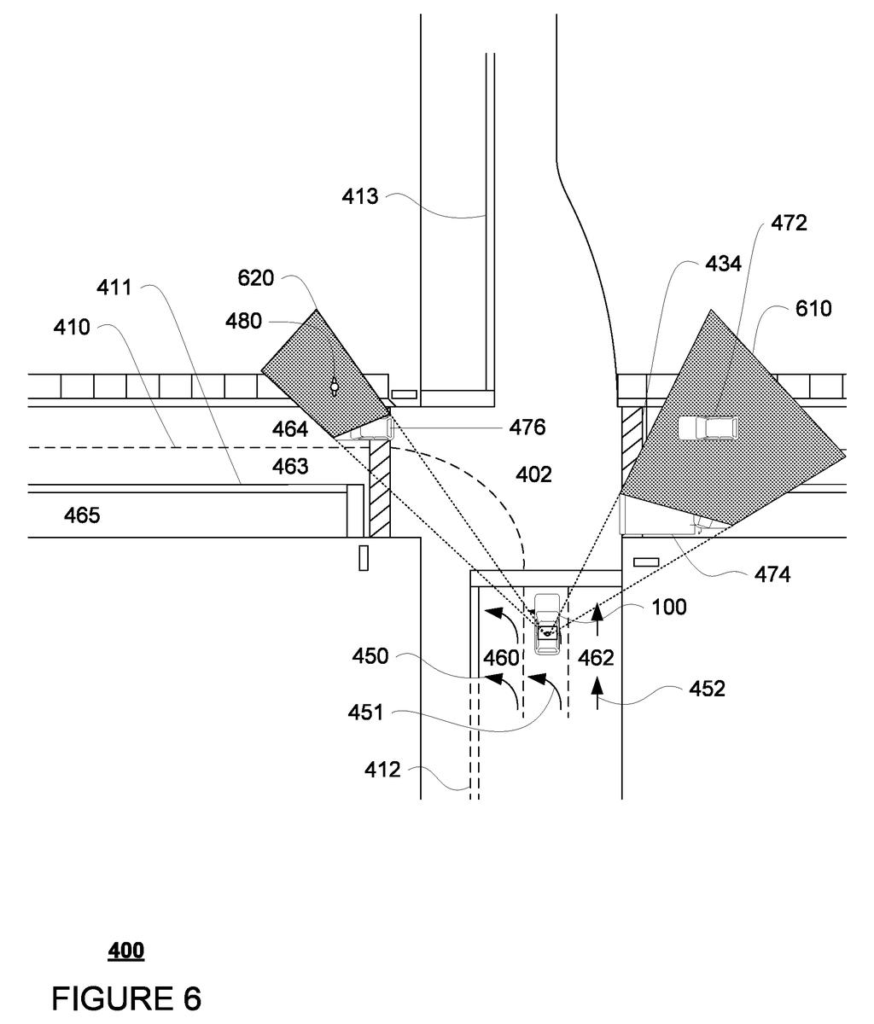
A new Waymo patent application describes a fix: the car remembers. When something it was tracking drops out of sight, the software keeps a running guess about where that person, bike, or vehicle probably is now, based on how fast and in what direction they were moving. The car then plans its driving around that guess, so it can still yield.
It doesn't remember everything. The system holds on only to real road users that disappeared in believable ways, such as behind another vehicle, and it lets go after a few seconds if nobody reappears. That keeps the car from freezing over every ghost.
… when the object is no longer detected within the field of view of the one or more sensors, generating, by the one or more processors, based on the identified characteristics, a set of predicted characteristics for the object; …
Translation: The car creates a mental picture of a person it can no longer see.
How Waymo decides which objects to remember
Normally, a self-driving car works from a live feed. Sensors such as cameras, radar, and lidar (laser scanners that measure distance) spot an object and report its characteristics: type, location, speed, heading, and size. The planner, the software that picks the car's path, uses the latest report. When an object drops out of view, the reports stop and the planner has nothing to react to.
The patent adds a vanished object manager. When a tracked object disappears, it saves the last known details plus the behavior prediction (the software's best guess about what the object does next). Each time the sensors refresh, it moves that guess forward in time and gives the planner a set of predicted characteristics, so the car can still plan a path that yields.
To avoid remembering junk, the filing describes several filters:
- Only road users (pedestrians, bicyclists, vehicles) and unknown moving objects are kept.
- The object must have been seen for a minimum run, such as 3 sensor updates or about 0.1 seconds, to rule out phantom "false objects."
- It should have last been seen near the edge of the sensors' view or hidden behind something, not vanished in plain sight.
Forgetting has rules too. In examples, the memory is dropped after about 3 seconds unseen, after about 0.7 seconds of the predicted spot being clearly visible with nothing there, or when the guess lands within a few meters of a newly spotted match. The filing also describes optionally aiming a movable sensor at the predicted spot to check.
What this means for Waymo's cautious driving
Busy streets hide people all the time: behind parked trucks, buses, or the car in the next lane. A self-driving car that forgets someone the moment they're blocked could pull forward into them. This approach aims to keep the car yielding to people it can't currently see, and the filing says it may improve safety.
It also shapes how a ride feels. Remembered objects carry more uncertainty, and that grows over time, so the car may drive more cautiously around them. Limiting what gets remembered also saves computing power. For you as a passenger or pedestrian, the goal is a car that behaves like a careful human driver who knows the cyclist is still behind the bus.
Google's 70th filing we've tracked in our robotaxi sensing watchlist since May builds on earlier applications like labeling distant stationary objects and spotting wrong riders.
Every memory costs something. A car that keeps a hidden pedestrian in mind may yield to someone who has already turned down a side street, and that can mean needless pauses for you and the traffic behind you. The filing tries to limit the damage with short expiry timers (around 3 seconds in one example) and tight checks on what gets remembered.
The other cost is trust in a guess. The car is acting on where it figures someone went, and that guess gets shakier with each passing second. The design handles this by treating remembered objects as less certain and driving more cautiously around them, which is a sensible way to pay for the doubt.
The trade reads as worth it. A slight hesitation is a small price next to a car that acts as if a person ceased to exist the moment a van rolled past.
Get our take in your Top Stories
Liked this breakdown? Add Patentlyze as a preferred source on Google, and our plain-English take shows up more often in your Top Stories the next time Google patent news breaks.
There are more where this came from
We read every patent application Big Tech publishes and send you the ones worth knowing. Plain English, free, every week.
The drawings
8 drawing sheets from US 2026/0316793 A1 · click any drawing to enlarge


Want this weekly breakdown for a company we don't cover? Patentlyze Pro →
Be the first to weigh in