
Sony Files Patent to Make Stabilized Video Look Less Strange
Video stabilization can leave you with a calm frame full of smeared motion, and Sony's filing tries to make the two agree. The camera would ease off its stabilizing when the shutter is slow.
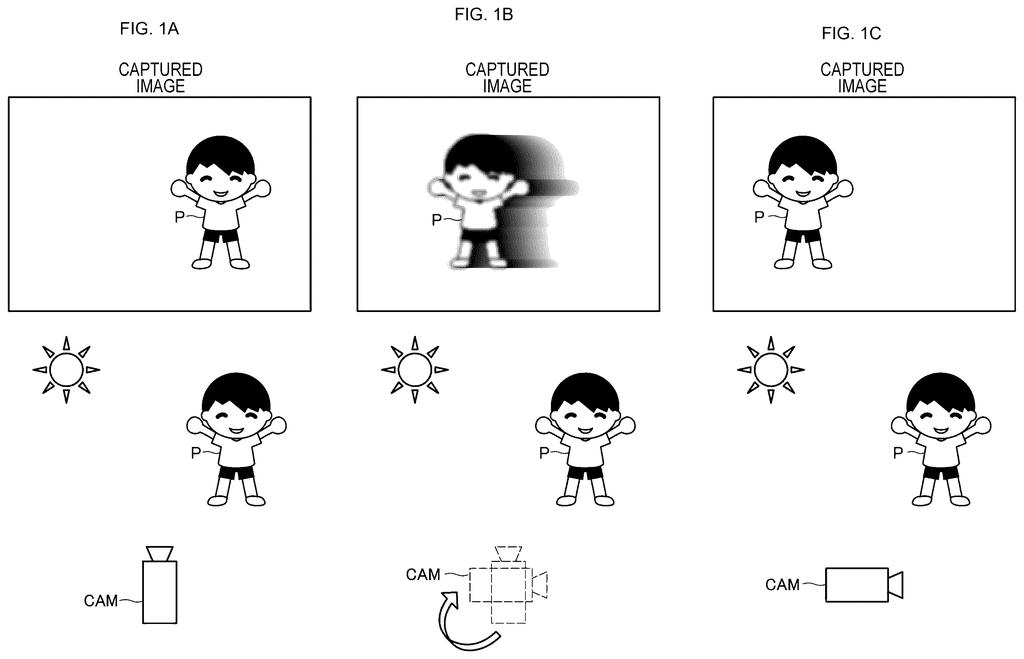
What Sony's stabilizer-and-shutter pairing does
Imagine you're filming from a motorcycle as it bounces down a road. Your camera's stabilizer keeps the scene looking steady, but each frame still has streaky, smeared details from the shaking. The result feels oddly eerie: a calm picture with blurry stuff in it.
Sony's filing describes a camera that tunes the two together. Stabilization and shutter speed (how long the sensor stays open for each frame) would be linked. When the shutter is fast and blur is low, the camera stabilizes fully. When the shutter is slow and blur is high, it eases off, so the picture moves a bit more like it would on an ordinary camera.
The aim is footage where the steadiness and the blur feel like they belong in the same video.
An information processing device comprising an adjustment unit that adjusts one of a value related to blur correction in an imaging device or a shutter speed, the imaging device including an electronic blur correction function that corrects a blur of image data and a control function for the shutter speed.
Translation: Sony is patenting a device that tweaks digital stabilization settings and shutter speed.
How the crop shrinks as the shutter slows
Electronic stabilization works by recording a wider picture than the camera outputs, then sliding a smaller cutout window around to cancel out shake. The distance that window moves is called the blur correction amount. Motion sensors (such as a gyroscope, which measures rotation) feed a calculation that produces a target amount.
In the main version, an adjustment unit changes that amount based on the shutter speed:
- At or above a first shutter speed (the filing's example is 1/250 of a second), the camera uses the full target amount.
- At or below a second, slower speed (example: 1/200), it drops to a minimum, set as a fraction between 0 and 1 of the target.
- In between, the correction ramps up smoothly as the shutter gets faster.
The claims also cover two other versions. One reverses the logic: a large correction amount forces a faster shutter, and a small one allows a slower shutter. The other adjusts settings used inside the calculation, such as the following speed (how quickly the correction chases movement) or a cutoff frequency (which shakes get filtered out).
The filing adds extras. If the motion sensor gives bad readings, the camera falls back to a plain center crop so the video feed keeps running. Different adjustment curves can be stored for indoor, outdoor or particular subjects, and the work can be split with an outside device such as a phone or server.
Why bumpy-ride video could look more natural
If you shoot video from a bike, car, drone or your own hands, this could mean footage that looks more natural when things get bumpy. The filing says the usual workaround, a faster shutter, darkens the picture. Brightening it again with extra gain (electronic amplification) adds grain, especially at night. Linking stabilization to shutter speed avoids that trade.
The filing also says it could apply to smartphones, tablets and wearables, not just dedicated cameras. As for status, an examiner's first review rejected the claims as filed, which is routine at this stage and usually followed by amendments.
Sony's 83rd filing in our camera patent coverage since May follows work like one on body tracking across frames and one on lowering sensor voltage, showing how broadly we've tracked the company's imaging applications.
This idea sits close to shippable. It needs no new hardware: the motion sensors, the cropping and the shutter control already exist in cameras with electronic stabilization. What's missing is a rule that ties them together, and that is firmware.
The shortest route to a product is a software update with a stabilization setting that follows your shutter speed. The hard part is tuning, meaning where to put the two cutoff speeds and how gently the correction ramps. The filing leaves those as example values like 1/250 and 1/200.
The claims are broad and the examiner has already pushed back once, so the wording may narrow. As an idea, though, it costs little to ship and fixes a visible flaw in handheld and vehicle video.
Get our take in your Top Stories
Liked this breakdown? Add Patentlyze as a preferred source on Google, and our plain-English take shows up more often in your Top Stories the next time Sony patent news breaks.
There are more where this came from
We read every patent application Big Tech publishes and send you the ones worth knowing. Plain English, free, every week.
The drawings
16 drawing sheets from US 2026/0332894 A1 · click any drawing to enlarge


Show the other 8 sheets


Want this weekly breakdown for a company we don't cover? Patentlyze Pro →
Be the first to weigh in