
Intel Files Patent for an AI Chip That Rearranges Data on the Fly
Intel's filing describes an AI chip that, in its example, packs 131,072 tiny calculators around one shared pool of fast memory. A built-in shuffler decides which numbers each calculator gets.
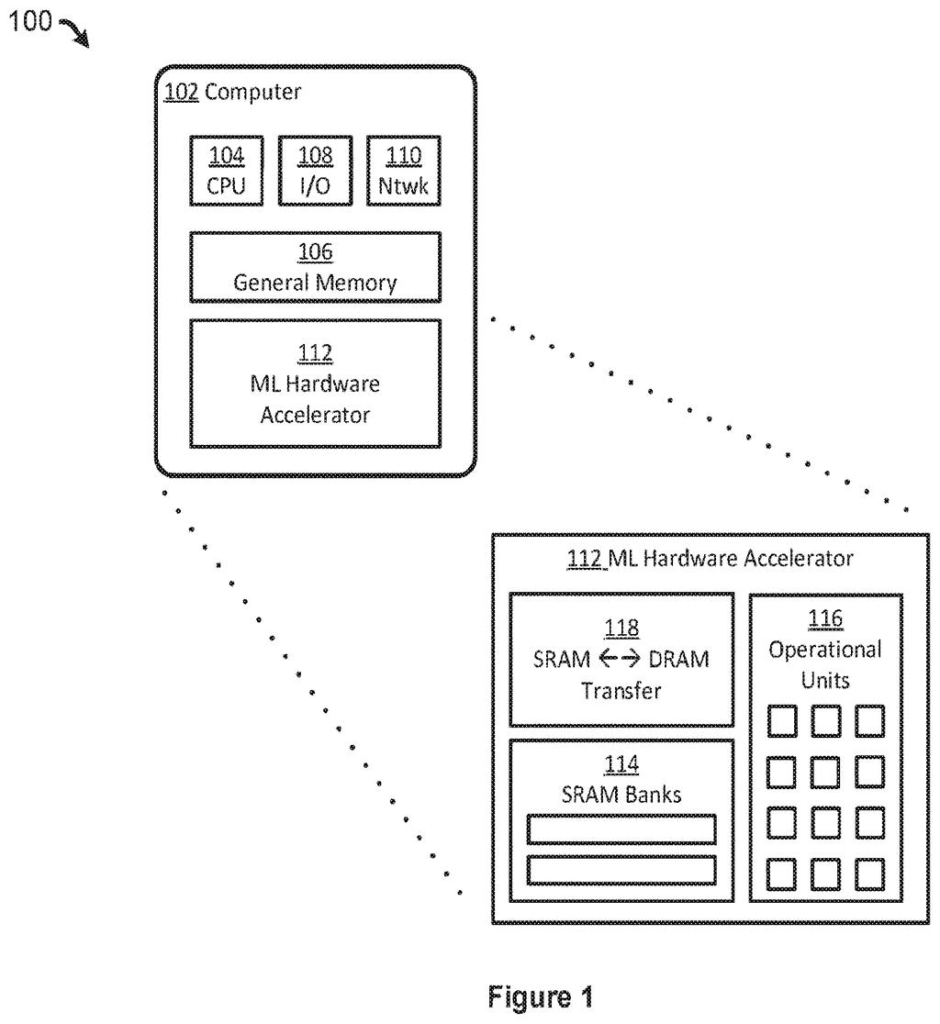
What Intel's AI math chip actually does
Ever wondered why teaching a computer to recognize a photo takes so much raw number crunching? Underneath, it is mostly one chore repeated billions of times: multiply two big grids of numbers together and add up the results.
Intel's filing describes a chip built around that one chore. Instead of a general-purpose processor that does a little of everything, it has a block of fast memory right on the chip and a huge crowd of small calculators, all working at the same moment. A built-in shuffler rearranges and copies the numbers so each calculator gets exactly what it needs.
You would never see this inside your device. But the faster that grid math runs, the less time and energy the AI features you use have to spend on it.
… circuitry to permute a first plurality of data elements of the first input tensor to generate a permuted first plurality of data elements …
Translation: Hardware built to rearrange data elements on the fly before multiplying them.
How Intel's chip shuffles data for its calculators
The claims cover a chip that multiplies two big grids of numbers (called tensors, which are just multi-dimensional tables) and writes the answer into a third grid. The inputs live in SRAM, a fast type of memory built into the chip itself.
Between that memory and the calculators sits circuitry that permutes the data, meaning it reorders it, for example flipping a grid on its side (a transpose). Then many operational units each do a multiply-and-add at the same time. The claims also require the running total to be at least twice as many bits wide as the inputs, so sums have room to grow. The filing's example uses 16-bit inputs and a 48-bit total.
The description adds concrete details:
- An example memory of 8 banks, each reading 512 numbers at once, about 20 MB in all.
- An example of 131,072 calculators, all following the same instruction each clock tick.
- A layered network that copies and reorders data, with several designs ranging from cheap and fixed to fully reprogrammable by software.
- A small instruction set built for AI: multiply-and-add, add random noise (used for rounding), shift, and compare.
The filing also allows lower-precision floating-point numbers (fewer than 23 bits for the fractional part), since many AI jobs don't need full precision.
… a multicast network that permutes and copies data and associates with an operational unit that support those operations …
Translation: A specialized network routing system that copies and rearranges data for parallel processing units.
What faster grid math means for AI hardware
If you use anything AI-powered, your experience comes down to how quickly a machine can chew through grid multiplication. A chip designed around that single job, with memory and data shuffling built to match, aims to finish the same work in less time. That could mean snappier responses or lower power bills for whoever runs the hardware.
The filing itself gives no speed figures and names no product, so it is a design sketch, not a benchmark. It does show Intel thinking about AI at the chip level rather than leaving it to general-purpose processors and graphics cards. For you, any payoff would arrive indirectly, through devices and data centers that run AI tasks faster.
Intel's 51st filing we've tracked in our AI chip wars watchlist since May builds on earlier applications like one auditing chips and cameras and one shifting work mid-job.
You will never shop for this chip by name, and nothing in the filing promises a speed number, so the benefit to you is indirect. If it works as described, you would notice it as AI features that answer a little faster, or servers that need less power for the same job.
The most useful idea here is the shuffler. Much of the wasted time in AI math comes from getting the right numbers to the right calculator, and building that step into the chip means the calculators spend less time waiting. That is a sensible fix for a real bottleneck.
The filing is dense with engineering detail and short on real-world results. Treat it as a solid piece of chip plumbing: useful if it ships, and invisible to you when it does.
Get our take in your Top Stories
Liked this breakdown? Add Patentlyze as a preferred source on Google, and our plain-English take shows up more often in your Top Stories the next time Intel patent news breaks.
There are more where this came from
We read every patent application Big Tech publishes and send you the ones worth knowing. Plain English, free, every week.
The drawings
4 drawing sheets from US 2026/0329589 A1 · click any drawing to enlarge


Want this weekly breakdown for a company we don't cover? Patentlyze Pro →
Be the first to weigh in